
A Doctor Who Listens: Why Time With Your Doctor Matters
On This Page
- What Can Happen in 11 Seconds? Why a Doctor Who Listens Matters
- Why doctor visits feel rushed (it’s not that doctors don’t care)
- How long does a doctor’s appointment take?
- What gets lost when a visit is rushed
- What personalized primary care looks like
- Questions to ask your doctor, and how to prepare for any visit
- Finding a doctor who listens in Lakewood Ranch and Sarasota
- Frequently asked questions
What Can Happen in 11 Seconds? Why a Doctor Who Listens Matters
You’ve thought about it all week. You know exactly what you want to say. You sit down, start explaining, and about one sentence in, the conversation moves on. Twenty minutes later you’re back in your car, and the question you cared most about never got asked.
If that sounds familiar, you’re not imagining it. And if you’ve ever wished for a doctor who listens, there’s research behind that feeling.
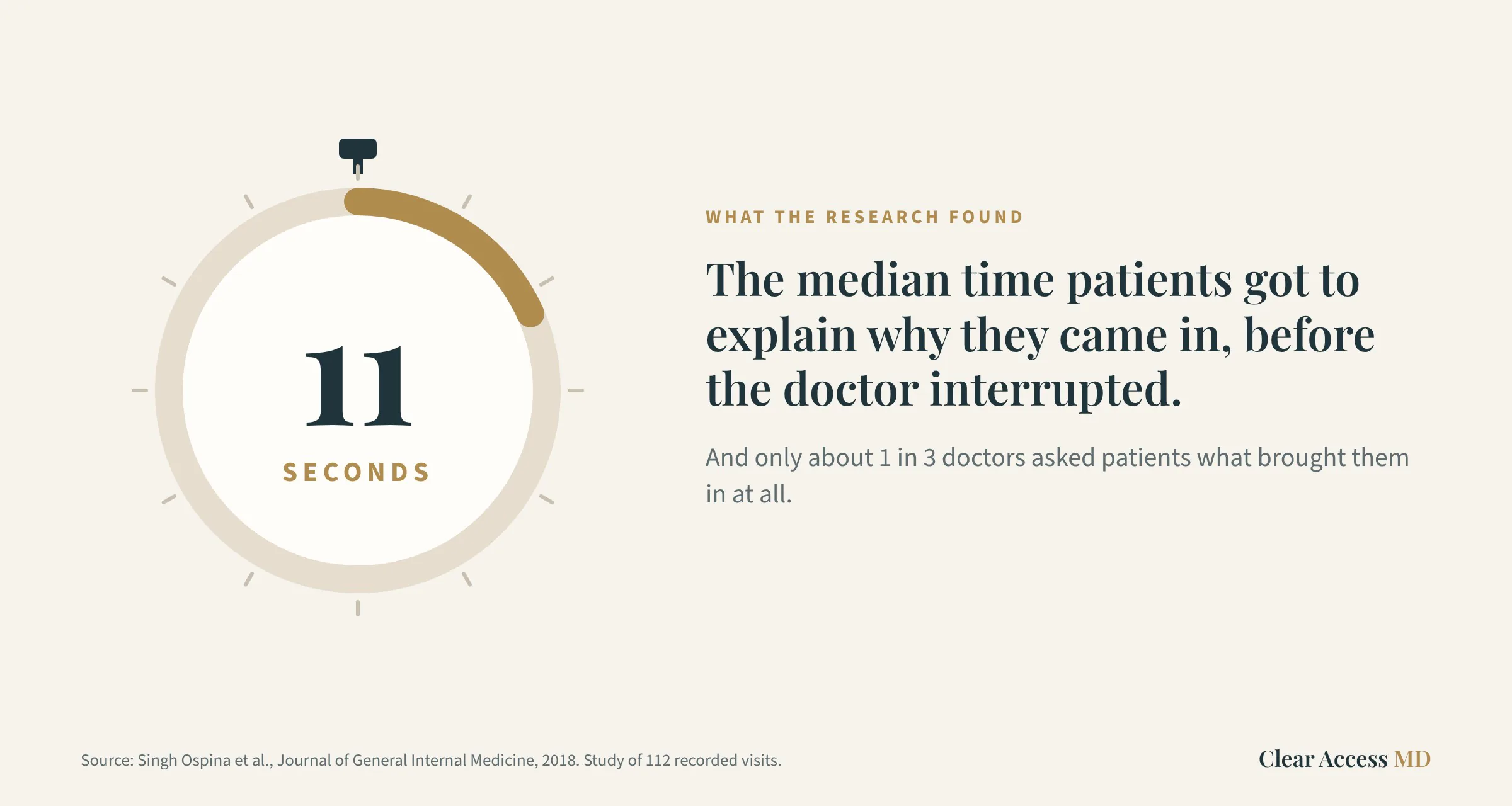
In a 2018 study led by a University of Florida researcher, doctors were recorded during real patient visits. Only about one in three asked patients what brought them in. When they did ask, they interrupted the answer after a median of 11 seconds.
Here’s why that happens, what gets lost, and what to look for in a doctor who actually has time for you.
Why doctor visits feel rushed (it’s not that doctors don’t care)
Before we go any further: this isn’t a story about bad doctors. Most physicians went into medicine because they care about people. The problem is the system they work in.
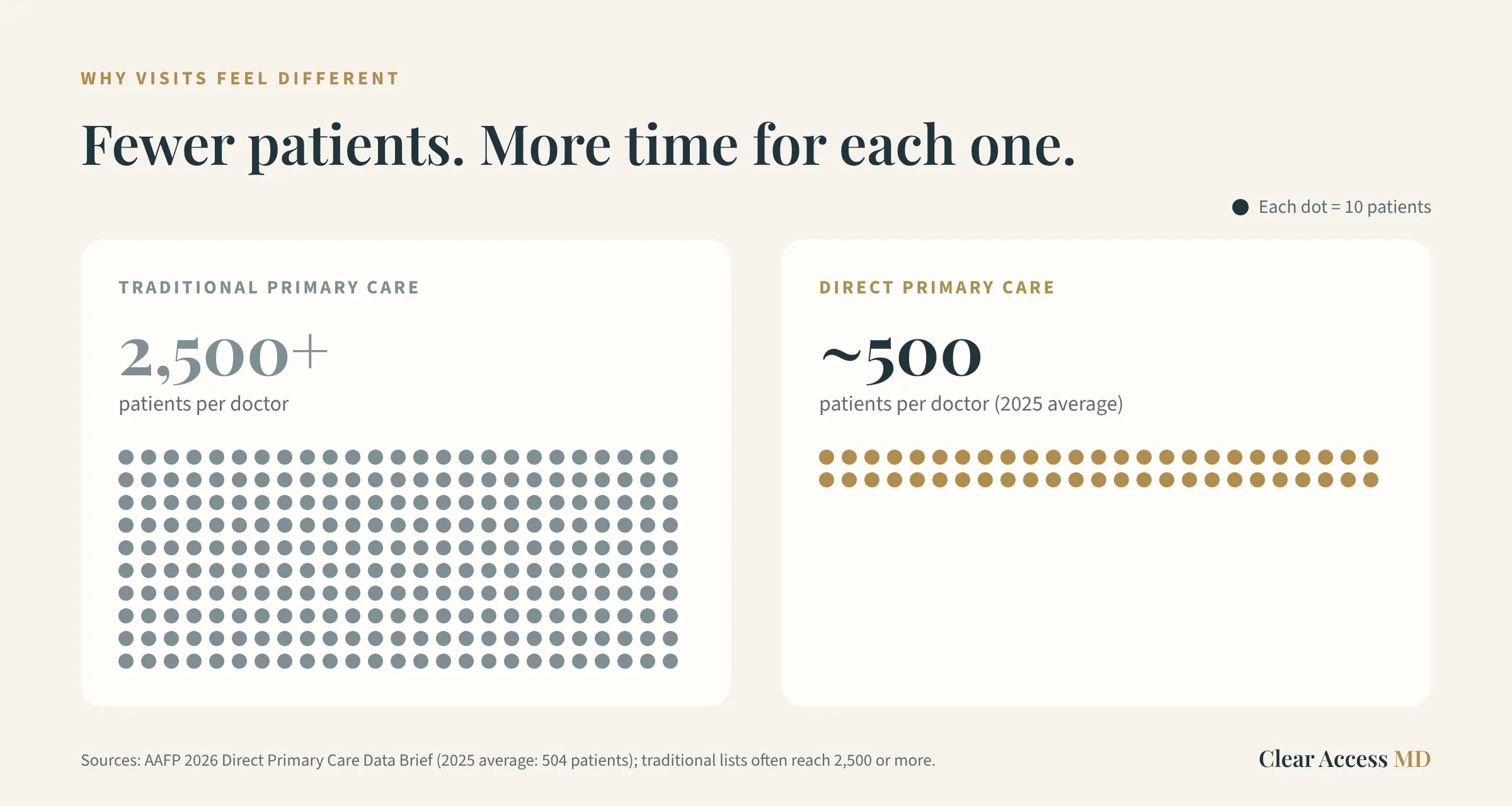
- Packed schedules. In many traditional practices, a single doctor is responsible for 2,000 to 2,500 patients or more. With a list that long, the schedule decides how much time you get.
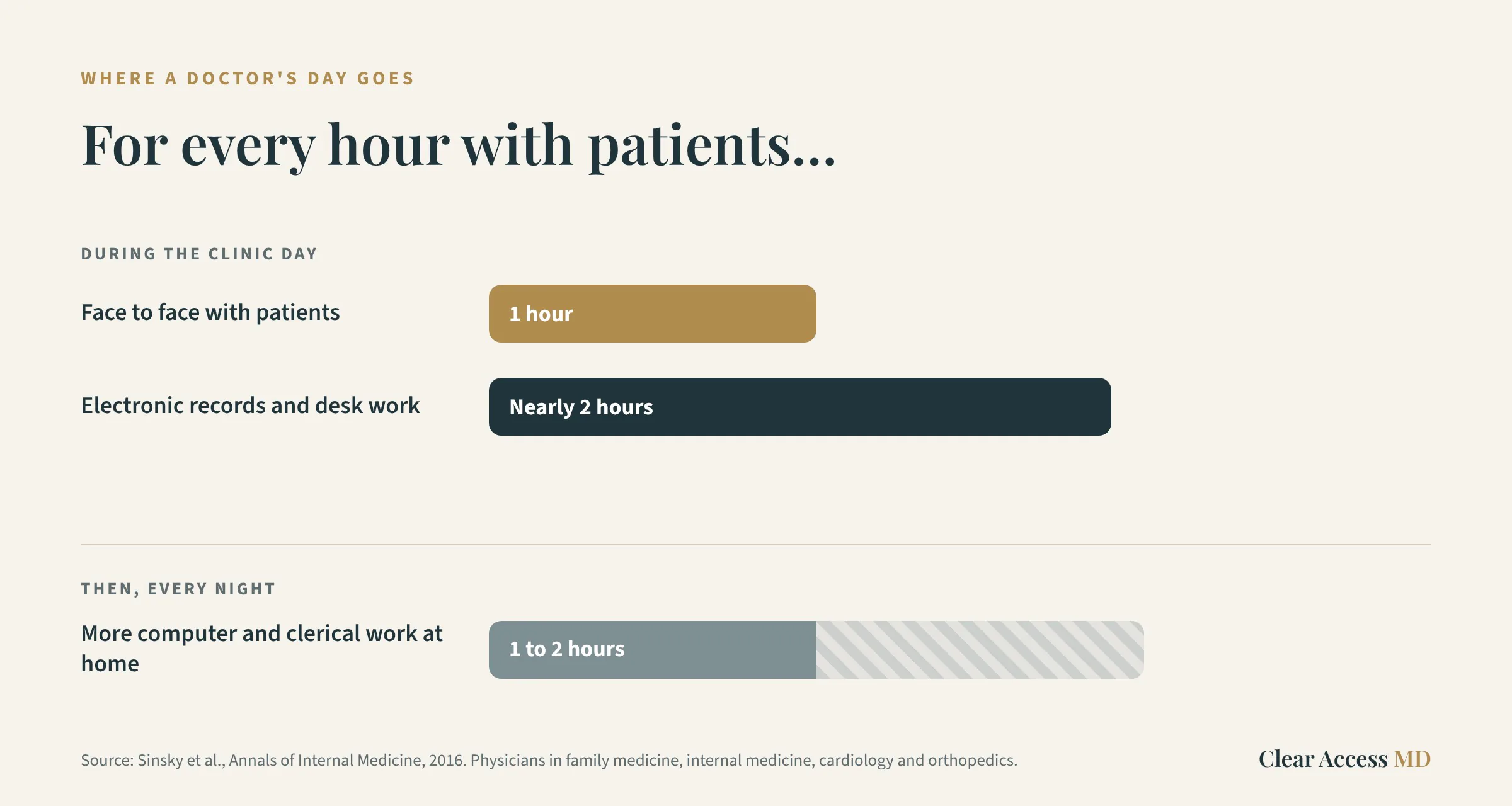
- Paperwork that never ends. A widely cited study found that for every hour doctors spend face to face with patients, they spend nearly two more hours on electronic records and desk work during the clinic day, plus another one to two hours at night.
- Pressure to keep moving. The lead researcher on the 11-second study pointed to increasing demands on physicians’ time as part of the problem.
When a doctor is stretched that thin, interrupting isn’t rudeness. It’s survival. But patients pay a price for it.
How long does a doctor’s appointment take?
An analysis of more than 21 million primary care visits found that the average exam lasted about 18 minutes. That 18 minutes has to cover:
- Your history
- Your symptoms
- An exam
- Any test results
- Medication questions
- A plan going forward
It also has to cover the part of the visit that happens on a computer screen.
Some visits run longer, but many feel shorter than they are, because so much of the time goes to keeping the record up to date.
What gets lost when a visit is rushed
Here’s the part that matters most. When there isn’t enough time, important things fall through the cracks:
- The “oh, and one more thing” concern. Patients often save the worry they’re most nervous about for the end of the visit. In a rushed visit, it never comes up.
- The context behind your symptoms. Your job, your stress, your sleep, your family history: the details that turn a symptom into a diagnosis. The 11-second study’s lead researcher warned that when patients don’t get room to talk, doctors can miss important medical issues, or what matters most to the patient.
- The right prescription. In a study of more than 8 million primary care visits, shorter visits were linked to a higher chance of inappropriate prescribing. With each additional minute, the likelihood dropped, most noticeably for unnecessary antibiotics.
To be fair, patients don’t need to give speeches. The same research found that patients who weren’t interrupted finished explaining their concerns in about six seconds. Most people don’t need much time to be heard. They just need room to finish.
What personalized primary care looks like
So what does it look like when a doctor actually has time for you? That’s the idea behind personalized primary care, including a model called direct primary care. Here’s what changes:
- A smaller patient list. Instead of thousands of patients, direct primary care doctors typically care for a few hundred. In 2025 the average was about 500. That one change makes everything else possible.
- Unhurried visits. Time to tell the whole story, cover more than one concern, and actually talk through the plan. At Clear Access MD, in person visits are typically 30 - 60 minutes.
- Results reviewed together. At Clear Access MD, your lab results aren’t dropped into a portal for you to decode alone. Dr. Bruna goes over them with you in a follow-up visit.
- Time between visits, too. Members can text the practice with questions, refill requests or new symptoms, instead of booking another appointment just to ask something simple. Here’s how that works when you come down with the flu or COVID.
- The same doctor every time. Someone who remembers last year’s numbers, your medications and what you talked about last time.
That’s the meaning behind our slogan: a doctor who has time for you.
Questions to ask your doctor, and how to prepare for any visit
Whoever your doctor is, a little preparation helps you get the most out of the time you have. Here’s a simple doctor appointment checklist.
Before your visit:
- Write down your concerns, and put the most important one first.
- Bring your medication list, including vitamins and supplements. A photo of your pill bottles works too.
- Note when symptoms started and anything that makes them better or worse.
At the start of the visit:
- Say how many things you’d like to cover. For example: “I have three things today.” It helps your doctor plan the time.
Questions to ask your doctor before you leave:
- “What do you think is causing this?”
- “What are my options, and what do you recommend?”
- “Are there side effects I should watch for with this medication?”
- “When should I expect to feel better, and what should I do if I don’t?”
- “Is there anything else I should know?”
If something isn’t clear, ask your doctor to explain it another way, or to write it down. A good doctor will be glad you asked.
Finding a doctor who listens in Lakewood Ranch and Sarasota
If you don’t have a regular doctor right now, you’re not alone. Many people go years without one, often because past visits felt rushed or pointless. But having a doctor who knows you, and has time for you, makes a real difference when something comes up.
At Clear Access MD, Dr. Bruna Jebelev is board-certified in Internal Medicine and fellowship-trained in Nephrology. She cares for adults in Lakewood Ranch, Bradenton and Sarasota. The practice is built on direct primary care, so your time with your doctor isn’t squeezed by a packed schedule. Wondering about cost? Here’s an honest breakdown of what primary care really costs without insurance.
The best way to see if it’s a fit? Book a free 30-minute intro visit, in person, by phone or by Zoom. It’s just a conversation, with no rush and no pressure.
📞 (941) 322-7202 · Book your free intro visit →
Frequently asked questions
How long does a doctor’s appointment take? A typical primary care exam in the U.S. lasts about 18 minutes, according to an analysis of more than 21 million visits. Practices with smaller patient lists, like direct primary care practices, can usually offer longer visits.
Why does my doctor interrupt me? Usually because of time pressure, not lack of care. Many doctors manage very large patient lists and spend hours each day on paperwork. Leading with your most important concern helps make sure it gets addressed.
What should I do if my doctor isn’t listening? Start the visit by saying how many concerns you have, and lead with the most important one. Bring a written list. If you still feel unheard, it’s reasonable to look for a doctor whose practice is set up to give you more time.
What is personalized primary care? It’s primary care built around a smaller number of patients, so each person gets more time and more direct access to their doctor. Direct primary care is one version: patients pay a flat monthly membership for ongoing access to their doctor.
How do I prepare for a doctor’s appointment? Write down your concerns in order of importance. Bring your medication list, note when symptoms started, and come with questions. See the checklist above.
This article is for general education and isn’t a substitute for medical advice about your own situation.
Sources
- Singh Ospina N, et al. “Eliciting the Patient’s Agenda.” Journal of General Internal Medicine, 2018. Coverage: CMAJ · Springer
- Neprash HT, et al. “Measuring Primary Care Exam Length Using Electronic Health Record Data.” Medical Care, 2021. Coverage: Healio
- Sinsky C, et al. “Allocation of Physician Time in Ambulatory Practice.” Annals of Internal Medicine, 2016. Full text (PDF)
- Neprash HT, et al. “Association of Primary Care Visit Length With Potentially Inappropriate Prescribing.” JAMA Health Forum, 2023. Coverage: CIDRAP
- American Academy of Family Physicians, 2026 Direct Primary Care Data Brief
- Elation Health, The average number of patients for a DPC practice