Cold, Flu, COVID or RSV? How to Tell, and When to Call a Doctor
On This Page
You wake up with a scratchy throat. By lunch you’re aching all over, and by dinner you’re wondering: Is this just a cold? Should I tough it out, or call someone?
The honest answer is that these illnesses overlap so much that you often can’t tell them apart by symptoms alone. But there are clues that help, and one time window matters more than most people realize.
Here’s how to sort it out, when testing is worth it, what to do in the first 48 hours, and the warning signs that mean you shouldn’t wait.
This guide is for adults. If your child is sick, call their pediatrician.
Why this matters in Florida right now
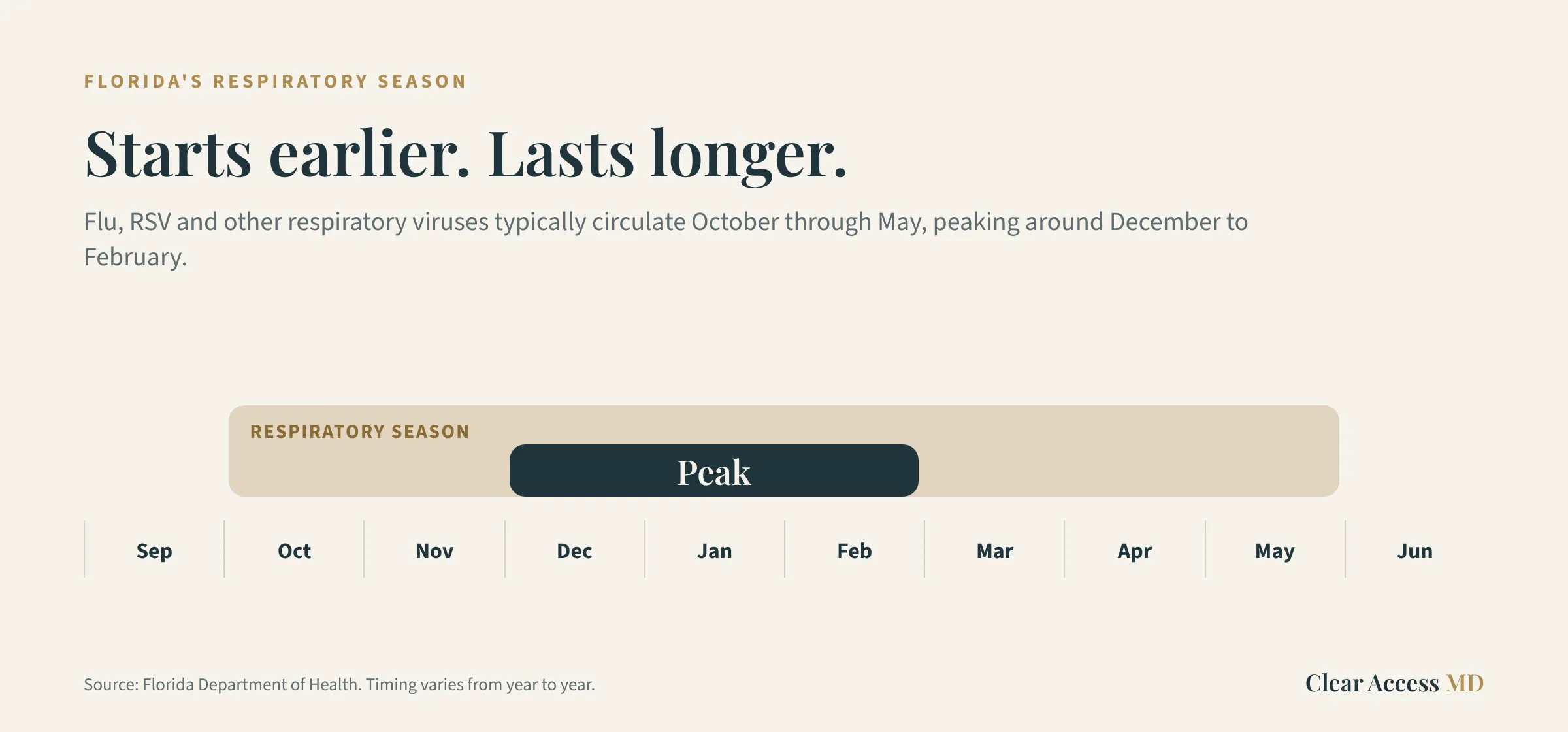
Florida’s respiratory season is long. The Florida Department of Health says flu, RSV and other respiratory illnesses typically circulate from October through May, and that activity here usually starts earlier and lasts longer than in the rest of the country.
Cases tend to peak between December and February. That’s when holiday travel picks up, families gather, and seasonal residents arrive. If you’re going to get sick this year, the next few months are the most likely time.
The clues: a side-by-side guide
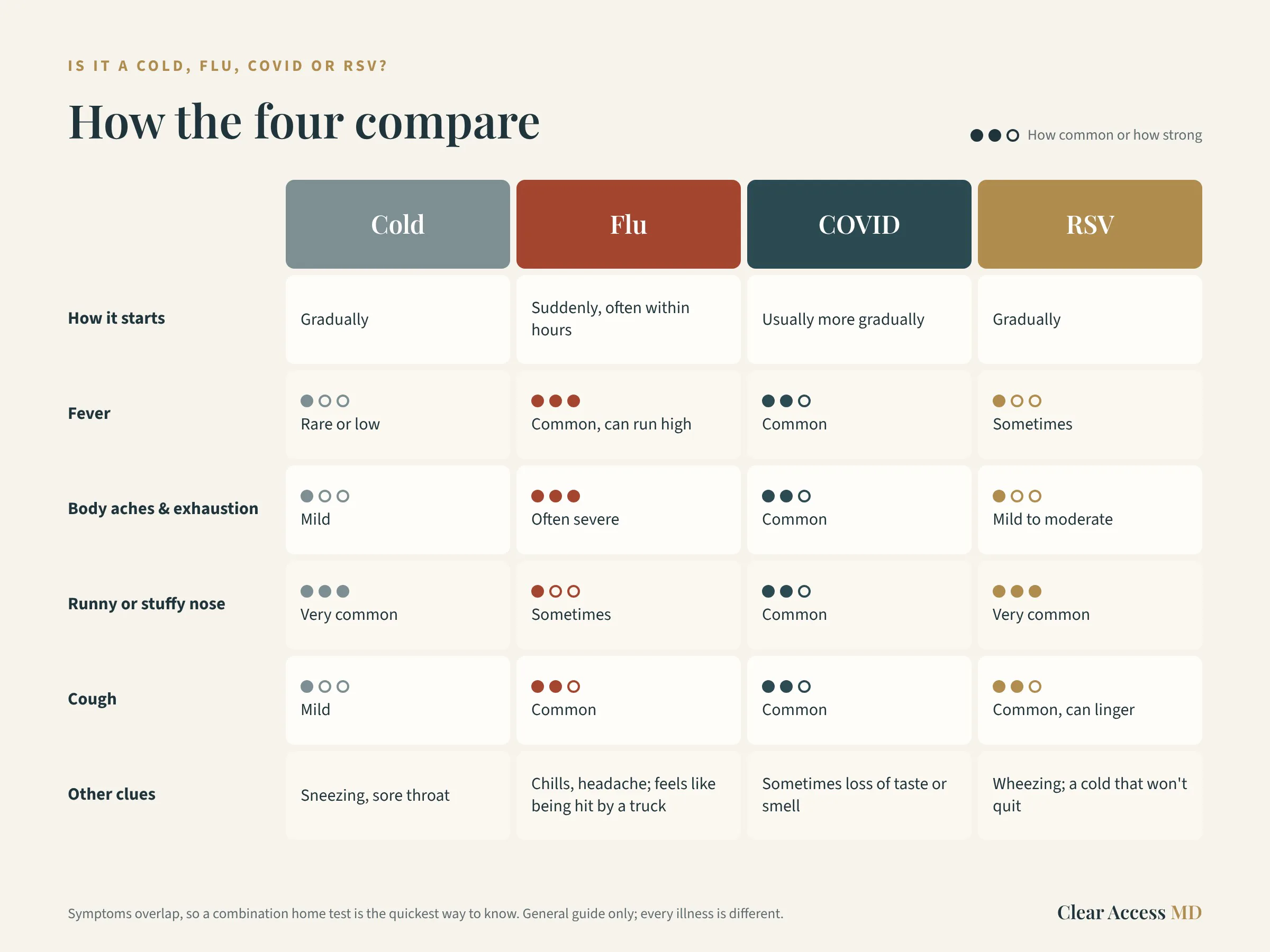
A few patterns stand out:
- The flu hits fast. Symptoms usually appear one to four days after exposure. Many people can name the hour they started feeling sick.
- COVID varies a lot. Some people feel terrible, some have a mild cold, and some never notice symptoms at all.
- RSV is often the cold that drags on. For most healthy adults it’s mild. It can be serious for older adults and people with heart or lung disease.
Even with these clues, many people can’t tell flu from COVID by symptoms alone. That’s where testing comes in.
Testing at home: when it’s worth it
You no longer need a clinic visit to find out what you have. Combination home tests that check for both COVID and flu are sold at pharmacies without a prescription. They use a simple nasal swab and give results in about 15 minutes.
How to read the result:
- A positive result most likely means you have that virus.
- A negative result isn’t the final word, especially early on. If you still feel sick, test again in a day or two.
Why it’s worth knowing: flu and COVID are treated with different medicines. Knowing which one you have decides which treatment, if any, will help.
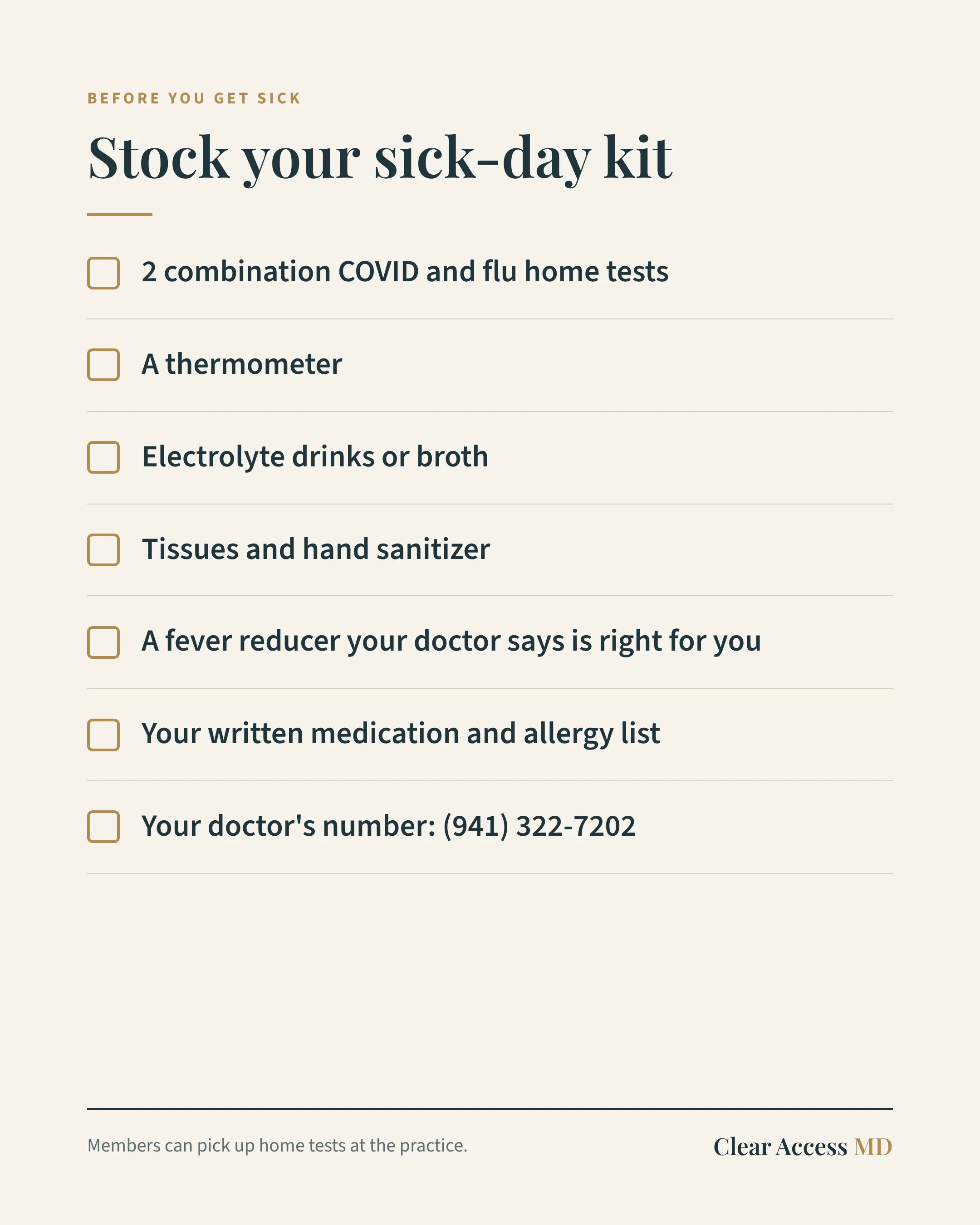
Tip: keep a couple of tests in your medicine cabinet before you need them, especially before holiday travel. Clear Access MD members can pick up tests right from the practice, so there’s no hunting through pharmacies while you’re sick.
The 48-hour window: the part most people miss
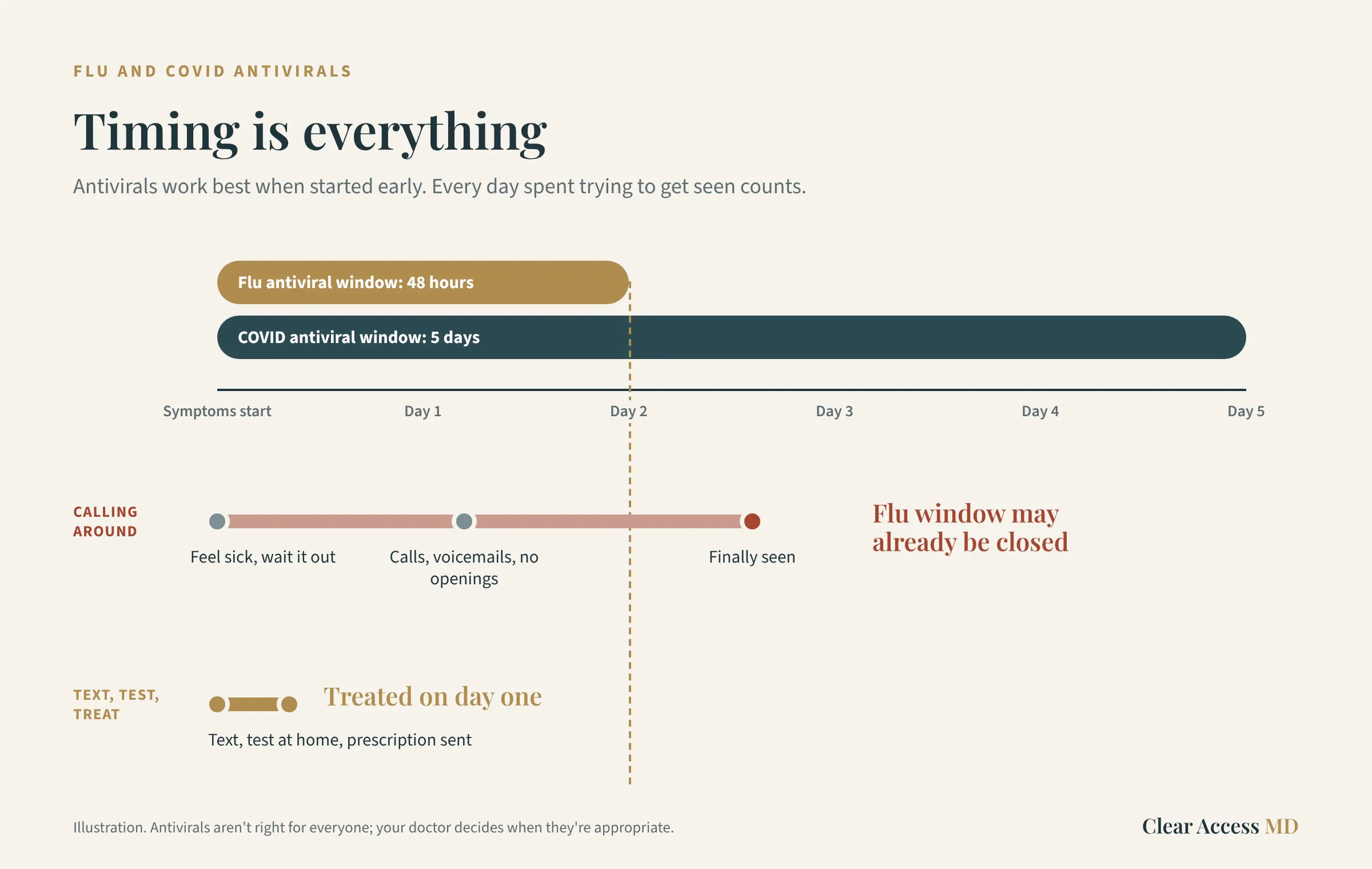
There are prescription antiviral medicines for both flu and COVID. They can shorten the illness and lower the risk of it turning serious. But timing is everything:
- Flu antivirals work best when started within 48 hours of your first symptoms.
- COVID antivirals should be started within five days of your first symptoms.
Not everyone needs an antiviral. They matter most for people at higher risk of complications, including:
- Adults 65 and older
- People with heart disease, lung disease (like COPD or asthma), diabetes or kidney disease
- People with a weakened immune system
- People who are pregnant
One important safety note: some antivirals interact with many common medications, including some supplements. Some also need a lower dose for people whose kidneys don’t work at full strength. That’s why it helps when the person prescribing already knows your medication list and kidney function.
What about antibiotics? They don’t work on viruses. A Z-Pak won’t help the flu or COVID, and taking antibiotics you don’t need can cause side effects and resistance. Your doctor may prescribe one later if a bacterial infection, like some pneumonias, develops on top of the virus.
The real problem: if it takes you two days of calling around to be seen, the treatment window may already be closing.
Feeling better at home
Most people recover from these viruses with rest and time. To help yourself along:
- Rest. Your body is doing real work.
- Drink fluids. Fever and Florida heat both dry you out. Water, broth and electrolyte drinks all help.
- Use fever and pain relievers sensibly. Follow the label. Anti-inflammatory pain relievers like ibuprofen and naproxen aren’t right for everyone, especially people with kidney disease, heart disease or stomach ulcers, or who take blood thinners. If you’re not sure, ask your doctor.
- Stay home while you have a fever, and until you’re clearly getting better. Be extra careful around older relatives, anyone with a chronic illness, and newborns.
- Expect a lingering cough. A cough can hang on for a few weeks after the rest of you feels fine. If it’s getting worse instead of better, call your doctor.
When to call your doctor
Reach out if:
- You’re in a higher-risk group and have flu-like symptoms or a positive test, especially in the first day or two.
- You start to feel better, then suddenly get worse. This can be a sign of pneumonia or another infection.
- Your fever lasts more than a few days, or your cough keeps getting worse.
- A chronic condition is flaring, like your COPD, asthma, blood sugar or blood pressure.
Prevention: the short version
You can’t avoid every virus, but you can lower the odds and take the edge off:
- Wash your hands often, and keep your hands away from your face.
- Stay home when you’re sick, and ask others to do the same.
- Get fresh air moving when people gather indoors.
- Stay up to date on vaccines. Flu and COVID vaccines are updated every year. An RSV vaccine is recommended for some adults over 50, depending on age and health. The right mix depends on you, so ask your doctor what makes sense for your situation.
How having your own doctor changes all of this
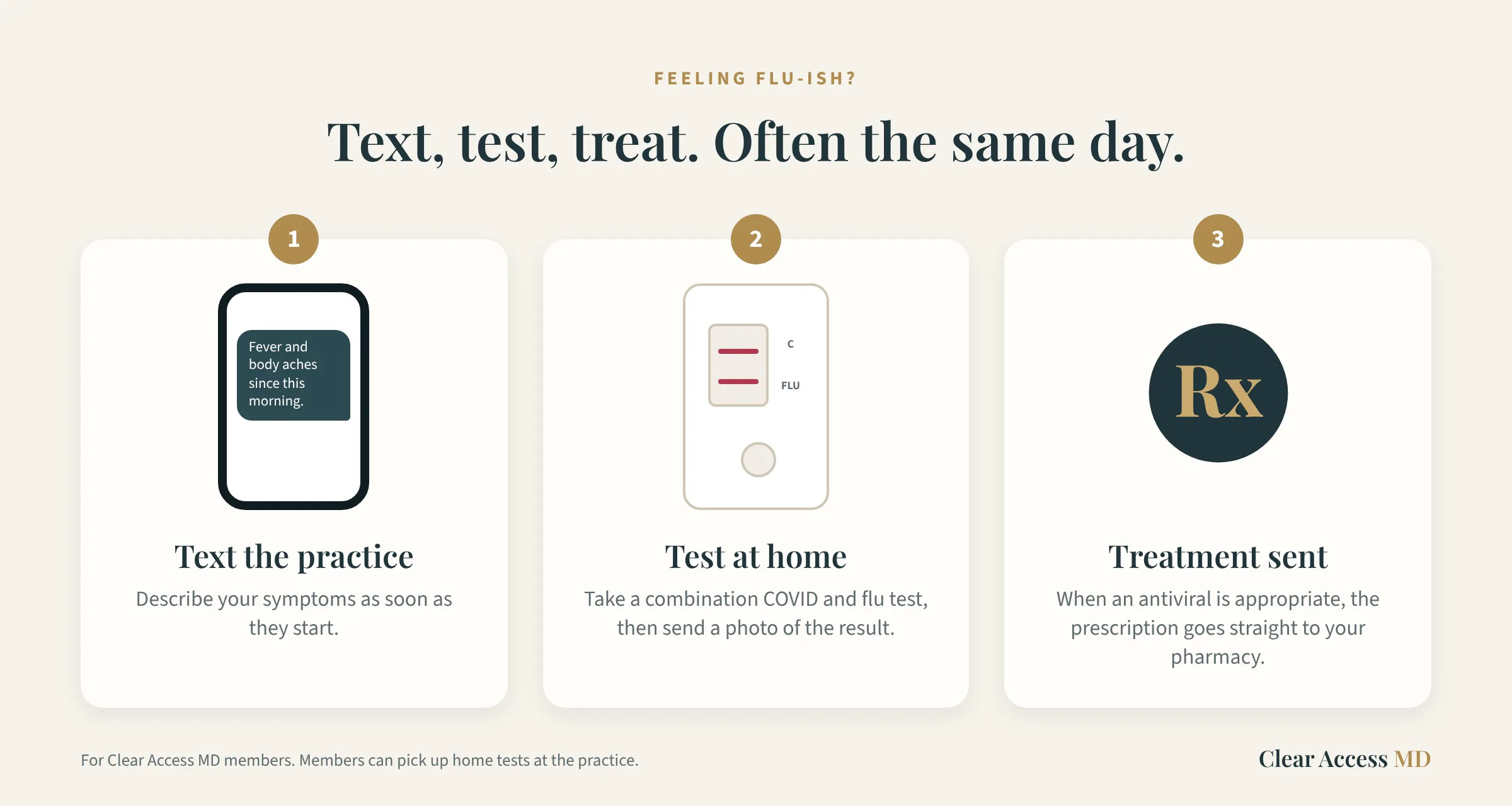
Here’s how a typical sick day goes for a Clear Access MD member:
- Text the practice as soon as symptoms start.
- Take a home test and send a photo of the result.
- When an antiviral is appropriate, Dr. Bruna sends the prescription straight to your pharmacy, often well within the 48-hour window, with no waiting room.
Because she already knows your history, your medications, your allergies and your kidney function, she can choose a treatment that’s safe for you. If you’re not improving, she follows up, so you don’t have to start over at urgent care.
That’s the difference between “I should probably see someone” and actually getting help while it can still make a difference. It’s the same reason we believe so strongly in having a doctor who listens: when your doctor already knows you and has time for you, getting help is simple.
Don’t have a doctor you can reach like this? Start with a free 30-minute intro visit with Dr. Bruna, in person, by phone or by Zoom. It’s just a conversation, with no pressure.
📞 (941) 322-7202 · Book your free intro visit →
Clear Access MD serves adults 18+ in Lakewood Ranch, Bradenton and Sarasota, in English and Spanish.
Frequently asked questions
How can I tell if it’s flu or COVID? Often you can’t by symptoms alone. The flu usually hits suddenly, while COVID tends to build more gradually and sometimes causes loss of taste or smell. A combination home test is the quickest way to know.
How long am I contagious? It depends on the virus and the person. You’re generally most contagious in the first few days of illness. Stay home while you have a fever and until you’re clearly improving, and take extra care around anyone at higher risk.
Do I need antibiotics for the flu? No. Antibiotics don’t work on viruses. If a bacterial infection develops on top of the flu, your doctor may prescribe one then.
Is it too late for an antiviral after 48 hours? Flu antivirals work best when started within 48 hours, but for people at higher risk or who are getting sicker, a doctor may still recommend one later. COVID antivirals can be started up to five days after symptoms begin. Either way, call sooner rather than later.
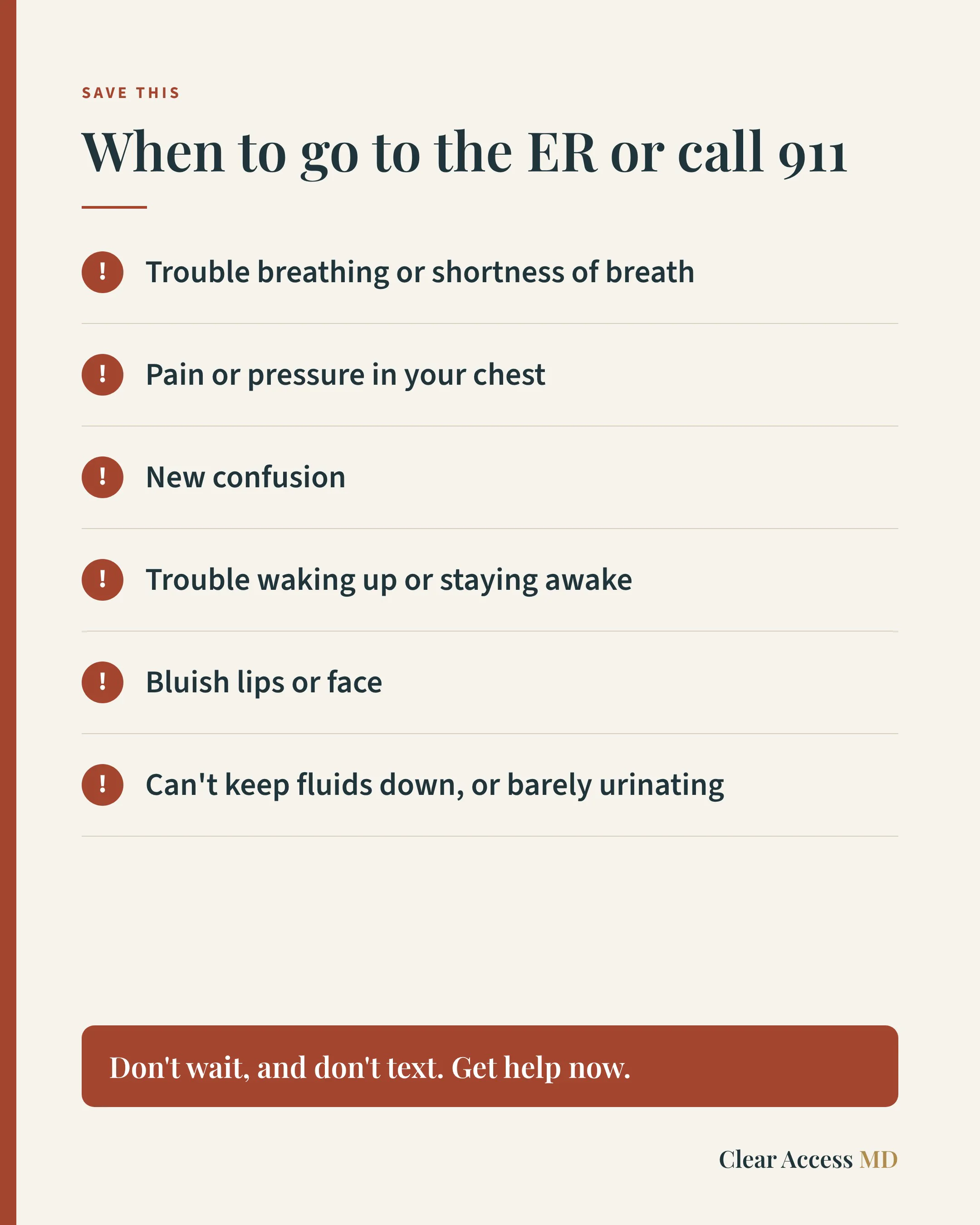
Should I go to urgent care or call my doctor? If you have a doctor you can reach quickly, start there: they know your history and can often treat you without a visit. For any of the emergency warning signs above, go to the ER or call 911.
This article is for general education and isn’t a substitute for medical advice about your own situation. If you’re unsure, contact your doctor.
Sources
- Florida Department of Health, Florida’s respiratory season
- WDBO, Florida flu season timing and peak
- ABC News, RSV, flu and COVID-19: How can you tell the difference?
- Medical Laboratory Observer, FDA authorizes first home flu and COVID-19 combination test
- Harvard Health Publishing, Antiviral medications for winter bugs
- NSW Health, COVID-19 and influenza antiviral medicines
- American Academy of Family Physicians, 2026–2027 influenza, RSV and COVID-19 immunization recommendations