
Your Kidneys Age Quietly: What to Know After 40
On This Page
Protecting Kidney Health as You Get Older
Most people can tell you their weight. Many know their blood pressure, and some can quote their cholesterol. Almost nobody knows how well their kidneys are working.
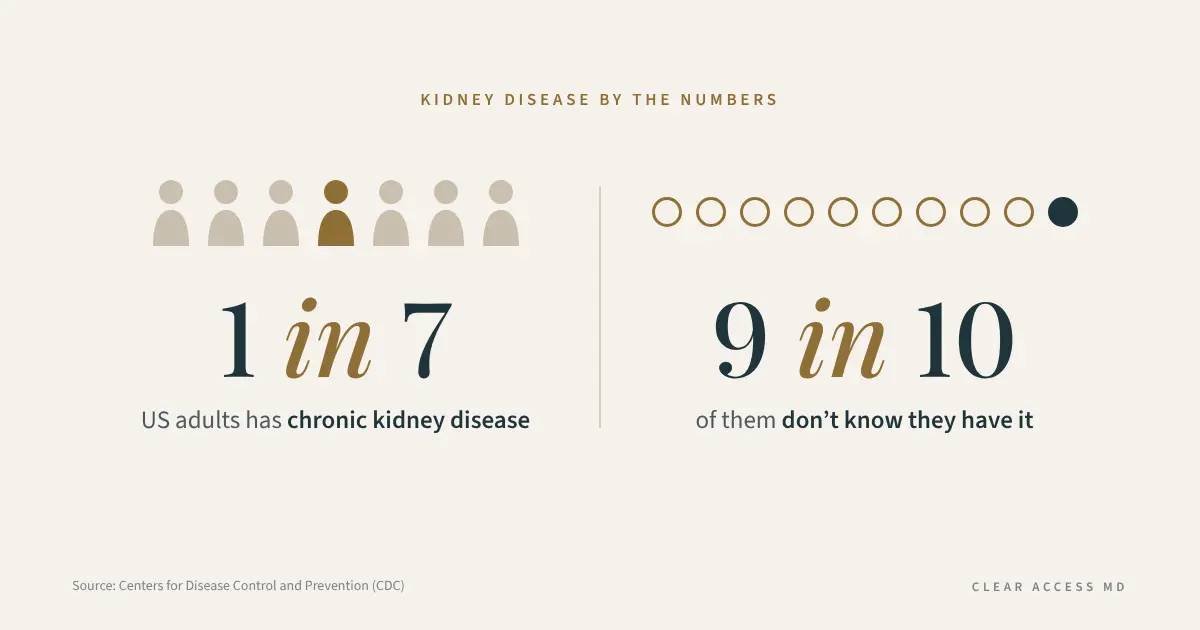
That’s a problem, because kidney disease is one of the most common chronic conditions in the country and one of the quietest. According to the CDC, about 1 in 7 American adults has chronic kidney disease (CKD), and roughly 9 in 10 of them don’t know it. Early kidney disease usually causes no pain and no obvious warning signs. Many people find out only after significant damage has been done.
The upside is that kidney problems are easy to detect early with simple tests, and much of the damage can be slowed or prevented. At Clear Access MD, this topic is personal. Dr. Bruna Jebelev is board-certified in internal medicine and fellowship-trained in nephrology, the specialty focused on the kidneys. Here’s what she wants every adult to know as they get older.
What your kidneys actually do
Your two kidneys are fist-sized filters that clean your entire blood supply many times a day. They remove waste and extra fluid, keep sodium and potassium in balance, and help control your blood pressure. They also make hormones that keep your bones strong and tell your body to produce red blood cells.
When the kidneys slow down, those jobs don’t stop all at once. They erode gradually, often over years, which is exactly why problems go unnoticed.
What changes as we age
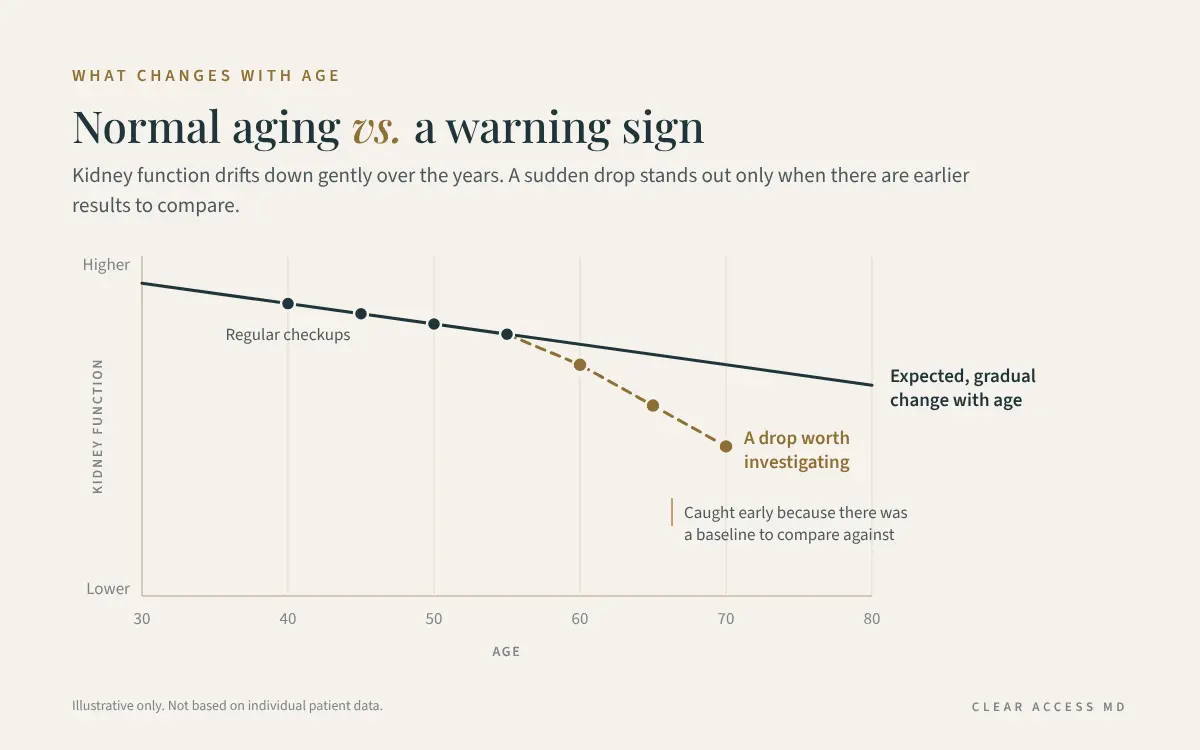
Kidney function naturally declines somewhat with age. A healthy 70-year-old typically has less filtering capacity than they did at 30, and that alone isn’t cause for alarm.
The challenge is telling normal aging apart from actual disease. A single lab result can’t always do that. What does is a trend: your numbers this year compared with last year and the year before. A slow, steady drift is one thing. A sudden drop, or protein showing up in the urine, is another.
That’s why the most useful thing you can do for your kidneys is establish a baseline and keep tracking it.
Who is most at risk
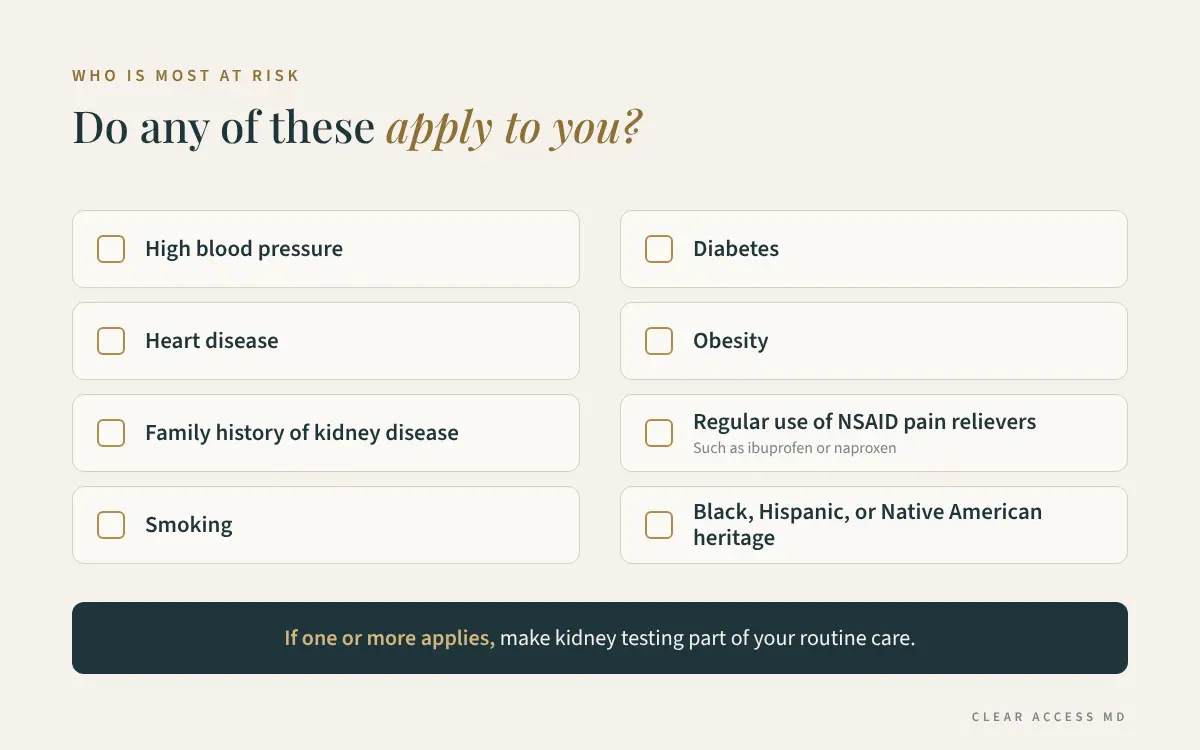
Anyone can develop kidney disease, but some factors raise the odds considerably:
- High blood pressure. It damages the tiny blood vessels in the kidneys, and kidney damage in turn raises blood pressure further. It’s a cycle.
- Diabetes. High blood sugar is the leading cause of kidney failure in the United States.
- Heart disease and obesity. Both strain the same blood vessels the kidneys depend on.
- Family history. If a parent or sibling has kidney disease, your risk is higher.
- Regular use of over-the-counter pain relievers. NSAIDs like ibuprofen (Advil, Motrin) and naproxen (Aleve) can harm the kidneys when used often or long-term.
- Smoking. It narrows blood vessels and speeds up kidney decline.
- Background. Kidney disease is more common among Black, Hispanic, and Native American adults.
If one or more of these applies to you, kidney testing should be part of your routine care, not something you wait to think about.
Why “I feel fine” isn’t reassurance
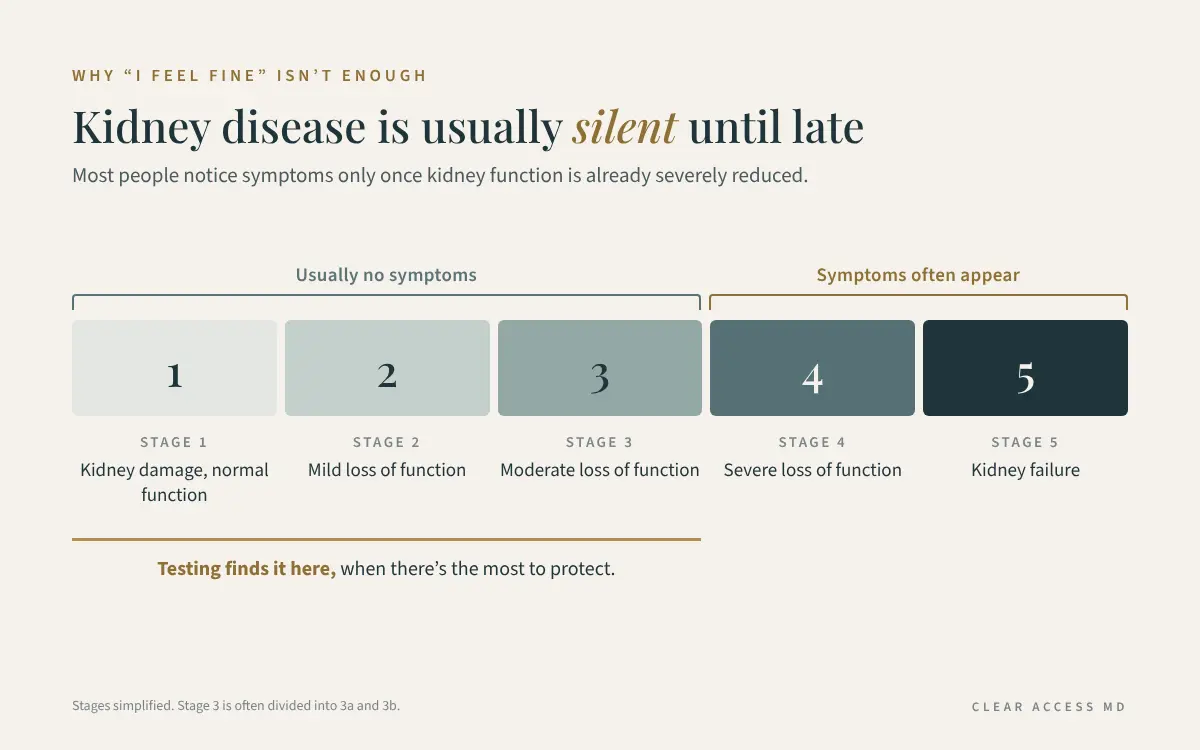
Here’s the uncomfortable truth: in its early stages, kidney disease usually feels like nothing at all.
Symptoms such as swelling in the legs or ankles, persistent fatigue, changes in how often you urinate, foamy urine, or itchy skin tend to appear only when kidney function is already significantly reduced. By then, the options for protecting what’s left are narrower.
Feeling good is great. It just doesn’t tell you anything about your kidneys. Only testing does.
The tests that matter
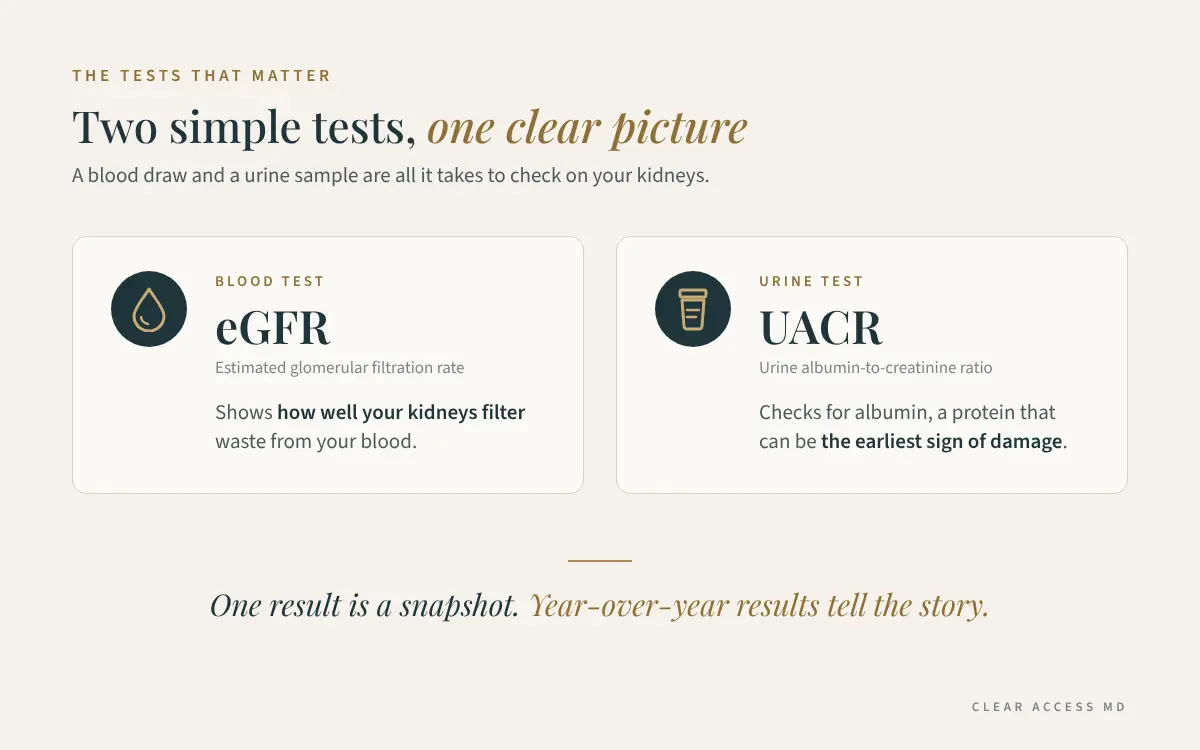
Checking your kidneys is simple. It takes a blood draw and a urine sample.
- eGFR (estimated glomerular filtration rate). Calculated from a blood test for creatinine, a waste product your kidneys filter out. It estimates how well your kidneys are cleaning your blood.
- Urine albumin-to-creatinine ratio (UACR). Checks for a protein called albumin leaking into your urine. This is often the earliest sign of kidney damage and can show up before eGFR changes.
- Blood pressure. Measured properly, seated and rested, and ideally tracked over time. It’s both a cause and a signal of kidney trouble.
Again, one result is a snapshot. Year-over-year results tell the story.
Simple habits that protect your kidneys
Most kidney protection comes down to everyday choices:
- Keep blood pressure and blood sugar in range. This has the biggest impact of anything on this list. If you have high blood pressure or diabetes, managing it well is kidney care.
- Be careful with NSAIDs. An occasional dose is generally fine for healthy adults, but if you reach for ibuprofen or naproxen several times a week, talk with your doctor about safer options.
- Stay hydrated sensibly. Drink to thirst, and drink more in the heat. (Florida summers count.) Forcing down extra water beyond what your body needs doesn’t give healthy kidneys any additional benefit.
- Go easy on sodium. Much of it hides in restaurant meals, deli meats, and packaged foods.
- Don’t smoke, and stay active. Both help your blood vessels, and your kidneys are made of blood vessels.
- Ask before starting supplements. Some herbal products and high-dose protein supplements can stress the kidneys, especially if your function is already reduced.
- Keep a current medication list. Many common drugs need dose adjustments as kidney function changes with age. A doctor who reviews your full list can catch problems before they start.
Why having a doctor who knows you makes the difference
Notice a theme? Protecting your kidneys depends on continuity: someone who has your previous results, knows your medications, and notices when a number starts moving in the wrong direction.
That’s hard to get if you don’t have a primary care physician, or if you only see a doctor when something goes wrong. Urgent care can treat an infection, but it isn’t set up to compare this year’s labs with last year’s.
A primary care physician who knows you can:
- Track your kidney numbers year over year and spot changes early
- Review every medication and supplement you take, and adjust as needed
- Help you manage blood pressure and blood sugar before they cause damage
- Be easy to reach when a question comes up, instead of weeks away
At Clear Access MD, that kind of relationship is the whole point. Visits aren’t rushed, it’s easy to reach Dr. Jebelev directly, and your care has the benefit of a physician with specialized kidney training.
Start with a baseline
If you can’t remember the last time someone checked your kidney function, or you’ve never had it checked at all, the best first step is to know your numbers.
Our $179 annual physical includes a comprehensive exam and a full lab panel, giving you a clear picture of where your health stands today, kidneys included. If you decide to become a member within 30 days of your physical, your first month of membership is free.
Clear Access MD serves adults in Lakewood Ranch, Bradenton, and Sarasota, with care available in English and Spanish.
Frequently asked questions
How often should I have my kidney function checked? For most healthy adults, kidney testing is a sensible part of an annual physical. If you have diabetes, high blood pressure, heart disease, or a family history of kidney disease, yearly testing of both blood (eGFR) and urine (albumin) is especially important, and your doctor may recommend checking more often.
Does drinking more water protect my kidneys? Staying well hydrated matters, especially in hot weather or if you’re prone to kidney stones. But for healthy kidneys, drinking far more than your body needs doesn’t add extra protection. Drinking to thirst is a good rule for most people. If you have a heart or kidney condition, ask your doctor what’s right for you.
Is ibuprofen bad for my kidneys? Occasional, short-term use is generally safe for people with healthy kidneys. Frequent or long-term use, high doses, dehydration, or combining NSAIDs with certain blood pressure medications can raise the risk of kidney injury. If you use pain relievers regularly, it’s worth a conversation with your doctor.
What’s a normal eGFR for my age? An eGFR of 60 or higher is generally considered within the normal range for adults, and average values gradually decline with age. An eGFR below 60 for three months or more, or protein in the urine at any eGFR level, can signal kidney disease. Your doctor will interpret your results in the context of your age, health history, and previous results.
This article is for educational purposes only and isn’t a substitute for personalized medical advice. If you have concerns about your kidney health, please talk with your physician.