
Sleep: When Snoring and Fatigue Deserve Evaluation
On This Page
Sleep: When Snoring and Fatigue Deserve Evaluation
Maybe it’s the elbow in the ribs at 2 a.m. and a sleepy “you’re snoring again.” Maybe it’s the third cup of coffee by mid-afternoon, or the way your eyes get heavy the minute you sit down to read. Most of us treat these things as a normal part of adult life: a little embarrassing, mostly a joke, not worth mentioning to a doctor.
That’s exactly why they rarely get mentioned.
Occasional snoring is usually harmless. But loud, regular snoring combined with daytime tiredness is a pattern worth paying attention to. The causes are common, often overlooked, and very treatable. And as a member, you have a doctor with the time to actually work through it with you.
Snoring vs. sleep apnea: what’s actually happening
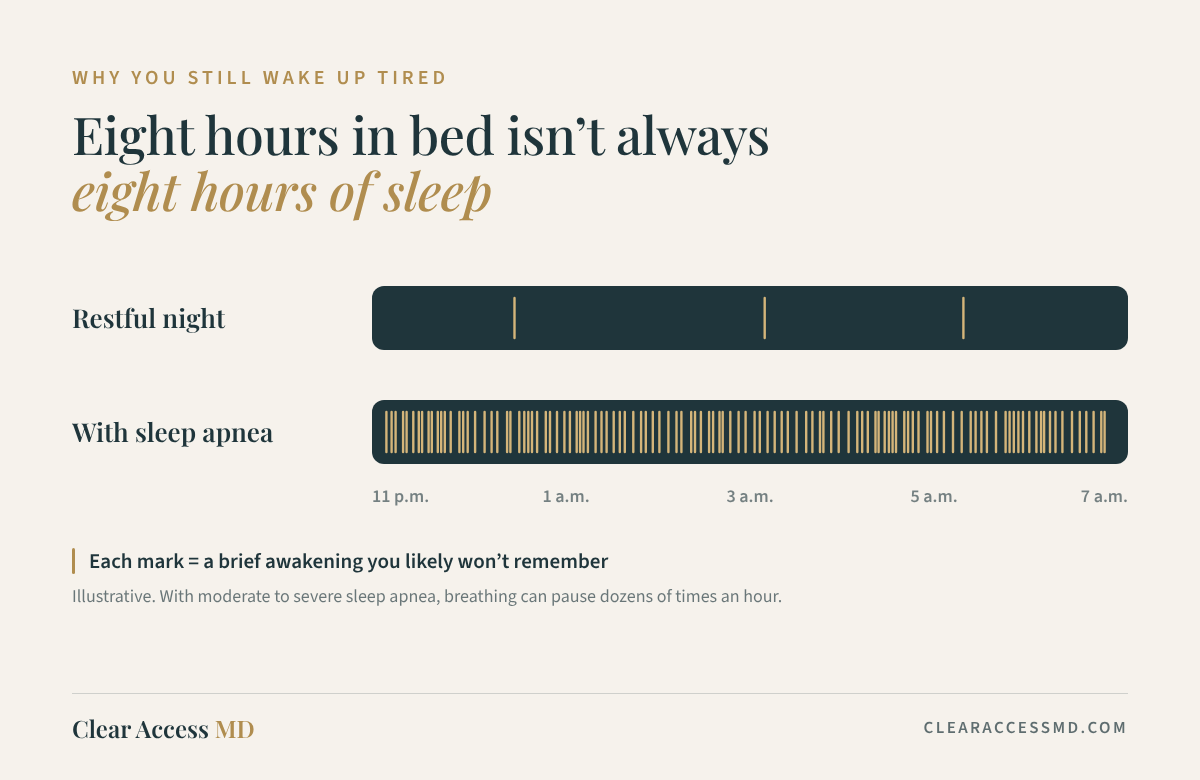
Snoring is the sound of air moving through a narrowed airway. As you fall asleep, the muscles in your throat relax, the airway gets smaller, and the soft tissue vibrates.
In obstructive sleep apnea (OSA), the airway doesn’t just narrow. It partially or completely closes. Breathing slows or stops for several seconds, oxygen levels dip, and your brain jolts you just awake enough to start breathing again. This can happen dozens of times an hour. Most people never remember waking up, but their body feels it.
That’s why someone with sleep apnea can spend eight hours in bed and still wake up exhausted: the sleep keeps getting interrupted.
It’s also far more common than most people realize. The American Academy of Sleep Medicine has estimated that roughly 30 million American adults have obstructive sleep apnea, and that around 80% of them have never been diagnosed.
Signs worth bringing up
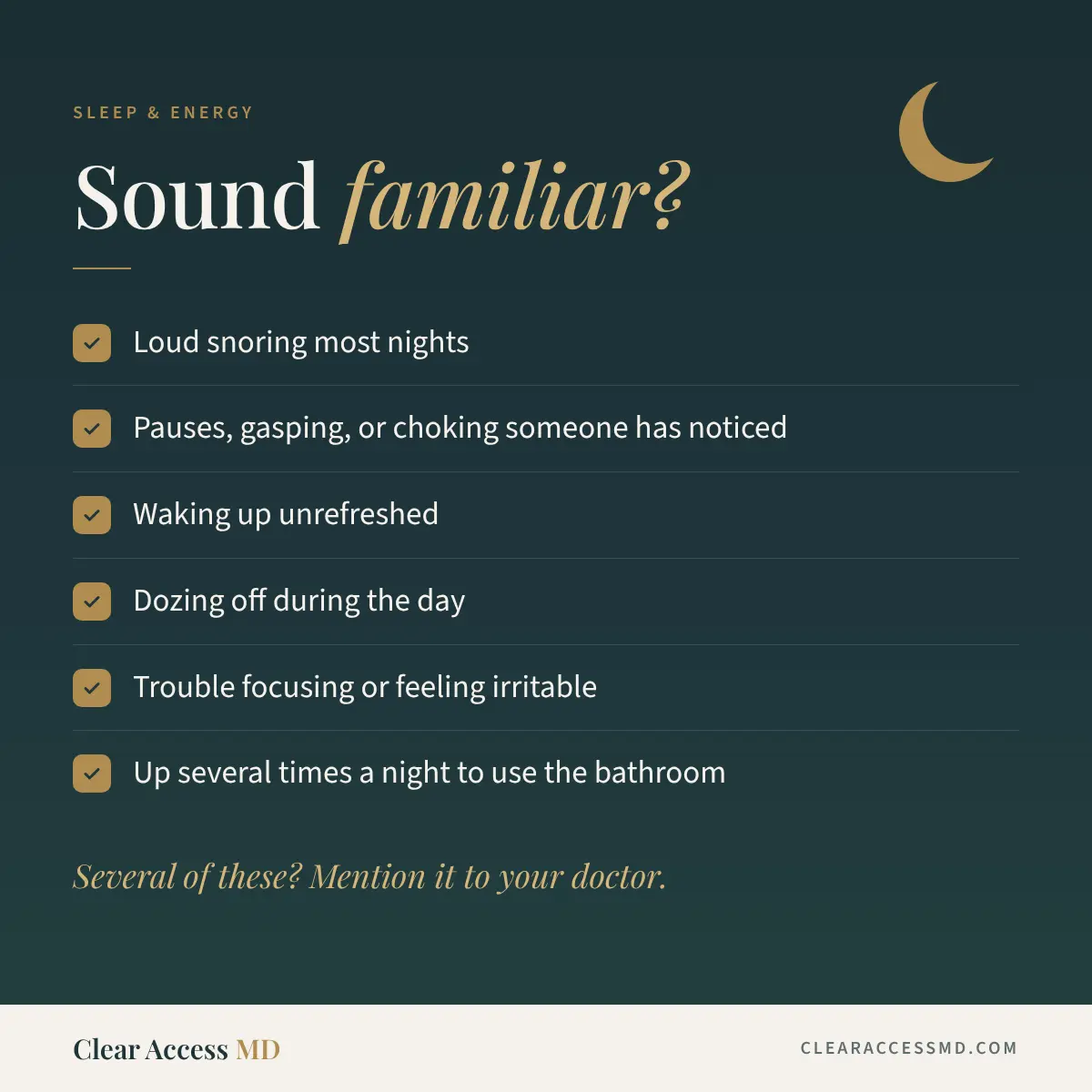
You don’t need to check every box. If several of these sound familiar, it’s worth a conversation:
- Loud snoring most nights, the kind people can hear through a closed door
- Pauses in breathing, gasping, or choking that a partner or family member has noticed
- Waking up unrefreshed, even after a full night, sometimes with a headache or dry mouth
- Daytime sleepiness, such as dozing off while reading, watching TV, or sitting in traffic
- Trouble focusing, irritability, or feeling low
- Getting up several times a night to use the bathroom
Why it matters beyond feeling tired
Feeling tired all the time is reason enough to look into it. But untreated sleep apnea affects more than your energy.
When breathing repeatedly stops and starts, your body goes through repeated stress responses all night long. Over time, untreated sleep apnea is linked to high blood pressure (especially blood pressure that stays stubbornly high despite medication), heart rhythm problems like atrial fibrillation, higher stroke risk, and trouble controlling blood sugar. Drowsiness also raises the risk of car accidents and injuries at work.
This is where having an internist matters. Dr. Jebelev is board-certified in internal medicine and fellowship-trained in nephrology, so she pays close attention to how sleep, blood pressure, the heart, and the kidneys affect one another. A snoring complaint isn’t just a snoring complaint. It’s one piece of your overall health picture.
Fatigue isn’t always about sleep
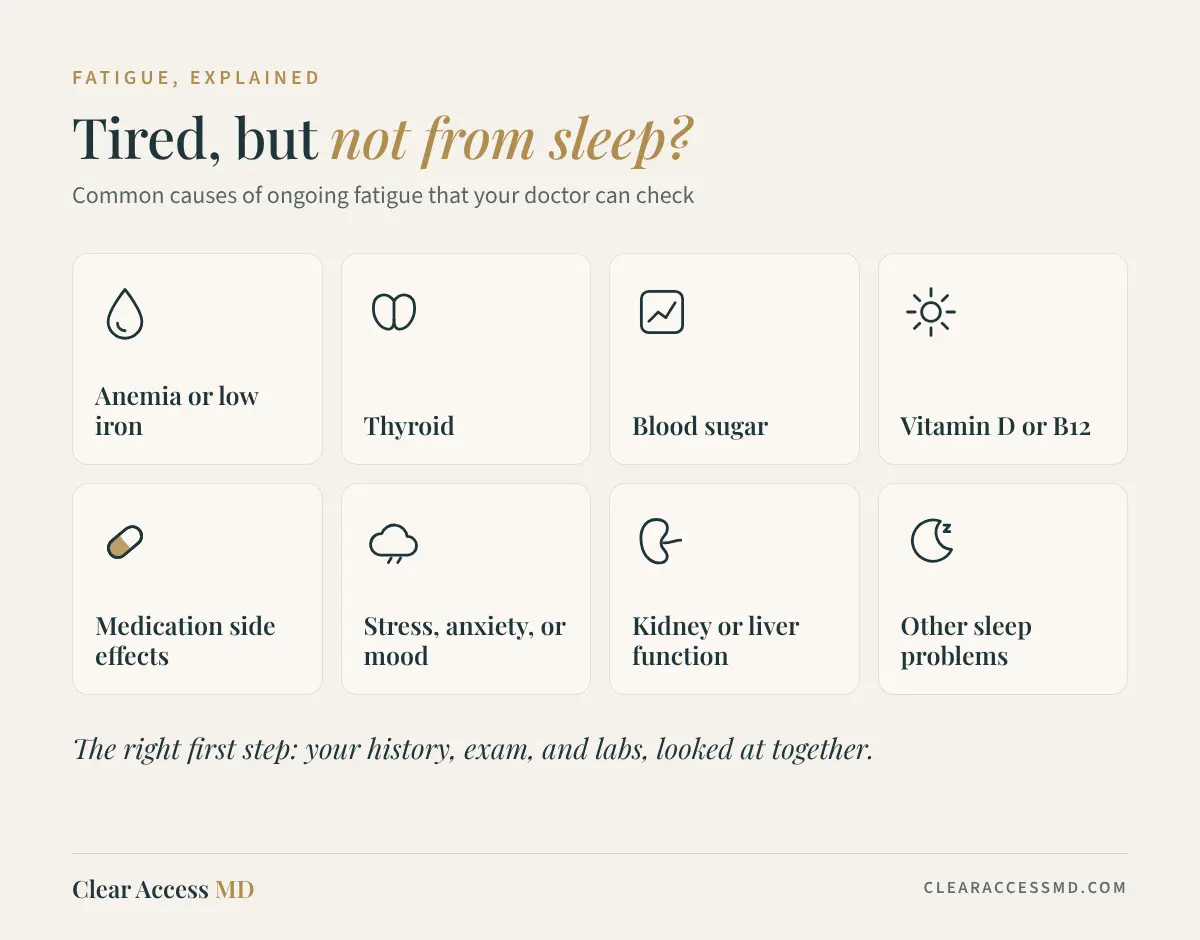
Not everyone who’s tired has sleep apnea, and not everyone with sleep apnea snores. Ongoing fatigue can come from many other places, including:
- Anemia or low iron
- An underactive thyroid
- Blood sugar problems, including prediabetes
- Low vitamin D or B12
- Side effects from medications or supplements
- Stress, anxiety, or depression
- Changes in kidney or liver function
- Other sleep problems, like insomnia or restless legs
That’s why the right first step isn’t jumping straight to a sleep study. It’s starting with your doctor, who can look at your history, your exam, and your labs together and figure out what’s actually going on.
How to bring it up
You don’t have to wait for your annual physical. If this sounds like you, reach out the way you normally contact the practice, or book a visit. This is exactly the kind of “it’s probably nothing, but…” question your membership is designed for.
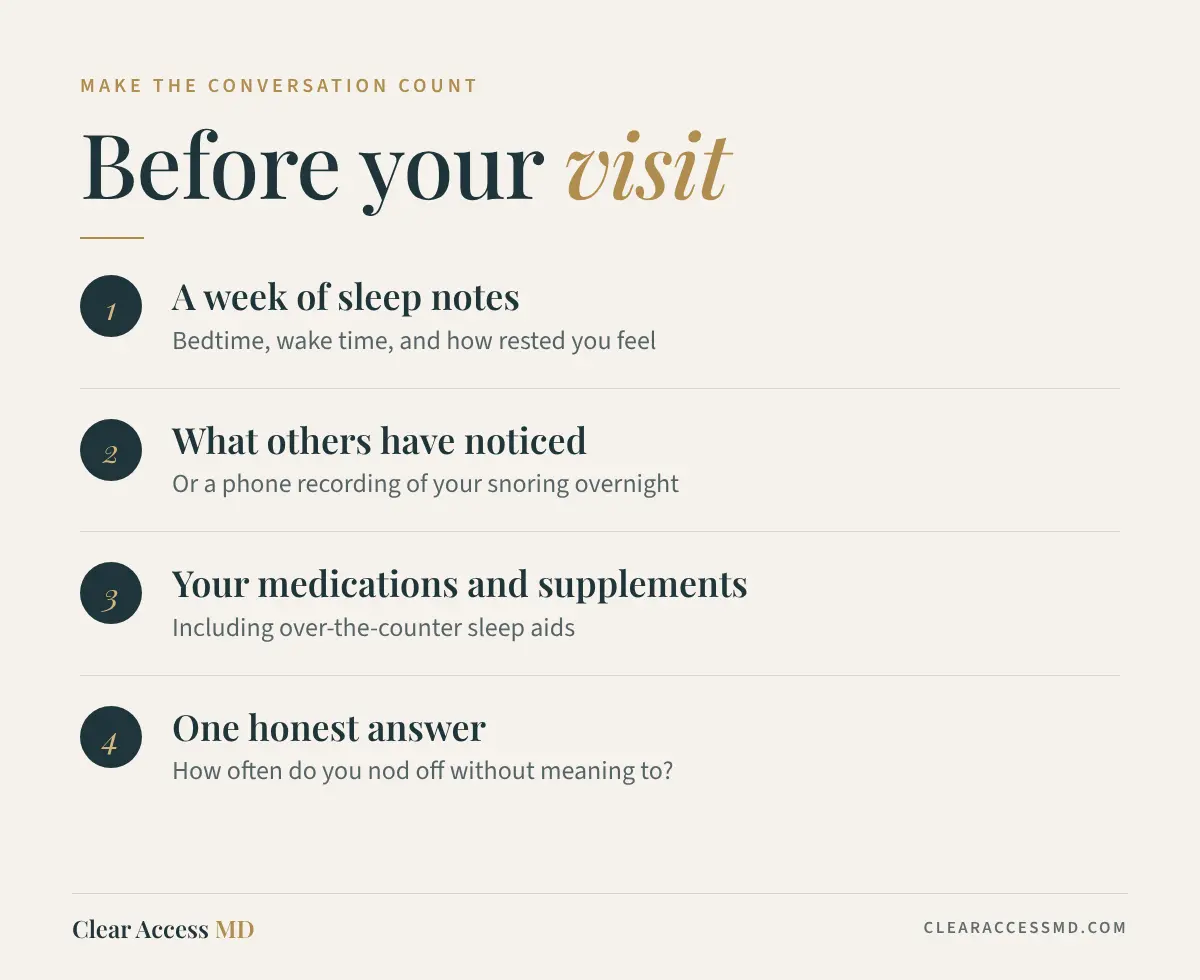
A little preparation makes the visit more useful. Before you come in, try to gather:
- A week of rough sleep notes: when you go to bed, when you wake up, and how rested you feel
- What others have noticed: ask your partner, or use a free phone app to record yourself snoring overnight
- A list of your medications and supplements, including over-the-counter sleep aids
- Your honest answer to one question: how often do you nod off when you don’t mean to?
Already have your physical on the calendar? Add sleep and energy to your list so it gets covered.
What happens next
Here’s what an evaluation typically looks like:
- A real conversation. Dr. Jebelev will ask about your sleep, energy, habits, alcohol and caffeine, medications, and what others have noticed. She may also ask you to fill out a short questionnaire that measures daytime sleepiness.
- An exam. Blood pressure, weight, and a look at your neck, mouth, and airway.
- Labs, if needed. Bloodwork can rule out other causes of fatigue, like anemia or thyroid problems. Labs come at member pricing, and you’ll go over the results with Dr. Jebelev in a follow-up appointment, not just as numbers in a portal.
- A sleep study, if apnea is likely. Many people can do a simple home sleep test in their own bed. Others need an overnight study in a sleep lab. Dr. Jebelev will help you get the right one.
- A treatment plan. Depending on the results, options may include a CPAP machine (today’s are much smaller and quieter than people expect), a custom oral appliance, sleeping position changes, weight management, or adjusting alcohol and medication timing.
- Follow-up. Treatment works best when it’s adjusted over time. We’ll check in on how you’re sleeping, how you feel during the day, and how your blood pressure responds.
Already diagnosed? Keep us in the loop
If you already use a CPAP or an oral appliance, we want to hear about it, especially if:
- Your mask is uncomfortable, leaks, or keeps you awake
- You’ve quietly stopped using it
- You’re still tired even though you use it every night
These are common problems, and most of them can be fixed. It’s also worth knowing that changes in your weight, medications, or blood pressure can affect how well your treatment works, so mention them at your visits.
Small changes you can try tonight
While you’re waiting for a visit, a few habits can make a real difference:
- Keep a consistent schedule. Go to bed and wake up at roughly the same time, even on weekends.
- Skip alcohol close to bedtime. It relaxes throat muscles and can make snoring and apnea worse. Try to stop at least three hours before bed.
- Sleep on your side. Snoring and airway collapse are often worse on your back.
- Put screens away for the last hour before bed.
These help, but they aren’t a substitute for an evaluation if the warning signs above sound familiar.
When not to wait
Contact us promptly if you’ve nodded off while driving, or if someone has seen you stop breathing in your sleep and you also have high blood pressure. Until you’ve been evaluated, avoid driving when you feel drowsy.
The bottom line
Being tired all the time isn’t something you just have to live with, and snoring isn’t always just a nuisance. If this post sounded a little too familiar, send us a message or book a visit. Figuring out why you don’t feel like yourself is exactly what your membership is for.
Know someone who snores the house down? Feel free to pass this along.
This article is for general education and isn’t a substitute for personal medical advice. If you have questions about your own sleep or health, please reach out to Dr. Jebelev.
Sources
- American Academy of Sleep Medicine, Hidden Health Crisis Costing America Billions (Frost & Sullivan report, 2016): https://aasm.org/resources/pdf/sleep-apnea-patient-experience.pdf