How to Get the Most Out of Your DPC Membership
On This Page
- 1. Don’t Save Your Membership Only for When You’re Sick
- 2. Take Advantage of Your Annual Physical
- 3. Ask Questions Before Starting—or Stopping—Medications
- 4. Keep Us Updated About Specialists, Emergency Visits, and New Diagnoses
- 5. Use Us to Help Coordinate Your Care
- 6. Bring Us Your Health Goals, Not Just Your Medical Problems
- 7. Use Your Access When Something Changes
- 8. Take Advantage of Lower-Cost Healthcare Options
- 9. Keep Your Health Information Current
- 10. Build a Relationship With Your Doctor Before You Really Need One
- Your Membership Is There to Be Used
One of the biggest differences between Direct Primary Care and traditional healthcare is that you don’t have to wait until something is seriously wrong to talk with your doctor.
Your DPC membership is designed to give you ongoing access to primary care—not simply a place to go when you’re sick. The more we know about your health over time, the more useful that relationship becomes.
Here are some of the best ways to get the most value from your membership.
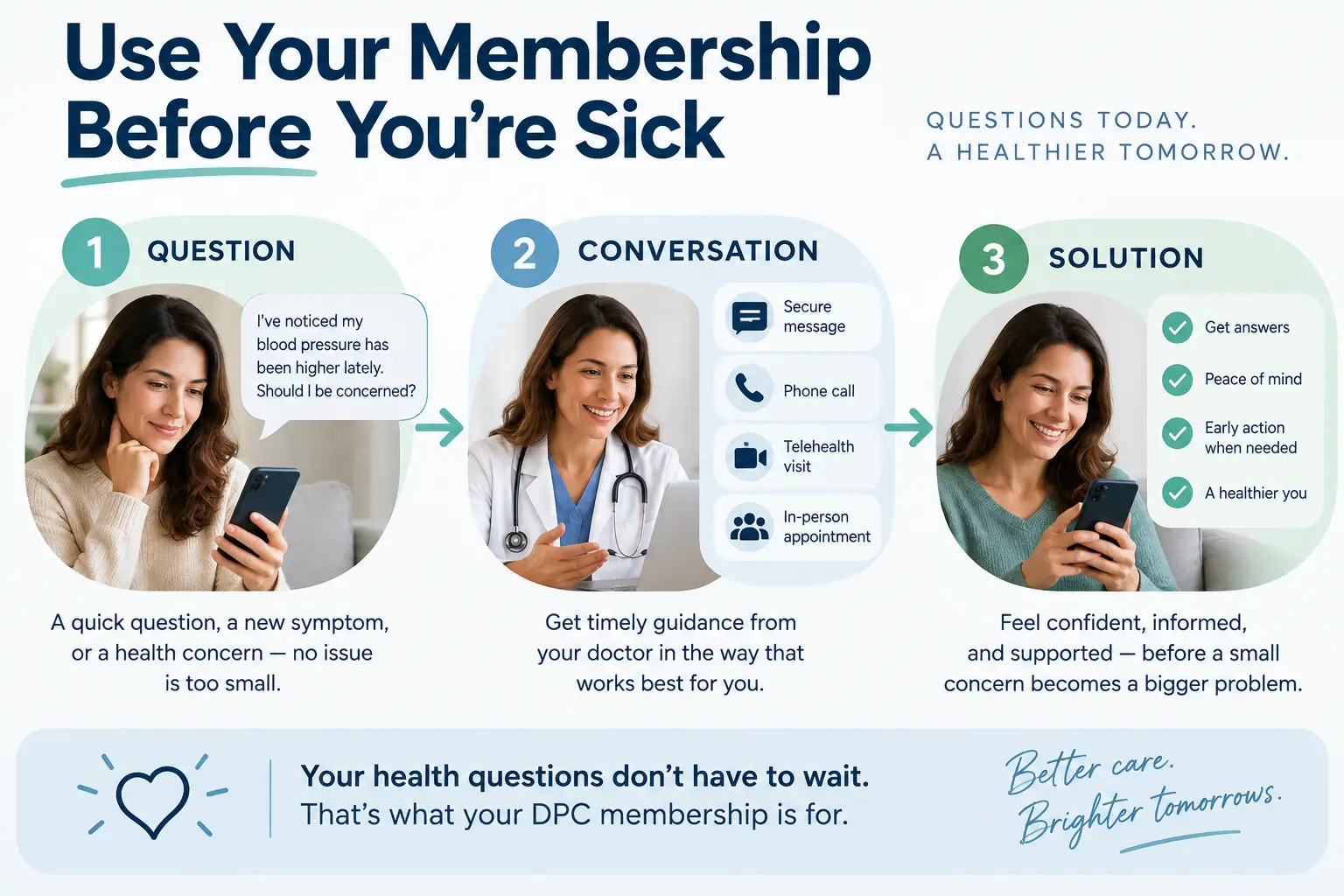
1. Don’t Save Your Membership Only for When You’re Sick
Many people are accustomed to avoiding the doctor’s office unless they absolutely need to go. High deductibles, copays, long waits, and rushed appointments have trained patients to think twice before asking a medical question.
With Direct Primary Care, the relationship works differently.
If something is bothering you, changing, or simply doesn’t seem right, contact us. A relatively minor concern today can sometimes become a much larger issue if it is ignored for months.
That doesn’t mean every question requires an office visit. Depending on the situation, we may be able to help by phone, secure messaging, telehealth, or an in-person appointment.
The goal is simple: use your doctor earlier, not just after a problem becomes difficult to manage.
2. Take Advantage of Your Annual Physical
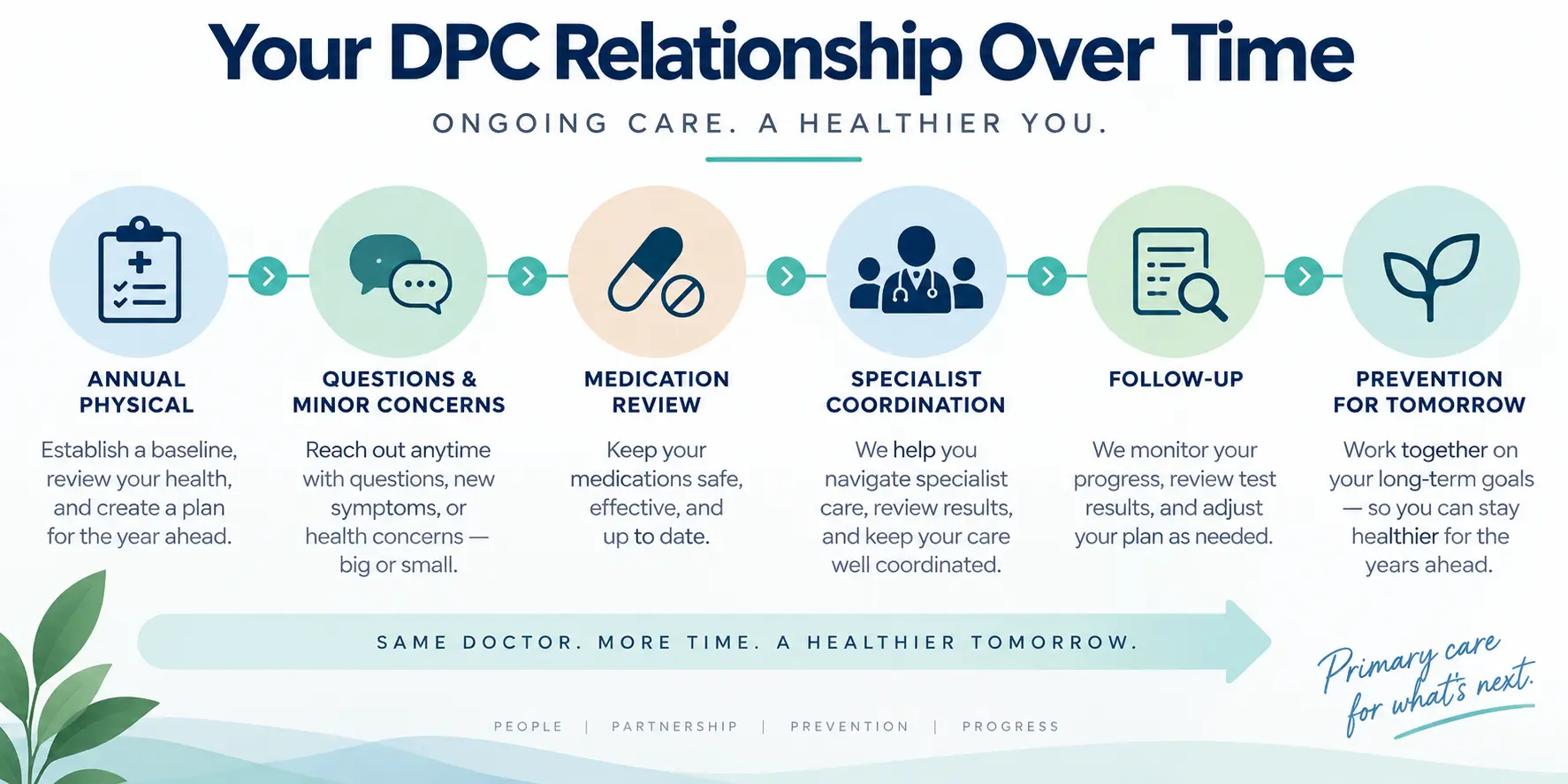
Even if you feel perfectly healthy, your annual physical is an important opportunity to look at the bigger picture.
We can review:
- Blood pressure and cardiovascular risk
- Weight and metabolic health
- Cholesterol and blood sugar
- Recommended cancer screenings
- Vaccination history
- Medications and supplements
- Sleep, exercise, and nutrition
- Family history and changing risk factors
- Age-appropriate preventive care
For our members, the annual physical also provides an opportunity to establish a baseline and follow trends over time.
A single laboratory result can be useful. Seeing how your blood pressure, cholesterol, kidney function, blood sugar, weight, or other health markers change over several years can be even more valuable.
3. Ask Questions Before Starting—or Stopping—Medications
Medication management is one of the areas where having an accessible primary-care physician can be especially helpful.
If another doctor prescribes something new, let us know. If you are considering an over-the-counter medication or supplement, you can ask us about it. And if you think a medication is causing a side effect, contact us before simply stopping it whenever possible.
We can help review:
- Potential medication interactions
- Side effects
- Duplicated medications
- Appropriate dosing
- Whether a medication is still necessary
- Possible alternatives
- Monitoring that may be needed
This becomes particularly important as the medication list grows.
4. Keep Us Updated About Specialists, Emergency Visits, and New Diagnoses
Primary care works best when we have the complete picture.
If you visit an emergency room, urgent care center, specialist, hospital, or other healthcare provider, please let us know—especially if there was a new diagnosis, medication change, procedure, or important test result.
You can also send us copies of specialist notes, imaging reports, laboratory results, and discharge documents.
We can help you understand how the different pieces fit together and what, if anything, needs to happen next.
5. Use Us to Help Coordinate Your Care
Healthcare can become complicated surprisingly quickly.
You may have one doctor managing your heart, another following your kidneys, another ordering imaging, and a different facility performing laboratory testing. Patients are often left to connect all of those pieces themselves.
Your primary-care physician can help serve as the central point in that process.
We can help determine when specialist care may be appropriate, review recommendations you receive, discuss results, and help you understand the next steps.
Sometimes the most valuable part of primary care isn’t ordering another test. It’s helping you decide which test, specialist, or treatment actually makes sense.
6. Bring Us Your Health Goals, Not Just Your Medical Problems
You don’t need a diagnosis to have a conversation with your doctor.
Maybe you want to:
- Lose weight
- Improve your blood pressure
- Reduce your cholesterol
- Sleep better
- Start exercising safely
- Improve your diet
- Stop smoking
- Review hormone-related symptoms
- Understand your cardiovascular risk
- Prevent diabetes
- Discuss healthy aging
These are exactly the kinds of conversations that benefit from an ongoing primary-care relationship.
Instead of waiting for something to become a disease, we can work on reducing risk before it gets there.
7. Use Your Access When Something Changes
You know your body better than anyone else.
A new symptom, a change in how you feel, an unusual home blood-pressure reading, unexpected weight change, persistent fatigue, new pain, or a medication side effect may or may not be important—but you don’t necessarily have to figure that out by yourself.
One of the benefits of DPC is being able to ask.
Sometimes the answer will simply be reassurance and observation. Other times we may recommend an examination, testing, or additional evaluation.
Either way, earlier communication gives us more options.
8. Take Advantage of Lower-Cost Healthcare Options
One goal of Direct Primary Care is to make routine healthcare more transparent and affordable.
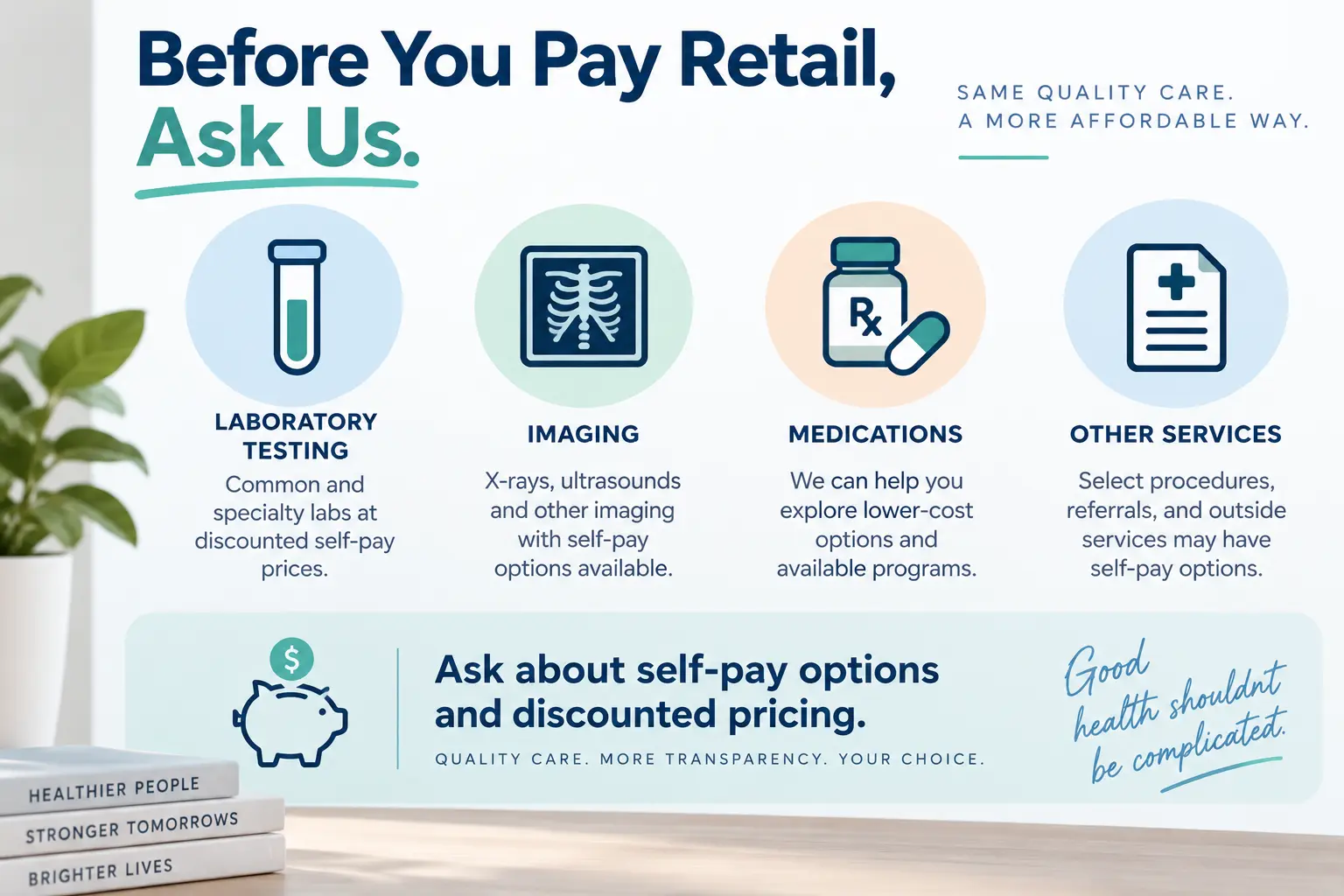
When outside testing is needed, ask us about self-pay options before automatically using insurance.
Depending on the service, discounted cash pricing may be available for laboratory testing, imaging, medications, or other services. In some cases, particularly for patients with high deductibles, the cash price can be worth comparing with the insurance-negotiated price.
At Clear Access MD, we pass along discounted laboratory pricing available through our practice rather than marking those services up simply because they are being ordered through a doctor’s office.
9. Keep Your Health Information Current
Let us know when something important changes.
That includes:
- New medications
- Medication allergies
- New diagnoses
- Hospitalizations
- Surgeries
- Changes in family medical history
- New specialists
- Major changes in weight or lifestyle
- Changes in insurance, pharmacy, or contact information
Keeping your medical record current helps us give you better advice when you need us.
10. Build a Relationship With Your Doctor Before You Really Need One
Perhaps the greatest value of Direct Primary Care is also the hardest to measure.
Over time, your physician gets to know what is normal for you.
We learn your medical history, your medications, your family history, your health goals, how you respond to treatments, and what matters to you when making healthcare decisions.
That context can make future medical decisions faster and more thoughtful.
Primary care works best when it isn’t a series of isolated appointments with someone meeting you for the first time.
It works best as an ongoing relationship.

Your Membership Is There to Be Used
You don’t need to calculate whether a question is “important enough” to justify a copay. And you don’t need to save every concern until your next annual physical.
If something comes up, reach out.
If you haven’t seen us in a while, schedule a visit.
If you have a health goal you’d like to work on, tell us.
And if everything is going well, that’s great too—we can work together to help keep it that way.
At Clear Access MD, our goal is not simply to treat illness. It is to make primary care easier to access, more personal, and more useful throughout the year.
Already a member? If there is something you’ve been meaning to ask us about, send us a message or schedule a visit.
Not yet a member? Learn more about how Direct Primary Care works or schedule a free introductory visit to see whether Clear Access MD is a good fit for you.