
What Should Be Included in an Annual Physical? A Guide to Your Yearly Checkup
On This Page
- An Annual Physical Should Be More Than “Everything Looks Fine”
- The Health Conversation: What Your Doctor Should Ask About
- Vital Signs and Basic Health Measurements
- The Physical Examination
- Complete Blood Count (CBC)
- Comprehensive Metabolic Panel (CMP)
- Cholesterol and the Lipid Panel
- Blood Sugar and Diabetes Screening
- Thyroid Testing
- Additional Blood Tests When Appropriate
- The Most Important Question: Will the Test Help Us Make a Better Decision?
- Preventive Screening: The Part of the Physical You Can’t See With a Stethoscope
- Preventive Screening Should Be Individualized
- Vaccinations and Preventive Care
- Reviewing the Results May Be Just as Important as Ordering the Tests
- The Goal Is to Decide What Happens Next
- The Bigger Idea: Know Your Baseline Before Something Goes Wrong
- Ready to Get a Clear Picture of Your Health?
An Annual Physical Should Be More Than “Everything Looks Fine”
For many people, an annual physical can feel surprisingly brief: a blood pressure check, a few questions, a quick listen to the heart and lungs, perhaps some bloodwork, and then a reassuring, “Everything looks good—see you next year.”
But a useful annual physical should do more than confirm that you feel well today.
The real purpose of a yearly checkup is to step back and look at your health as a whole. That means updating your medical history, reviewing existing conditions and medications, looking for risks that may not yet be causing symptoms, making sure important preventive screenings are up to date, and giving you time to discuss concerns that may not fit neatly into a problem-focused visit.
It is also an opportunity to establish a baseline. Blood pressure, weight, cholesterol, blood sugar, kidney function, and other health markers become much more meaningful when they can be compared over time. Small changes may reveal developing problems long before they become obvious.
A thoughtful annual physical should help answer questions such as:
- Has anything important changed since last year?
- Are there health risks we should address now?
- Are my medications still appropriate?
- Am I due for any screenings or preventive care?
- Is there anything in my bloodwork that deserves attention?
- What should I focus on over the next year?
The goal is not simply to find disease. It is to understand where your health stands today and develop a practical plan for protecting it in the years ahead.
Rather than treating one isolated symptom or condition, an annual physical is one of the few opportunities in healthcare to look at the whole picture.
The Health Conversation: What Your Doctor Should Ask About
Some of the most valuable parts of an annual physical happen before the physical examination even begins.
Your medical history, symptoms, medications, family history, and daily habits often provide important clues about your current health and your future risk of disease. A thoughtful conversation can reveal things that would never be discovered by simply listening to your heart and lungs.
Current Health and Symptoms
Your doctor should ask how you have been feeling and whether anything has changed since your last examination.
This may include questions about:
- New symptoms or concerns
- Changes in energy or fatigue
- Sleep quality
- Weight gain or weight loss
- Appetite
- Exercise tolerance
- Changes in bowel or urinary habits
- Pain, shortness of breath, dizziness, or other symptoms
Even symptoms that seem minor can sometimes be important when viewed together with your medical history, medications, and laboratory results.
Medical History
An annual physical is also a good time to make sure your medical history is accurate and up to date.
Your doctor should review:
- Current medical conditions
- Previous surgeries
- Hospitalizations
- Significant illnesses
- Important past test results
- Changes in your health since your last visit
This helps place new findings in context and can identify areas that deserve closer attention.
Medications and Supplements
Medication review is an important but sometimes overlooked part of preventive care.
This includes:
- Prescription medications
- Over-the-counter medications
- Vitamins
- Herbal products
- Nutritional supplements
Your doctor should consider whether each medication is still necessary, whether the dose remains appropriate, whether you are experiencing side effects, and whether any medications or supplements could interact with one another.
For people taking several medications, this review can be especially important.
Family History
Family history can significantly affect your risk for certain conditions.
Your doctor may ask about close relatives with conditions such as:
- Heart disease
- High blood pressure
- Diabetes
- Stroke
- Kidney disease
- Certain cancers
The age at which a family member developed a condition can also matter. For example, a strong family history of early heart disease or certain cancers may change when screening should begin or how closely a risk factor should be monitored.
Lifestyle and Daily Habits
Many of the factors that have the greatest effect on long-term health happen outside the doctor’s office.
A good annual physical should include an appropriate discussion of:
- Nutrition
- Physical activity
- Sleep
- Alcohol use
- Tobacco or nicotine use
- Stress
- Sexual health when relevant
The purpose is not to judge habits. It is to understand the factors that may be helping or harming your health and identify realistic opportunities for improvement.
A good physical is not simply an examination of your body. Your story matters. In many cases, the information gathered during this conversation provides some of the earliest clues about health risks that have not yet appeared on an examination or blood test.
Vital Signs and Basic Health Measurements

Some of the simplest measurements taken during an annual physical can provide important information about your overall health.
These commonly include:
- Blood pressure
- Heart rate
- Respiratory rate
- Temperature when appropriate
- Oxygen saturation
- Height
- Weight
- Body mass index (BMI)
Depending on the patient, your doctor may also consider measurements such as waist circumference or changes in weight over time.
Blood Pressure
Blood pressure is one of the most important routine measurements because high blood pressure often causes no symptoms.
A single elevated reading does not always mean that someone has hypertension. Stress, caffeine, pain, recent exercise, and even the experience of being in a medical office can temporarily raise blood pressure.
What matters is whether elevated readings are persistent and how they fit into the patient’s overall cardiovascular risk.
Heart Rate, Breathing, and Oxygen Level
Your resting heart rate and respiratory rate can provide clues about cardiovascular fitness, medication effects, illness, dehydration, anemia, thyroid problems, and other conditions.
Oxygen saturation measures how effectively oxygen is being carried in the blood. In a healthy person it is usually reassuringly normal, but an unexpected low reading may warrant further evaluation.
Height, Weight, and BMI
Weight is another useful health marker, especially when viewed over time.
BMI, which compares weight with height, can be helpful as a general screening tool, but it has limitations. It does not directly measure body fat or distinguish between muscle and fat, so it should not be interpreted in isolation.
For some patients, waist circumference, body composition, physical activity, blood pressure, blood sugar, and cholesterol provide additional context.
Trends Matter
One of the biggest benefits of regular primary care is the ability to compare measurements from one visit to the next.
A blood pressure of 132/82, for example, may not seem particularly concerning by itself. But if previous readings were consistently around 110/70 and have been gradually increasing, that trend deserves attention.
The same is true for weight, resting heart rate, and other measurements.
A gradual change can sometimes provide an early warning of a developing health issue before symptoms appear.
This is why an annual physical should not simply record today’s numbers. Those measurements are most useful when they become part of a longer-term picture of your health.
The Physical Examination
The physical examination is an important part of an annual checkup, but it should not be identical for every patient.
A good examination is guided by your age, medical history, symptoms, medications, risk factors, and any concerns identified during the conversation with your doctor.
A comprehensive adult physical commonly includes evaluation of areas such as:
- General appearance and overall health
- Heart and circulation
- Lungs
- Abdomen
- Head and neck
- Thyroid
- Skin
- Extremities
- Neurologic function when appropriate
- Musculoskeletal concerns when relevant
Heart and Circulation
Your doctor may listen to your heart for abnormalities in rate, rhythm, or heart sounds and assess circulation when appropriate.
Depending on your history and symptoms, the examination may also include checking for swelling in the legs, evaluating pulses, or looking for other signs of cardiovascular disease.
Lungs
Listening to the lungs can help identify abnormal breath sounds and may provide clues to conditions affecting breathing, even when symptoms are mild.
Abdomen
The abdominal examination may include checking for tenderness, enlargement of organs, masses, or other abnormalities.
The extent of the examination depends on the patient’s history and symptoms.
Head, Neck, and Thyroid
Your doctor may examine the eyes, ears, mouth, throat, lymph nodes, and neck as appropriate.
The thyroid may also be examined for enlargement or nodules, particularly when symptoms, history, or previous test results suggest that closer attention is warranted.
Skin and Extremities
The skin can sometimes provide clues about overall health. Your doctor may notice unusual lesions, rashes, bruising, swelling, changes in circulation, or other findings that deserve attention.
The arms and legs may also be examined for swelling, joint problems, circulation, strength, or mobility concerns.
Neurologic and Musculoskeletal Examination
A detailed neurologic or musculoskeletal examination is not necessary for every healthy adult at every annual visit.
However, if you report symptoms such as weakness, numbness, dizziness, balance problems, joint pain, back pain, or changes in mobility, your doctor may perform a more focused evaluation.
Not Every Patient Needs Every Examination
It can be tempting to think that a “more comprehensive” physical means performing every possible examination on every person.
That is not necessarily better care.
For example, certain examinations may only be appropriate for particular ages, symptoms, medical histories, or risk factors. Other evaluations may be more useful when performed at specific intervals rather than every year.
The goal is not to complete the longest checklist possible.
The goal is to perform a thoughtful examination that is relevant to you and to use the findings together with your history, vital signs, laboratory results, and preventive screening needs to build a complete picture of your health.
Blood Tests: What Should Be Checked During an Annual Physical?
Bloodwork is often one of the most anticipated parts of an annual physical. Patients understandably want to know whether their cholesterol is high, their blood sugar is normal, their kidneys and liver are functioning properly, or whether there are early signs of a problem they cannot yet feel.
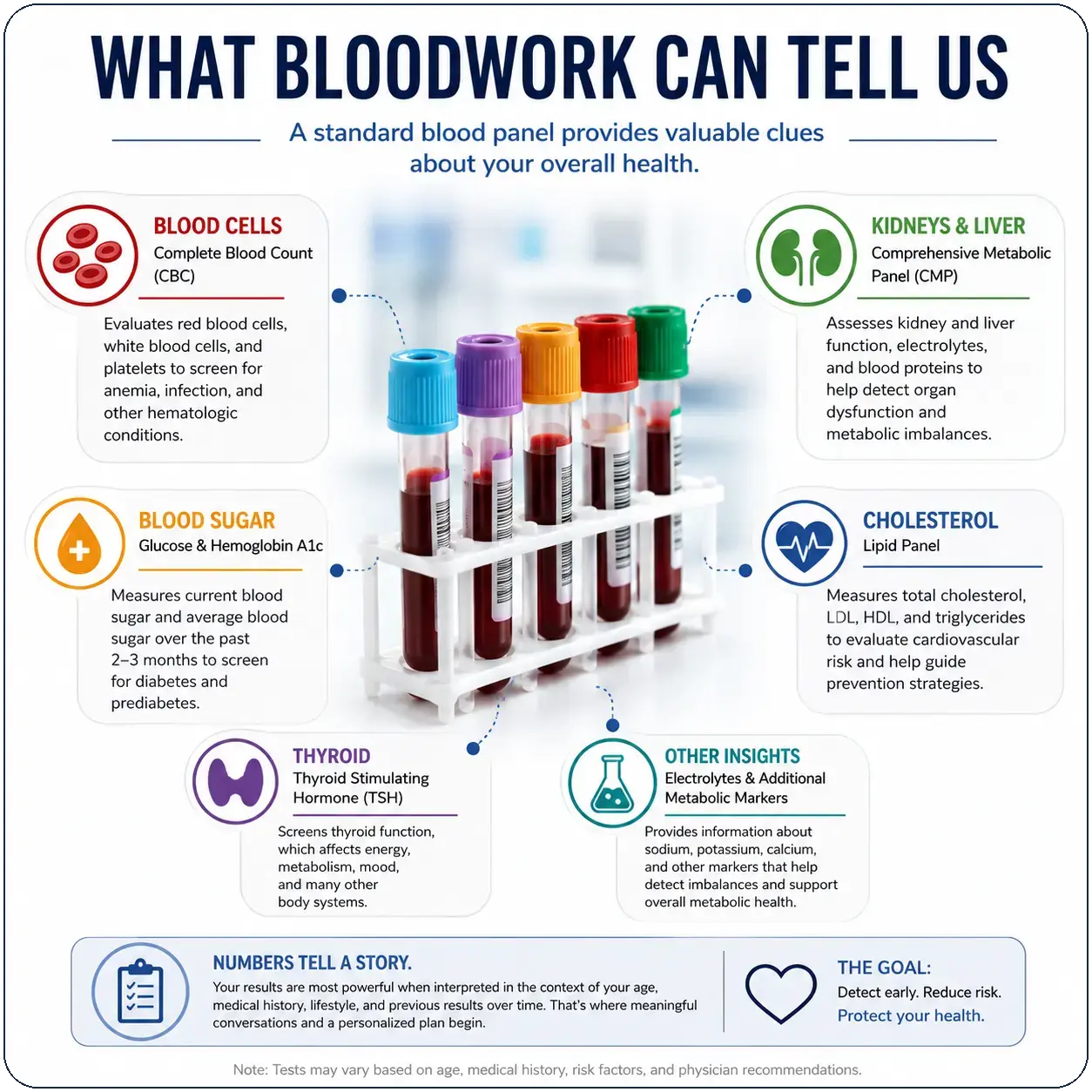
But there is an important point to understand:
There is no single blood panel that every healthy adult must receive every year.
The right laboratory testing depends on factors such as your age, medical history, medications, family history, previous results, symptoms, and individual risk factors.
That said, bloodwork can be extremely useful. Many common conditions—including high cholesterol, prediabetes, anemia, kidney disease, and certain liver or thyroid problems—may cause few or no symptoms in their early stages.
When interpreted in the context of the rest of your health, laboratory testing can help establish a baseline, identify developing problems, and track changes over time.
Complete Blood Count (CBC)
A complete blood count, commonly called a CBC, measures several types of cells circulating in your blood.
It typically includes:
- Red blood cell count
- Hemoglobin
- Hematocrit
- White blood cell count
- Platelet count
- Additional measurements describing the size and characteristics of blood cells
What can a CBC tell us?
Red blood cells carry oxygen throughout the body. Low hemoglobin or hematocrit may suggest anemia, which can have many possible causes, including iron deficiency, vitamin deficiencies, blood loss, chronic illness, or other medical conditions.
White blood cells are an important part of the immune system. Abnormal levels may sometimes be associated with infection, inflammation, medication effects, or certain blood disorders.
Platelets help with blood clotting. A platelet count that is unusually high or low can occasionally provide an important clue that further evaluation is needed.
A CBC does not diagnose most conditions by itself, but it can reveal abnormalities that otherwise might go unnoticed.
Comprehensive Metabolic Panel (CMP)
A comprehensive metabolic panel, or CMP, provides information about several major body systems using a single blood sample.
It commonly includes measurements related to kidney function, liver function, electrolytes, blood glucose, calcium, and blood proteins.
Kidney Function
Two commonly reviewed measurements are:
- Creatinine
- Estimated glomerular filtration rate, or eGFR
Creatinine is a waste product that is filtered from the blood by the kidneys. The eGFR uses creatinine along with other patient information to estimate how effectively the kidneys are filtering blood.
Kidney disease can be silent, particularly in its earlier stages. This is especially important for people with conditions such as diabetes, high blood pressure, or a history of kidney problems.
Just as importantly, kidney results are often best understood as a trend. A gradual change from a patient’s previous baseline may deserve attention even when the current number does not appear dramatically abnormal.
Liver-Related Tests
A CMP commonly includes markers such as:
- AST
- ALT
- Alkaline phosphatase
- Bilirubin
These results can provide clues about the liver and biliary system.
Abnormal liver tests can occur for many different reasons, including fatty liver disease, medications, alcohol use, infections, or other medical conditions. An abnormal result does not automatically mean serious liver disease, but it may indicate that additional evaluation is appropriate.
Electrolytes
Important electrolytes commonly measured include:
- Sodium
- Potassium
- Chloride
- Carbon dioxide/bicarbonate
These substances help regulate fluid balance, nerve and muscle function, and the body’s acid-base balance.
Electrolyte abnormalities can occur because of dehydration, medications, kidney problems, hormonal conditions, and many other causes.
Other CMP Measurements
A comprehensive metabolic panel generally also provides information about:
- Blood glucose
- Calcium
- Albumin
- Total protein
Together, these measurements help provide a broader picture of metabolic and organ function.
Cholesterol and the Lipid Panel
A lipid panel evaluates fats circulating in the bloodstream and usually includes:
- Total cholesterol
- LDL cholesterol
- HDL cholesterol
- Triglycerides
These numbers are important because cholesterol levels contribute to long-term cardiovascular risk.
LDL Cholesterol
LDL is often referred to as “bad cholesterol” because higher levels can contribute to plaque formation in the arteries.
But an LDL result should not be interpreted in isolation.
A particular LDL level may carry different significance for two different people depending on factors such as:
- Age
- Blood pressure
- Diabetes
- Smoking history
- Family history
- Previous heart disease or stroke
- Other cardiovascular risk factors
This is why simply seeing that a cholesterol value falls inside or outside a laboratory’s reference range does not tell the whole story.
HDL and Triglycerides
HDL is commonly called “good cholesterol,” although cardiovascular risk is more complex than any single number.
Triglycerides are another type of fat in the blood. Elevated triglycerides can be associated with metabolic health, diet, alcohol use, diabetes, certain medications, and other conditions.
The most useful approach is to interpret the entire lipid profile in the context of the patient’s overall cardiovascular risk.
Blood Sugar and Diabetes Screening
Diabetes and prediabetes frequently develop gradually, sometimes for years before noticeable symptoms occur.
Two commonly used blood tests are:
- Fasting glucose
- Hemoglobin A1c
Fasting Glucose
Fasting glucose measures the amount of glucose in the blood at that particular point in time, usually after the patient has not eaten for several hours.
An elevated result may indicate impaired glucose regulation and may require repeat testing or additional evaluation.
Hemoglobin A1c
Hemoglobin A1c provides an estimate of average blood sugar over roughly the previous two to three months.
It can help identify:
- Prediabetes
- Diabetes
- Changes in glucose control over time
An A1c can also be useful for following trends.
For example, a patient may remain below the diagnostic threshold for diabetes while their A1c gradually rises over several years. That trend can provide an opportunity to address nutrition, physical activity, weight, medications, and other risk factors before the problem progresses.
Thyroid Testing
The thyroid gland plays an important role in metabolism, heart rate, temperature regulation, and many other body functions.
A commonly used screening test is:
- TSH — thyroid-stimulating hormone
Abnormal thyroid function can sometimes contribute to symptoms such as:
- Fatigue
- Unexplained weight gain or weight loss
- Feeling unusually cold or hot
- Changes in heart rate
- Constipation or more frequent bowel movements
- Changes in mood or concentration
- Menstrual changes
TSH testing is not automatically necessary for every person at every physical, but it may be appropriate depending on age, symptoms, medical history, medications, previous results, and other risk factors.
If the TSH is abnormal—or if the clinical situation calls for further evaluation—additional thyroid tests such as free T4 may be ordered.
Additional Blood Tests When Appropriate
One of the biggest misconceptions about preventive testing is that a larger laboratory panel is always better.
It isn’t.
Every additional test creates the possibility of finding a mildly abnormal result that may not represent disease. This can sometimes lead to repeat bloodwork, additional testing, expense, or unnecessary worry.
The goal should therefore be appropriate testing, not simply the maximum number of tests possible.
Depending on the individual patient, additional laboratory testing may include:
PSA
A prostate-specific antigen, or PSA, blood test may be considered as part of prostate cancer screening.
Whether PSA screening makes sense depends on factors such as age, family history, individual risk, previous PSA results, and the patient’s preferences after discussing potential benefits and limitations with a physician.
Iron and Ferritin
Iron studies or ferritin may be appropriate when there is concern about:
- Anemia
- Iron deficiency
- Fatigue
- Blood loss
- Abnormal CBC results
Vitamin B12
Vitamin B12 testing may be useful in selected patients, particularly when there are symptoms or risk factors such as anemia, numbness or tingling, certain dietary patterns, gastrointestinal conditions, or medications that can affect B12 absorption.
Vitamin D
Vitamin D testing is commonly requested, but routine testing is not necessary for every healthy adult.
It may be more appropriate for people with particular medical conditions, risk factors, symptoms, or a previous deficiency.
Additional Thyroid Testing
Tests such as free T4 or thyroid antibodies may sometimes be appropriate when TSH is abnormal or when there is a specific concern about thyroid disease.
Hormonal Testing
Hormonal tests should generally be ordered to answer a specific clinical question rather than as a routine annual panel.
Depending on the situation, testing could include hormones related to:
- Menopause or menstrual abnormalities
- Testosterone deficiency
- Fertility
- Pituitary or adrenal conditions
The appropriate tests depend heavily on the patient’s symptoms and circumstances.
Hepatitis and HIV Screening
Screening for infections such as hepatitis B, hepatitis C, or HIV may be recommended based on age, prior testing, pregnancy status, medical history, or individual risk factors.
These screenings are an important part of preventive healthcare even though they are not necessarily performed every year.
The Most Important Question: Will the Test Help Us Make a Better Decision?
It can be tempting to believe that more bloodwork automatically produces a more comprehensive physical.
But the value of laboratory testing does not come from the number of tests ordered.
It comes from asking the right questions.
A useful test should help your doctor:
- Detect a health problem
- Better understand a symptom
- Assess your risk
- Monitor an existing condition
- Determine whether a medication is safe or effective
- Decide whether additional evaluation is necessary
The best blood panel is therefore not necessarily the biggest one.
It is the one that provides useful information for you.
And just as importantly, bloodwork should not end when the laboratory posts the results. The numbers need to be interpreted alongside your history, examination, medications, risk factors, and previous results.
That is what turns a laboratory report into meaningful preventive care.
Preventive Screening: The Part of the Physical You Can’t See With a Stethoscope
One of the most important purposes of an annual physical is to make sure you are up to date on the preventive screenings that are appropriate for you.
Many serious conditions develop quietly. By the time symptoms appear, a disease may already be more advanced. Preventive screening is designed to identify certain problems earlier, when treatment may be simpler or more effective.
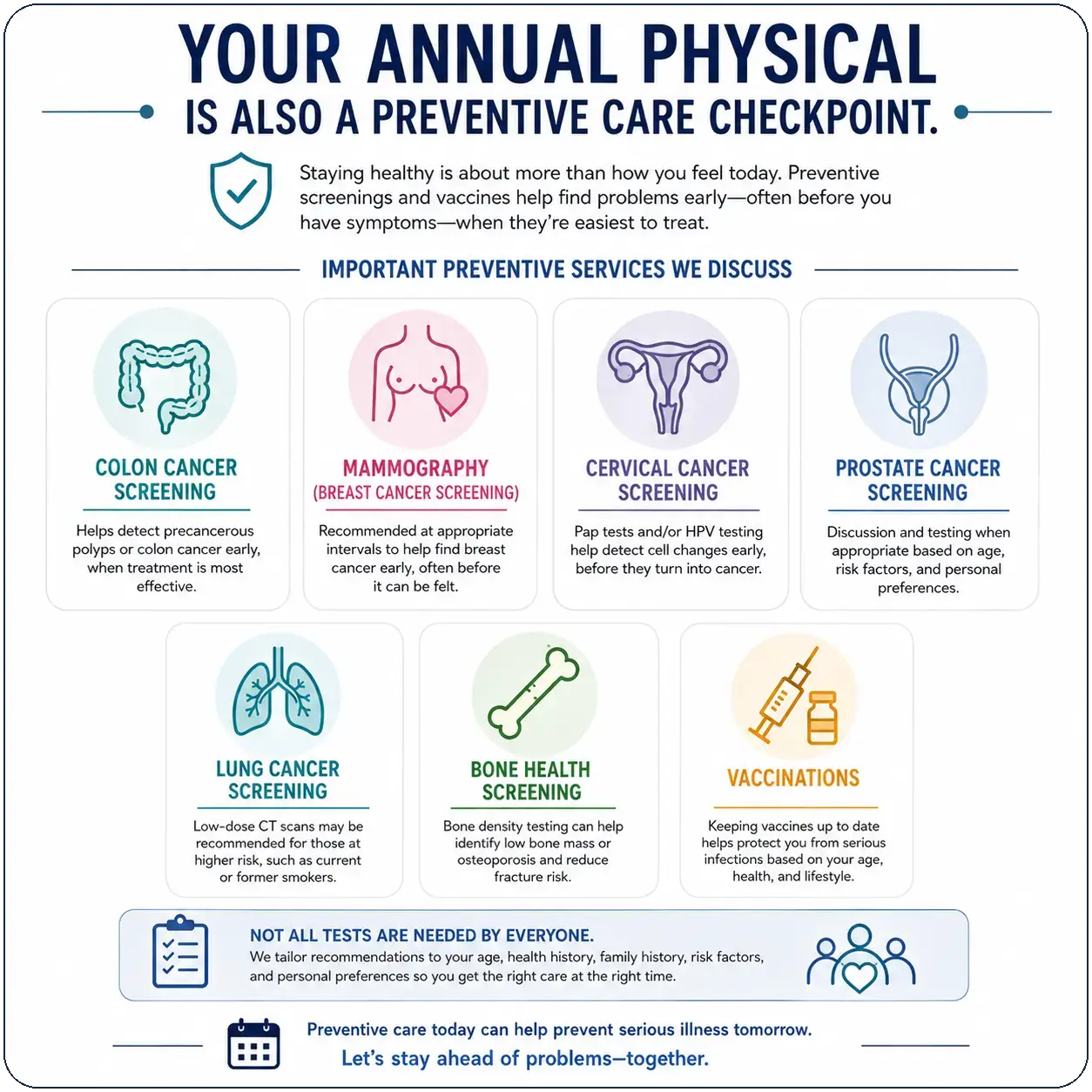
The right screening plan depends on factors such as:
- Age
- Sex
- Family history
- Smoking history
- Medical conditions
- Previous screening results
- Medications
- Individual risk factors
This is why preventive care should be reviewed as part of the annual visit rather than treated as a one-size-fits-all checklist.
Colorectal Cancer Screening
Colorectal cancer screening is recommended for many adults beginning in midlife, although the exact timing and method depend on individual risk.
Options may include:
- Colonoscopy
- Stool-based tests
- Other approved screening methods
People with a family history of colorectal cancer, certain gastrointestinal conditions, or previous abnormal findings may need to begin screening earlier or undergo testing more frequently.
Breast Cancer Screening
For women, breast cancer screening commonly includes mammography.
The appropriate starting age and frequency depend on current recommendations, personal risk, family history, previous imaging, and patient preferences.
Women with a strong family history or other high-risk features may need additional evaluation or a different screening strategy.
Cervical Cancer Screening
Cervical cancer screening may involve:
- Pap testing
- HPV testing
- A combination of both
The recommended approach depends on age, previous results, and medical history.
Patients who have had certain gynecologic procedures or previous abnormal results may require a different screening schedule.
Prostate Cancer Screening
For men, prostate cancer screening often involves a discussion about the PSA blood test.
PSA screening is not necessarily appropriate for every man at the same age or frequency.
The decision should consider:
- Age
- Family history
- Previous PSA levels
- Individual risk factors
- Potential benefits and limitations of screening
For some men, particularly those with a strong family history or higher risk, the discussion may begin earlier.
Lung Cancer Screening
Certain people with a significant smoking history may qualify for low-dose CT screening for lung cancer.
This is different from a routine chest X-ray and is recommended only for people who meet specific age and smoking-history criteria.
An annual physical is a good opportunity to determine whether someone qualifies.
Osteoporosis Screening
Bone density testing can help identify osteoporosis before a fracture occurs.
Screening is especially important in older adults and in people with risk factors such as:
- Previous fractures
- Long-term steroid use
- Low body weight
- Certain hormonal conditions
- Family history of osteoporosis
- Other medical conditions affecting bone health
Diabetes Screening
Diabetes and prediabetes can develop without obvious symptoms.
Screening may include:
- Fasting glucose
- Hemoglobin A1c
The appropriate frequency depends on age, weight, family history, blood pressure, previous results, and other metabolic risk factors.
Cardiovascular Risk Assessment
Preventing heart attack and stroke involves more than checking cholesterol.
Your doctor should consider the larger picture, including:
- Blood pressure
- Cholesterol
- Diabetes
- Smoking
- Age
- Family history
- Physical activity
- Weight and metabolic health
In some patients, additional testing or more aggressive risk reduction may be appropriate.
Hepatitis Screening
Screening for hepatitis B or hepatitis C may be recommended depending on age, prior testing, medical history, pregnancy status, exposures, or other risk factors.
Because chronic hepatitis can remain silent for years, screening can identify infection before significant liver damage develops.
HIV Screening
HIV screening is also an important part of preventive care.
Many adults should be tested at least once, with repeat testing based on individual risk factors.
As with other preventive screenings, this should be handled routinely and without stigma.
Preventive Screening Should Be Individualized
A 28-year-old and a 68-year-old should not receive identical annual physicals.
The younger patient may need relatively few cancer screenings but may benefit from attention to blood pressure, metabolic health, sexual health, vaccinations, and lifestyle risk factors.
The older patient may need a more extensive review of cancer screening, cardiovascular risk, bone health, medications, and chronic disease.
Even two people of the same age may need very different screening plans because of family history, previous test results, or medical conditions.
The goal is not to order every screening test available.
The goal is to make sure the right screenings are being done for the right person at the right time.
That is one of the most valuable things an annual physical can accomplish.
Vaccinations and Preventive Care
An annual physical is also a good time to review whether your vaccinations are up to date.
Vaccines are not just for children. Adult immunization needs change over time based on age, medical conditions, occupation, travel, previous vaccinations, and individual risk factors.
Depending on the patient, recommended vaccines may include:
- Influenza vaccine
- COVID-19 vaccine
- Tetanus, diphtheria, and pertussis vaccination (Tdap or Td)
- Shingles vaccine
- Pneumococcal vaccines
- Hepatitis A or hepatitis B vaccines when indicated
Your doctor should review what you have already received and determine whether any vaccines are due or should be considered.
For example, some vaccines are recommended routinely at certain ages, while others become especially important for people with chronic lung disease, heart disease, diabetes, kidney disease, weakened immune systems, or other medical conditions.
Vaccination recommendations can also change over time, which is another reason it is helpful to review them periodically rather than assume that everything is current.
The goal is not to give every vaccine to every patient. It is to make sure your preventive care matches your age, health history, and risk profile.
A thoughtful annual physical should help answer a simple but important question:
Am I protected against the illnesses I can reasonably prevent?
Reviewing the Results May Be Just as Important as Ordering the Tests
Ordering bloodwork is only the first step.
A laboratory report can contain dozens of numbers, but those numbers do not become useful simply because they appear in a patient portal. A message that says “Your results are normal” may be reassuring, but it can also miss an important opportunity to understand what the results actually mean.
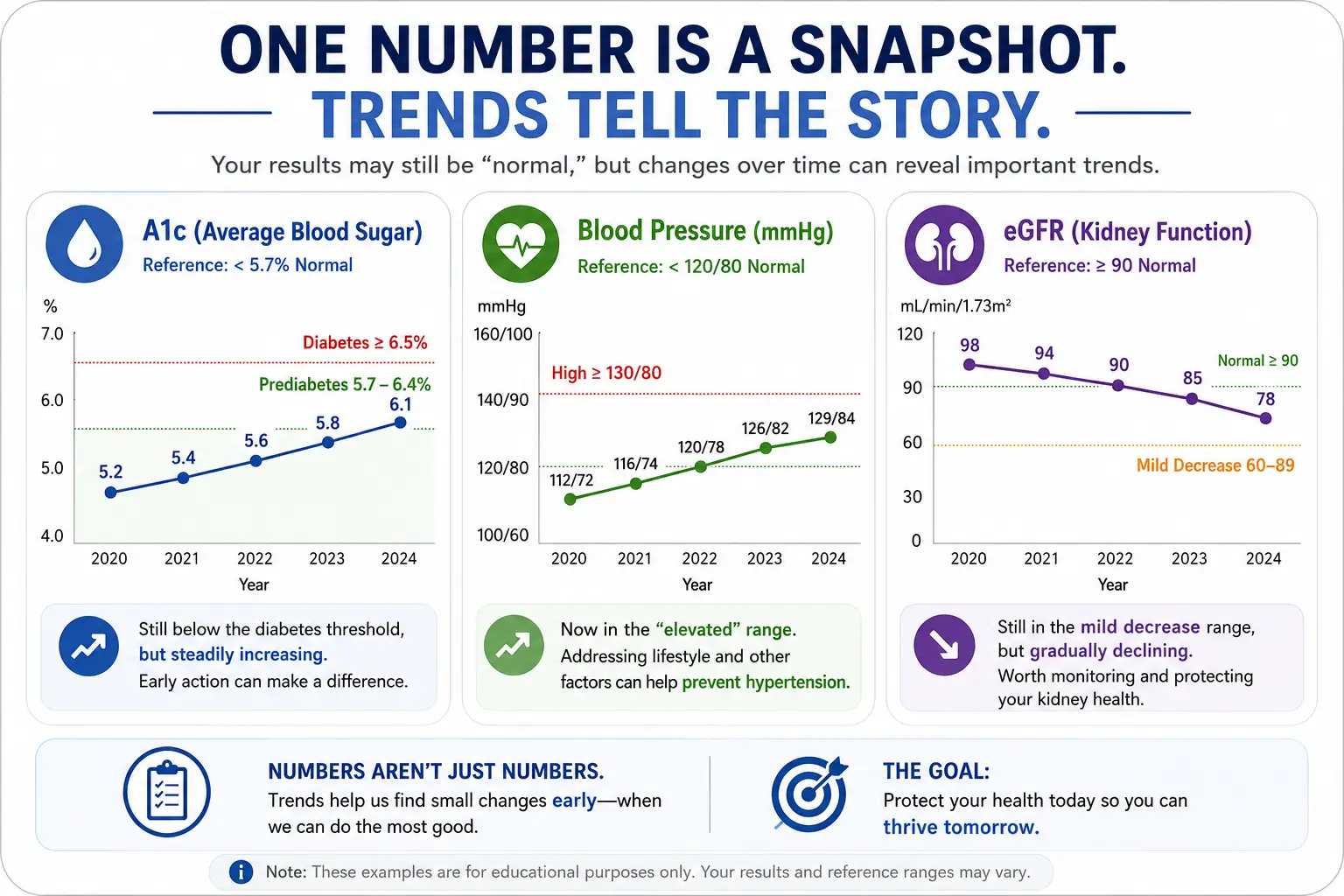
A good follow-up should help answer questions such as:
- What are the most important results?
- Has anything changed since previous testing?
- Are there early warning signs that deserve attention?
- Do any findings need to be repeated or investigated further?
- Should a medication be started, stopped, or adjusted?
- Are there realistic lifestyle changes that could improve the numbers?
The real value comes from putting the laboratory results into context.
A “Normal” Result Can Still Be Worth Discussing
Laboratory reference ranges are helpful, but they do not tell the whole story.
For example, a hemoglobin A1c may still be below the threshold for diabetes, but if it has steadily increased over several years, that trend may indicate worsening metabolic health.
That does not necessarily mean medication is needed. It may mean this is the right time to discuss nutrition, physical activity, weight, sleep, and other factors before the problem progresses.
Trends in Kidney Function Matter
Kidney function is another good example.
A creatinine or eGFR result may still fall within an acceptable range, but a meaningful change from a patient’s previous baseline can be important.
That is especially true for someone with high blood pressure, diabetes, kidney disease, or medications that can affect kidney function.
The question is not simply:
“Is this number normal?”
It is also:
“Is this number changing, and does that change matter?”
Cholesterol Needs Context
Cholesterol results also require interpretation beyond the laboratory’s reference range.
An LDL level that may be reasonable for one person could be more concerning in someone with:
- Diabetes
- High blood pressure
- Smoking history
- Strong family history of heart disease
- Previous heart attack or stroke
- Multiple cardiovascular risk factors
The decision about whether lifestyle changes are enough—or whether medication should be considered—depends on the patient’s overall cardiovascular risk, not just one cholesterol number.
Abnormal Results Do Not Always Mean Disease
The opposite is also true.
A mildly abnormal result does not automatically mean that something is seriously wrong.
Laboratory values can be affected by:
- Hydration
- Recent exercise
- Illness
- Medications
- Supplements
- Fasting status
- Normal biological variation
Sometimes the appropriate next step is simply to repeat a test or compare it with previous results rather than immediately begin an extensive evaluation.
This is another reason physician interpretation matters.
The Goal Is to Decide What Happens Next
The purpose of testing is not simply to generate more data.
It is to help make better decisions.
After reviewing the results, a patient should ideally understand:
- What looks reassuring
- What deserves attention
- What has changed
- Whether anything requires additional testing
- Whether treatment should be considered
- What can be improved through lifestyle changes
- When the next follow-up should occur
A useful annual physical therefore should not end when the blood is drawn.
The real value comes from interpreting the results, putting them into the context of your overall health, and deciding whether they should change what you do next.
Your Physical Should End With a Plan
A good annual physical should leave you with more than a collection of test results.
By the end of the process, you should have a clear understanding of where your health stands today and what, if anything, should happen next.
That means knowing:
- What looks reassuring
- What deserves attention
- Which preventive screenings are due
- Whether any medications should be started, stopped, or adjusted
- Which lifestyle changes would likely provide the greatest benefit
- What should be monitored over time
- When follow-up should occur
For some patients, the plan may be simple: continue current habits, stay up to date on routine screening, and return for the next preventive visit.
For others, the physical may identify areas that deserve more attention, such as rising blood pressure, worsening cholesterol, increasing blood sugar, weight gain, medication side effects, or an overdue cancer screening.
The important part is turning those findings into practical next steps.
Focus on What Matters Most
It is easy for preventive care to become overwhelming.
A patient may leave with advice about diet, exercise, sleep, weight, cholesterol, blood pressure, vaccinations, and multiple screenings all at once.
A better approach is often to prioritize.
Which one or two changes would make the biggest difference?
Does a test need to be repeated in three months?
Should blood pressure be checked at home?
Is it time to schedule a colonoscopy or mammogram?
Should a medication be adjusted?
Specific recommendations are much more useful than simply being told to “eat better” or “exercise more.”
Your Health Roadmap for the Coming Year
Ideally, the annual physical becomes a simple health roadmap.
It should help answer:
Where am I now?
What should I be watching?
What should I work on?
What needs to happen next?
That is ultimately what makes the annual physical valuable.
The goal is not simply to complete a yearly appointment. It is to use that appointment to make thoughtful decisions about your health for the year ahead.
What Our Annual Physical Includes at Clear Access MD
One way to understand what a comprehensive physical looks like is to look at how we structure ours at Clear Access MD.
Our annual physical is available to both members and non-members. For non-members, the complete visit is $179, with no insurance required.
The goal is to make the process simple and comprehensive: spend time with your physician, complete the examination and bloodwork, and then review the results together once they are available.
An Unrushed Physician Appointment
The visit begins with time to talk.
We review areas such as:
- Your medical history
- Current symptoms or health concerns
- Prescription medications and supplements
- Family history
- Nutrition, exercise, sleep, and other lifestyle factors
- Preventive screening needs
- Your personal health goals
This conversation helps determine what deserves particular attention during the examination and whether any testing beyond the standard laboratory panel would be useful.
A Comprehensive Physical Examination
Your visit includes vital signs and a physician examination tailored to your age, medical history, symptoms, and individual risk factors.
Rather than performing the exact same checklist for every patient, the examination is focused on the areas that are most relevant to your health.
Comprehensive Bloodwork
Bloodwork is included as part of the $179 physical.
Our standard laboratory testing provides information about several important areas of health, including:
- Complete blood count
- Cholesterol and cardiovascular risk markers
- Blood glucose
- Hemoglobin A1c
- Kidney function
- Liver function
- Electrolytes and other metabolic markers
- Thyroid function, including TSH
The exact testing may be adjusted when appropriate based on your age, medical history, previous results, medications, or physician recommendations.
If additional testing outside the standard panel may be useful—for example, PSA, vitamin levels, iron studies, or hormone testing—we can discuss that with you in advance.
Blood Drawn During Your Visit
For convenience, the blood draw can be performed in our office during the same appointment.
That means there is no need to schedule a separate trip to a laboratory simply to have the standard bloodwork collected.
A Separate Results Review With Your Physician
We believe the laboratory results are most useful when someone actually takes the time to explain them.
Once your results are available, your follow-up appointment with the physician is included in the $179 price.
During that visit, we can review:
- What your results mean
- Any abnormal or noteworthy findings
- How your numbers compare with previous results when available
- Cardiovascular and metabolic risk
- Whether additional testing is appropriate
- Whether medications should be considered or adjusted
- Preventive screening recommendations
- Lifestyle changes that may provide the greatest benefit
- What should be monitored going forward
The goal is for you to leave with more than a laboratory report. You should understand what the results mean for your health and what, if anything, you should do next.
One Price, With No Insurance Required
For non-members, the complete annual physical is $179 and includes:
- Physician consultation
- Comprehensive physical examination
- Standard comprehensive blood panel
- In-office blood draw
- Separate physician follow-up to review the results
No insurance is required.
If you simply want a thorough annual health evaluation—or would like to experience our approach to primary care before considering membership—you are welcome to schedule the physical as a non-member.
Learn More About Our $179 Annual Physical
The Bigger Idea: Know Your Baseline Before Something Goes Wrong
Many important health problems do not announce themselves early.
High blood pressure may cause no symptoms.
Prediabetes can develop gradually without making you feel different.
Elevated cholesterol usually causes no symptoms at all.
Early kidney disease can be silent.
And some cancers can begin developing long before a person feels ill.
That is one of the reasons preventive care matters.
The goal is not to search for problems simply for the sake of finding them. It is to identify meaningful changes early—when there may still be time to reduce risk, change course, or investigate further before a condition becomes more serious.
Your Baseline Matters
A single blood pressure reading, cholesterol level, A1c, or kidney function result tells only part of the story.
Over time, those measurements create a baseline.
That baseline makes it easier to recognize when something begins to change.
A gradual rise in blood pressure may be easier to address before it becomes established hypertension.
An A1c that is slowly increasing may create an opportunity to improve metabolic health before diabetes develops.
A change in kidney function may deserve attention even before symptoms appear.
The same principle applies to weight, medications, screening history, family risk, and many other parts of your health.
Prevention Is About Acting Earlier
Preventive medicine is not a guarantee that disease can always be avoided.
It is about giving yourself the best opportunity to recognize risk early and make informed decisions.
Sometimes the result of an annual physical is simply reassurance that things look good.
Sometimes it identifies something that should be watched.
And sometimes it reveals a problem that deserves attention now.
All three outcomes have value.
A thoughtful annual physical should give you a clearer picture of where your health stands today, what your risks may be, and what you can do to protect your health going forward.
The bigger idea is simple:
It is better to understand your health before something goes wrong than to begin asking questions only after it does.
Ready to Get a Clear Picture of Your Health?
An annual physical is most useful when it gives you more than reassurance. It should help you understand where your health stands today, identify risks worth paying attention to, and give you a practical plan for what comes next.
At Clear Access MD, we offer a comprehensive annual physical for $179, available to non-members with no insurance required.
The visit includes:
- An unrushed appointment with your physician
- A comprehensive physical examination
- A standard comprehensive blood panel
- In-office blood collection
- A separate follow-up visit with your doctor to review the results
- A personalized discussion of any findings, risks, and recommended next steps
If you are due for a physical or simply want a better understanding of your current health, we would be happy to help.
Book Your Annual Physical - $179
Not ready to schedule yet? See What’s Included