Medical Weight Management: More Than Just Losing Weight
On This Page
- What Is Medical Weight Management?
- Where Do GLP-1 Medications Fit In?
- What Good Weight-Management Care Actually Looks Like
- GLP-1s Aren’t for Everyone — and More Isn’t Always Better
- What About Medicare? GLP-1 Coverage Is Changing
- Why Weight Management Fits Naturally Into Primary Care
- The Goal Is Better Health, Not Just a Smaller Number
Medical Weight Management: More Than Just Losing Weight
If you’ve ever struggled with your weight, you’ve probably heard the same advice over and over: eat less and exercise more. It sounds simple. And if it were really that simple, far fewer people would find themselves frustrated, stuck, or regaining weight they worked hard to lose.
The truth is that body weight is shaped by many factors working together, including:
- Appetite and fullness signals — how hungry you feel and how quickly you feel satisfied
- Genetics and metabolism
- Medications — some common prescriptions can contribute to weight gain
- Sleep and stress
- Hormonal changes, including those that come with age
- Activity level and muscle mass
- Eating patterns and environment — work schedules, family routines, and the food around you
Weight management isn’t simply a matter of willpower. Effective treatment means looking at the whole person, not just the number on the scale.
What Is Medical Weight Management?
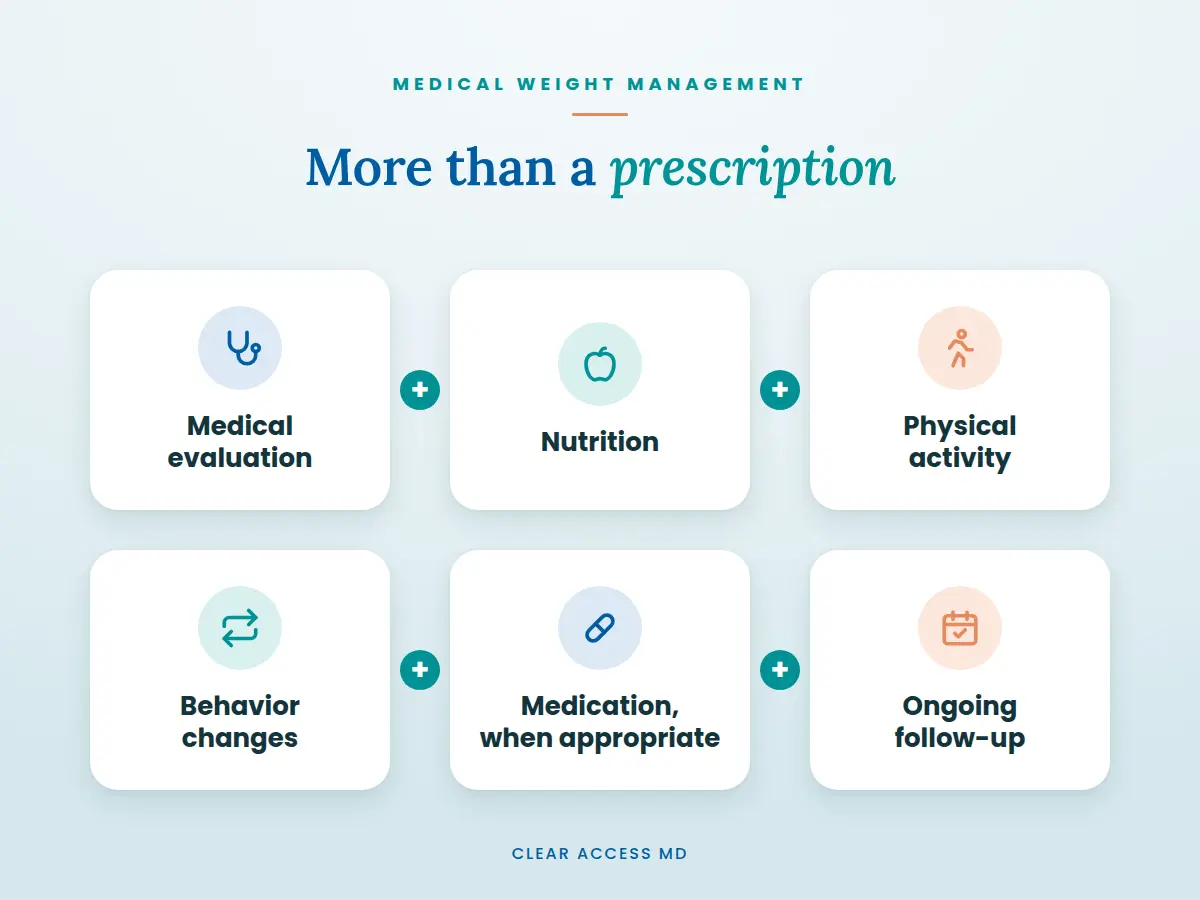
Medical weight management is a physician-guided approach to reaching and maintaining a healthier weight. Rather than relying on a single diet or product, it brings several pieces together:
Medical evaluation + nutrition + physical activity + behavior changes + medication when appropriate + ongoing follow-up
The goal isn’t necessarily to hit a particular number on the scale. For many patients, the most meaningful results show up elsewhere:
- Better blood pressure
- Better blood sugar control
- Improved cholesterol
- Easier movement and less joint strain
- Improved sleep
- More energy
- Lower long-term health risk
In other words, medical weight management is much more than writing a prescription for a weight-loss drug. It’s ongoing medical care focused on your overall health.
Where Do GLP-1 Medications Fit In?
You’ve almost certainly heard of GLP-1 medications by now. Here’s what they are and why they’ve gotten so much attention.
GLP-1 (glucagon-like peptide-1) is a hormone your body makes naturally. It plays a role in regulating appetite, signaling fullness, and managing blood sugar. GLP-1 medications mimic or enhance these effects.
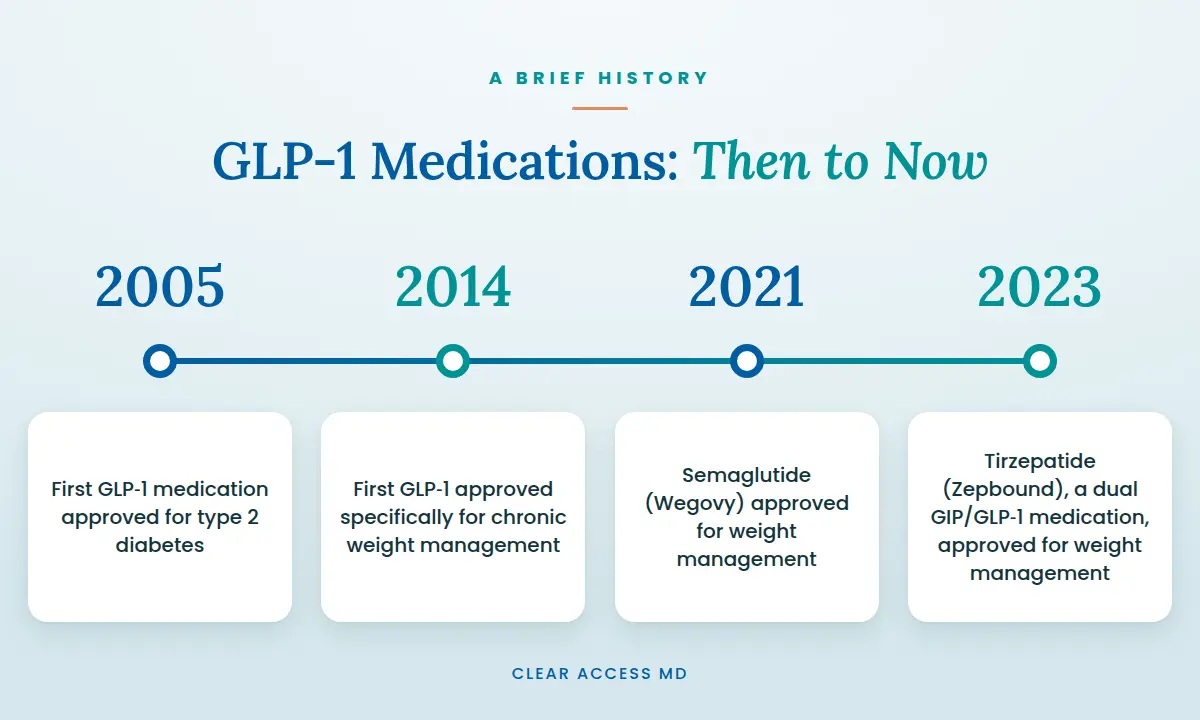
These medications weren’t originally developed for weight loss. They were first created to treat type 2 diabetes. Over time, researchers and physicians recognized that they also had significant effects on appetite and body weight, and that led to medications approved specifically for weight management.
A brief timeline:
Why all the excitement? For many patients, these medications help them feel full sooner and experience less hunger throughout the day. Eating less becomes less of a constant battle, which can make meaningful weight loss more achievable than it was with lifestyle changes alone.
But a GLP-1 medication is a tool. On its own, it is not a weight-management program.
What Good Weight-Management Care Actually Looks Like
Good medical weight management starts with understanding you. Before recommending a plan, a physician should look at:
- Your weight history and overall medical history
- Current medications
- Previous weight-loss attempts, and what did or didn’t work
- Eating patterns
- Physical activity
- Sleep
- Relevant lab results
- Your personal health goals
From there, treatment is individualized. For some people, focused changes to nutrition, activity, and daily habits may be enough. For others, medication, including a GLP-1, may be an appropriate part of the plan.
Ongoing care matters just as much as the starting plan. Over time, your physician may monitor:
- Weight progress
- Side effects
- Blood pressure
- Blood sugar and other labs when appropriate
- Nutrition, including adequate protein intake
- Preservation of muscle mass
- Medication dosing
- Plateaus and the transition to maintenance
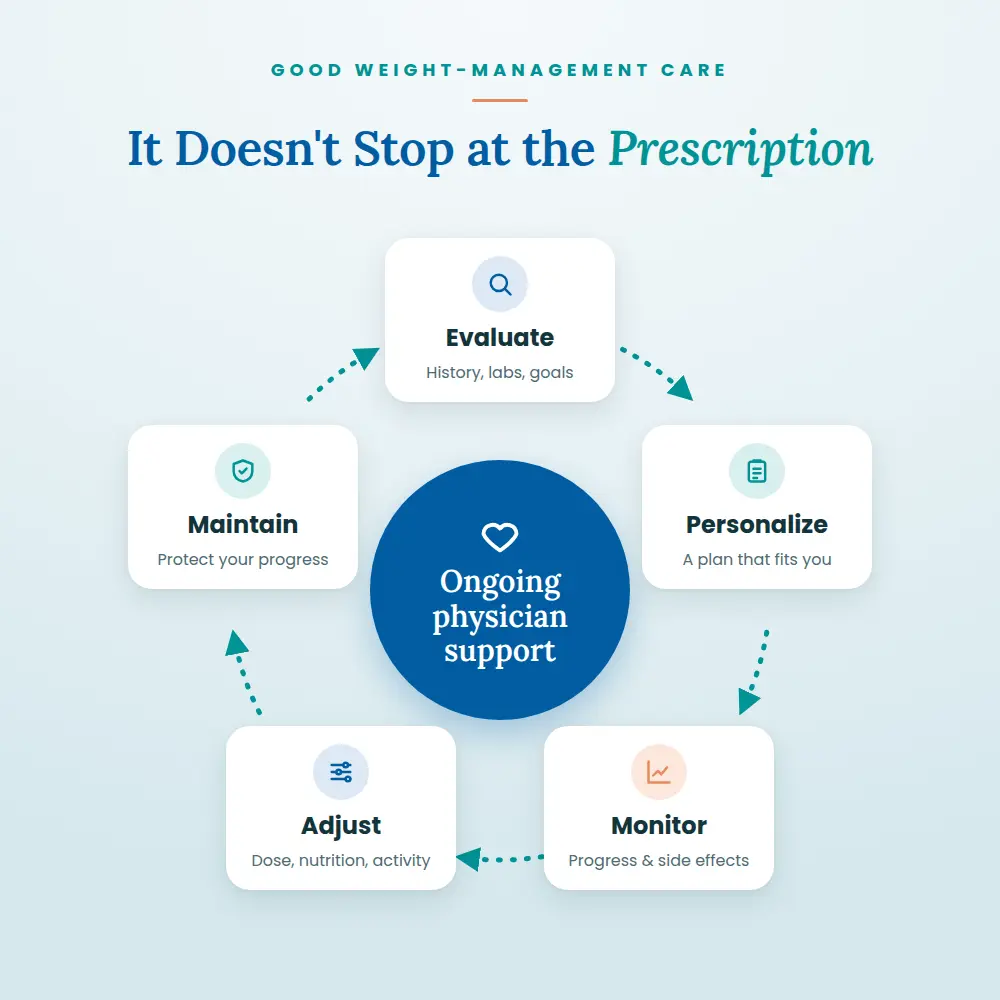
The goal isn’t simply to prescribe a medication. It’s to find an approach that is effective, medically appropriate, and sustainable for you.
GLP-1s Aren’t for Everyone — and More Isn’t Always Better
GLP-1 medications can be very effective, but they aren’t the right choice for every patient. Whether medication makes sense depends on factors like:
- Your medical history
- Your BMI and any weight-related health conditions
- Other medications you take and any contraindications
- How you tolerate side effects
- Previous treatments you’ve tried
- Your goals and preferences
- Affordability and access
It also helps to set realistic expectations. Weight loss usually happens gradually, not overnight. A higher dose isn’t automatically better, and treatment often needs adjusting along the way based on how you’re responding.
Then there’s the longer-term question. Losing weight is only one part of the process — keeping it off matters too. A good plan considers what happens after the initial weight-loss phase: ongoing nutrition, exercise, muscle preservation, and whether medication should continue, be adjusted, or change.
What About Medicare? GLP-1 Coverage Is Changing
For years, the answer for most people on Medicare was simple and frustrating: Medicare Part D was not allowed to cover medications used only for weight loss. GLP-1s could be covered for type 2 diabetes, and later for certain other conditions, but not for weight management on its own.
That has started to change. Through a temporary federal program, the Medicare GLP-1 Bridge, eligible beneficiaries can now get certain weight-management GLP-1 medications for $50 per month.
The Medicare GLP-1 Bridge at a glance
| Cost | $50 copay per monthly prescription |
| Timeframe | Began July 1, 2026; currently scheduled to run through December 31, 2027 |
| Medications | Wegovy® (injection and tablet), Zepbound® KwikPen®, and Foundayo™ |
| Who must have it | Medicare beneficiaries enrolled in Part D, through a stand-alone drug plan or an eligible Medicare Advantage plan with drug coverage |
| Approval | Prior authorization is required before the first fill |
Who may qualify
Eligibility is based on BMI at the start of treatment, sometimes combined with other health conditions:
- BMI of 35 or higher, or
- BMI of 30 or higher with stage 3a or higher chronic kidney disease, heart failure with preserved ejection fraction, or uncontrolled high blood pressure despite two or more medications, or
- BMI of 27 or higher with prediabetes, a previous heart attack or stroke, or symptomatic peripheral artery disease
Your physician must also confirm the medication is being used for weight management together with lifestyle changes.
Important details to know
- Some patients go through their regular Part D plan instead. If you have type 2 diabetes, obstructive sleep apnea, or MASH (a form of fatty liver disease), GLP-1 medications may already be covered through your Part D plan for those conditions, so the Bridge doesn’t apply. Your plan’s usual copay applies, and it may be more or less than $50.
- The $50 doesn’t count toward your Part D limits. Bridge copays don’t count toward your Part D deductible or the annual $2,100 out-of-pocket cap, and Extra Help (Low-Income Subsidy) cost-sharing doesn’t apply.
- Compounded medications aren’t included. The Bridge covers only the FDA-approved brand-name medications listed above.
- It’s temporary. What Medicare coverage will look like after 2027 hasn’t been settled yet, so it’s worth planning ahead with your doctor.
- Expect a short wait at the start. The first prescription can’t be filled until prior authorization is approved, which can take up to about 72 hours.
How Clear Access MD helps Medicare patients
Coverage rules are only half the picture. You still need a physician to determine whether a GLP-1 is right for you, complete the prior authorization, and follow your progress over time. Our weight management program includes medication management and prior authorization assistance, so we can check whether you meet the Bridge criteria and handle the paperwork with you.
Medicare program details are current as of October 2026 and may change. Check with your Part D plan or Medicare for the latest information.
Why Weight Management Fits Naturally Into Primary Care
Weight is connected to many of the health issues primary care already manages, including:
- Blood pressure
- Diabetes and prediabetes
- Cholesterol
- Sleep apnea
- Joint health
- Medication management
- Kidney health
- Cardiovascular risk
- Overall preventive care
A physician who already knows your history can treat weight as one piece of your larger health picture rather than an isolated problem. That’s the approach we take at Clear Access MD.
For Clear Access MD Members
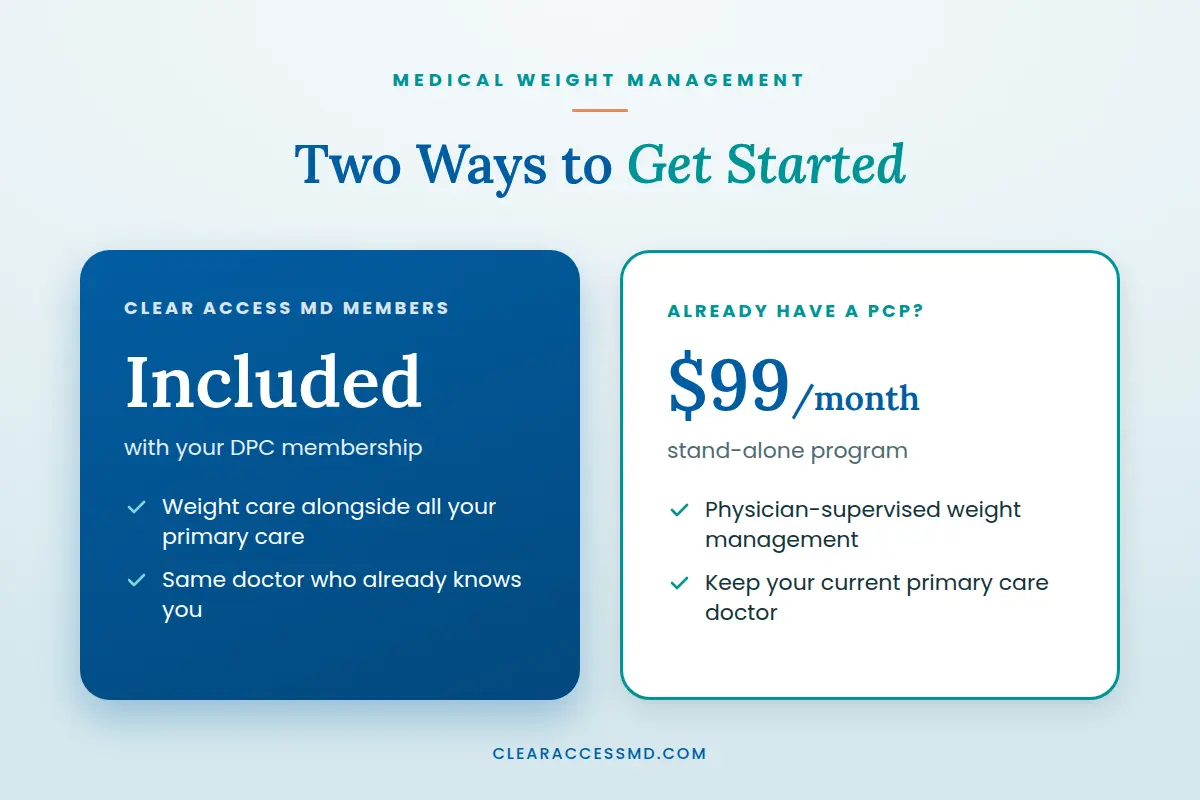
Medical weight management is included with your Direct Primary Care membership. You can address your weight alongside your other primary-care needs, with the same physician who already knows you, instead of treating it as a separate service with a separate provider.
For Patients Who Already Have a Primary Care Doctor
Happy with your current PCP? You don’t have to switch. Clear Access MD also offers a stand-alone Medical Weight Management program for $99/month, giving you physician-supervised weight management without changing your primary care doctor.
Learn more about our Medical Weight Management program →
The Goal Is Better Health, Not Just a Smaller Number
Successful weight management can look different for every patient. It may mean:
- Sustainable weight loss
- Improved metabolic health
- Greater strength and mobility
- Better blood pressure or blood sugar
- More energy
- Reduced long-term health risks
- Maintaining the progress you’ve made
We now have more effective tools for managing excess weight than ever before, including GLP-1 medications. But medication is only one part of the picture. Good medical weight management means choosing the right approach for the right patient, and supporting that patient over time.
Interested in Medical Weight Management?
Weight management is included for Clear Access MD members, or available as a stand-alone program for $99/month.
This article is for general educational purposes and is not a substitute for individual medical advice. Talk with your physician about whether a particular treatment is right for you.