
Understanding Your Annual Blood Work
On This Page
- “Am I at risk for heart disease?”
- ”Am I heading toward diabetes?”
- “Are my kidneys and liver okay?”
- ”Why am I always tired?”
- How to Read Your Report Without Panicking
- Questions to Bring to Your Doctor
- How to Prepare for Your Next Blood Draw
- Why This Conversation So Rarely Happens
- Ready to Understand Your Numbers?
- Frequently Asked Questions
Understanding Your Annual Blood Work: What Your Results Say About Your Heart, Blood Sugar, Organs, and Energy
You know the moment. Your phone buzzes with a patient portal notification. You open it and find a PDF with forty-some numbers, a few of them flagged in red, and a note that says “results reviewed.” No explanation. No context. Just you, a search engine, and a growing sense that something might be wrong.
Here’s what I want every patient to know: your blood work isn’t a pass/fail test. It’s a snapshot of how your body is running right now, and its real value shows up over time, when we compare this year to last year and the year before.
In this guide, I’ll walk through your annual labs the way patients actually think about them, by the questions you care about most.
The short version
Your annual blood work answers four main questions: Are you at risk for heart disease? Are you heading toward diabetes? Are your kidneys and liver working well? And is something in your blood explaining how you feel? A single result slightly outside the “normal” range is often nothing. Trends over time matter far more than any one number.
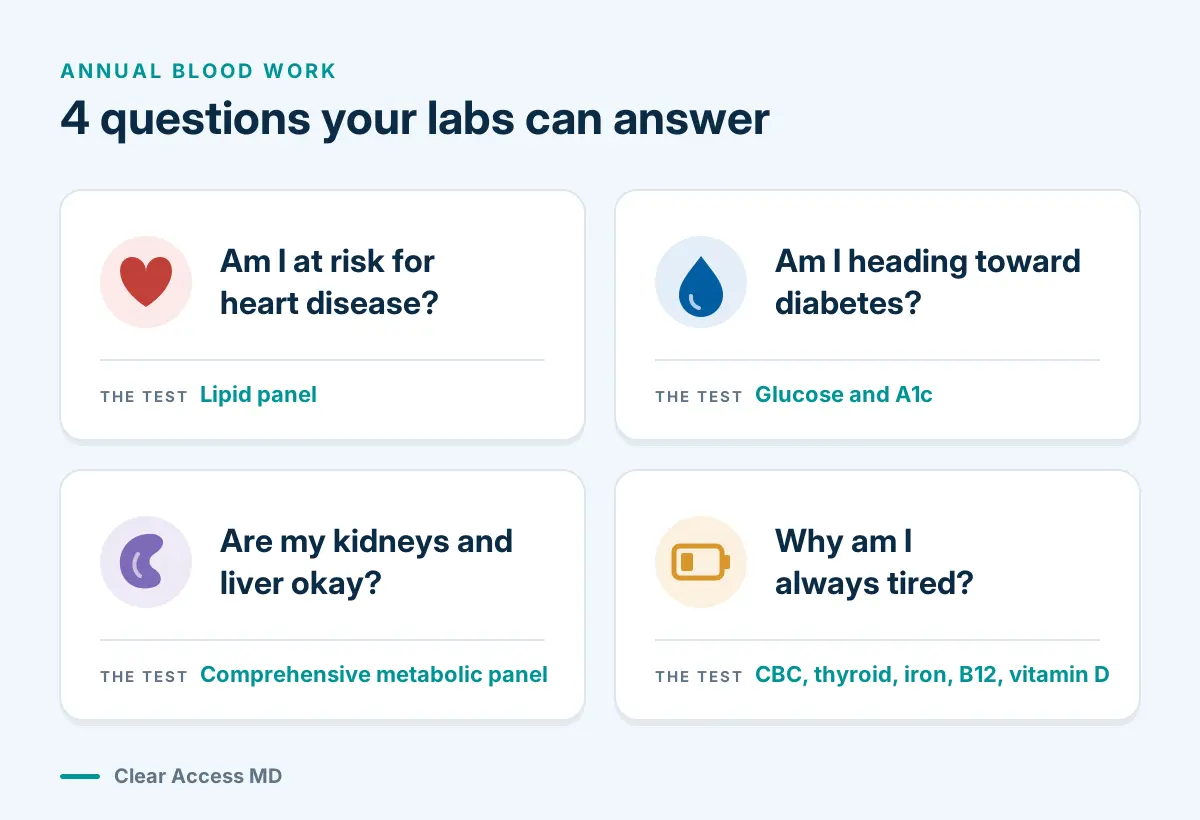
“Am I at risk for heart disease?”
The test: Lipid panel
Your lipid panel measures the fats circulating in your blood. Here’s what each number means:
- LDL cholesterol is the one most closely linked to plaque buildup in your arteries. For most people, lower is better.
- HDL cholesterol helps carry excess cholesterol away from your arteries. Higher levels are generally favorable.
- Triglycerides reflect fat from recent meals and how your body handles sugar and carbohydrates. They tend to rise with high-sugar diets, alcohol, and insulin resistance.
- Total cholesterol is the sum of the parts. On its own, it tells us the least.
| Marker | Generally desirable |
|---|---|
| LDL | Under 100 mg/dL |
| HDL | 40+ mg/dL (men), 50+ mg/dL (women) |
| Triglycerides | Under 150 mg/dL |
| Total cholesterol | Under 200 mg/dL |
One important point: no single cholesterol number defines your heart risk. Your age, blood pressure, family history, smoking status, and blood sugar all go into the picture. Two people with identical LDL can have very different levels of risk.
When the picture is unclear, or family history is strong, I may recommend looking deeper with tests like ApoB (a count of the particles that actually cause plaque), Lp(a) (a largely inherited risk factor that many experts suggest checking at least once in a lifetime), or hs-CRP (a marker of inflammation).
Do you need to fast? For a routine lipid panel, often not. But if your triglycerides came back high, or we’re also checking fasting glucose, I may ask you to come in fasting.
”Am I heading toward diabetes?”
The tests: Glucose and hemoglobin A1c
These two tests work as a pair:
- Glucose is your blood sugar at the moment of your draw. It’s a snapshot, and it can be affected by what you ate, how you slept, and even stress.
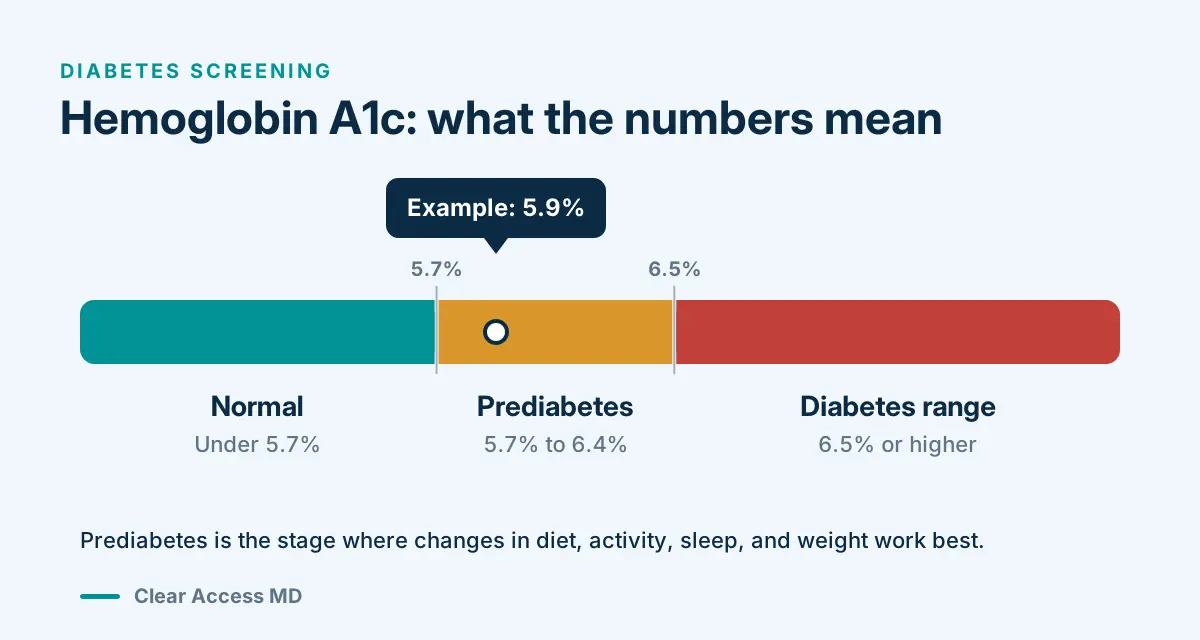
- Hemoglobin A1c reflects your average blood sugar over roughly the past three months. It’s much harder to “game,” which makes it one of the most useful numbers on your report.
| Fasting glucose | A1c | |
|---|---|---|
| Normal | Under 100 mg/dL | Under 5.7% |
| Prediabetes | 100–125 mg/dL | 5.7%–6.4% |
| Diabetes range | 126 mg/dL or higher | 6.5% or higher |
A diagnosis of diabetes is typically confirmed with repeat testing.
If your numbers land in the prediabetes range, here’s the good news: this is the stage where changes in diet, activity, sleep, and weight work best. Many people bring their A1c back to normal. Catching it here, instead of five years from now, is exactly why annual labs matter.
“Are my kidneys and liver okay?”
The test: Comprehensive Metabolic Panel (CMP)
The CMP is a broad screen that checks several organ systems at once.
Kidneys
- Creatinine is a waste product from your muscles that your kidneys filter out.
- eGFR is a calculation, based on creatinine, age, and sex, that estimates how well your kidneys are filtering.
- BUN (blood urea nitrogen) is another waste product the kidneys clear.
These numbers can shift for reasons that have nothing to do with kidney disease. Dehydration can raise them. So can a high-protein diet, creatine supplements, or simply having more muscle mass. That’s why a single slightly abnormal result usually calls for a recheck, not alarm.
Liver
- ALT and AST are enzymes that rise when liver cells are stressed or irritated.
- Alkaline phosphatase and bilirubin give additional clues about the liver and bile ducts.
Mildly elevated liver enzymes are common, and there are plenty of everyday explanations: a hard workout in the days before your draw, alcohol, certain medications and supplements, or fatty liver, which is increasingly common and very responsive to lifestyle changes.
Electrolytes and proteins
The CMP also checks sodium, potassium, chloride, carbon dioxide, and calcium, which keep your nerves, muscles, and heart working smoothly, along with albumin and total protein, which reflect nutrition and liver function. Small variations are usually not meaningful, but significant shifts are worth a conversation.
”Why am I always tired?”
The tests: CBC, thyroid, iron, B12, and vitamin D
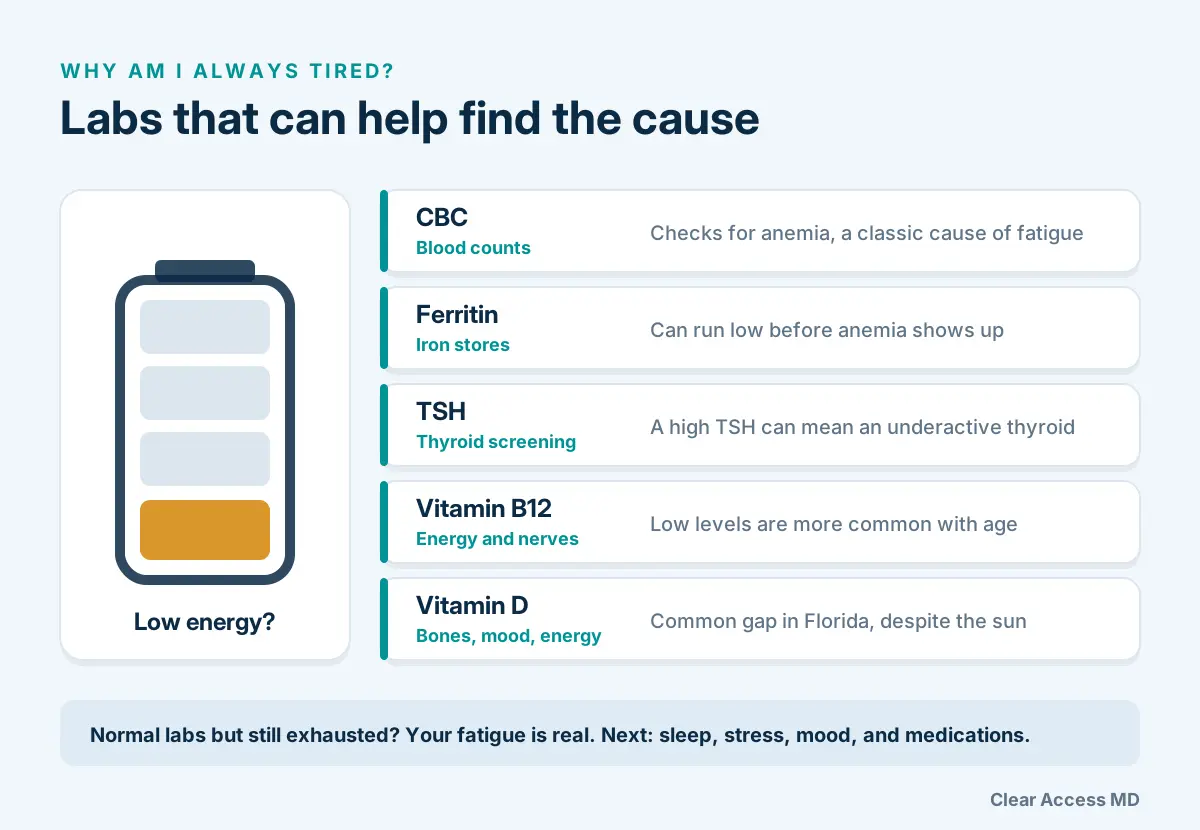
This is one of the most common questions I hear, and blood work can help answer it.
Complete Blood Count (CBC)
- Hemoglobin and hematocrit measure your blood’s oxygen-carrying capacity. Low levels point to anemia, a classic cause of fatigue, shortness of breath, and feeling cold.
- White blood cells reflect your immune system. They can rise with infection or inflammation.
- Platelets help your blood clot.
Iron and ferritin
Ferritin measures your body’s iron stores. Here’s a detail many people miss: your ferritin can be low, and you can feel the effects, before your hemoglobin drops enough to be called anemia. If you’re tired and your CBC looks normal, ferritin is worth checking, especially for women with heavy periods.
Thyroid (TSH)
TSH is the main screening test for thyroid function. A high TSH often points to an underactive thyroid, which can cause fatigue, weight gain, feeling cold, and brain fog. A low TSH can point to an overactive thyroid.
Vitamin B12 and vitamin D
Low B12 can cause fatigue, numbness or tingling, and memory issues. It’s more common with age, plant-based diets, and certain medications, including metformin and acid reducers.
And yes, vitamin D deficiency is common here in Florida. Sunshine only helps if you’re out in it, and many of us spend most of our days indoors, in the car, or wearing sunscreen.
An honest note: if your labs come back normal but you’re still exhausted, that doesn’t mean your fatigue isn’t real. It means the next step is a conversation about sleep, stress, mood, medications, and other causes that blood work doesn’t capture.
How to Read Your Report Without Panicking
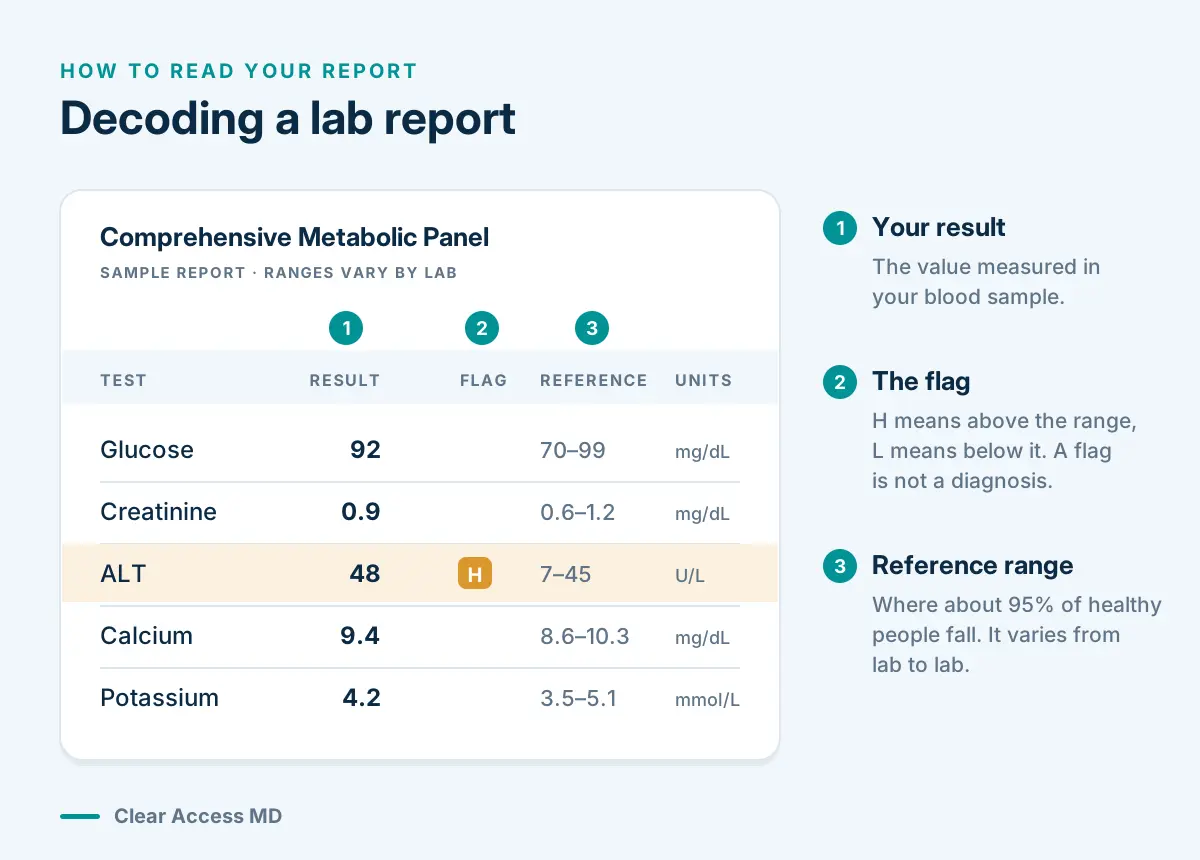
A few things to keep in mind when you see a flagged result:
Reference ranges are averages, not verdicts. The “normal” range on your report is typically built to include about 95% of healthy people. That means roughly 1 in 20 perfectly healthy people will fall outside the range on any given test, just by chance. On a report with dozens of markers, a flag or two is common.
Ranges vary between labs. Different labs use different equipment and methods, so the “normal” range on this year’s report may not match last year’s.
Everyday things can skew results. Common culprits include:
- Dehydration
- A hard workout in the day or two before your draw
- A recent cold or infection
- Supplements, especially biotin (found in many hair, skin, and nail products), which can interfere with some lab tests, including thyroid tests
- Not fasting when you were asked to
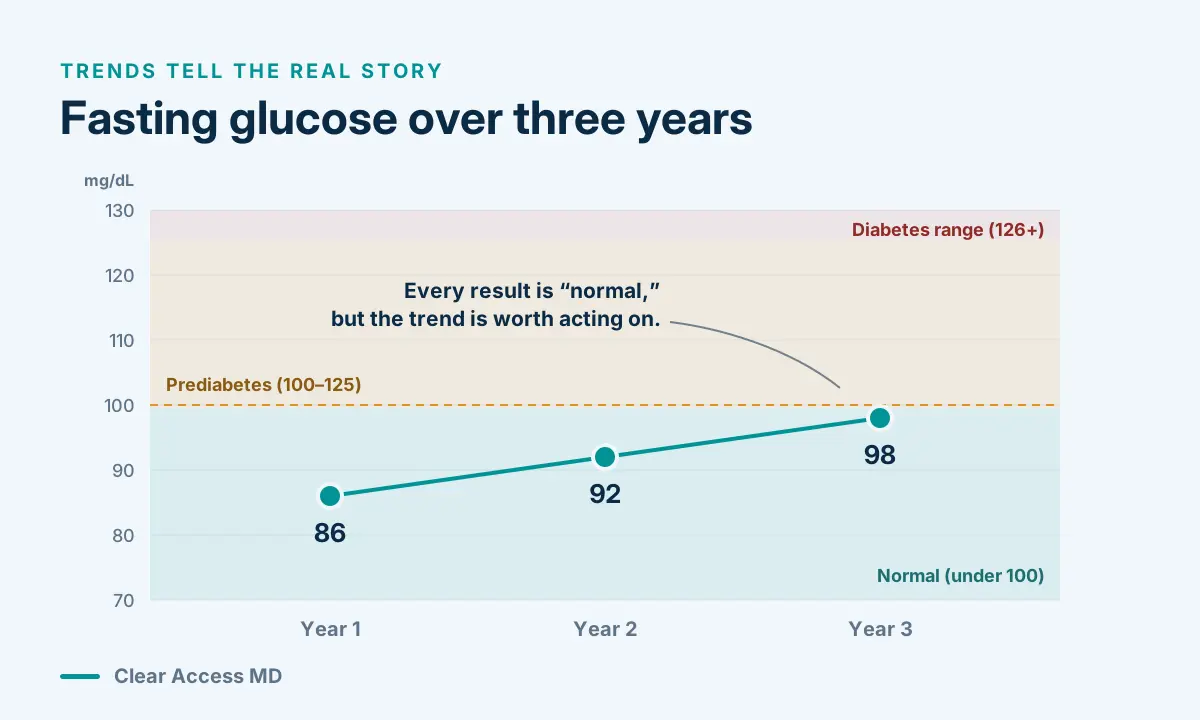
Trends tell the real story. A fasting glucose of 98 doesn’t mean much by itself. A fasting glucose that went from 86 to 92 to 98 over three years tells us something worth acting on, even though it’s still technically “normal.”
Questions to Bring to Your Doctor
Save this list for your next results review:
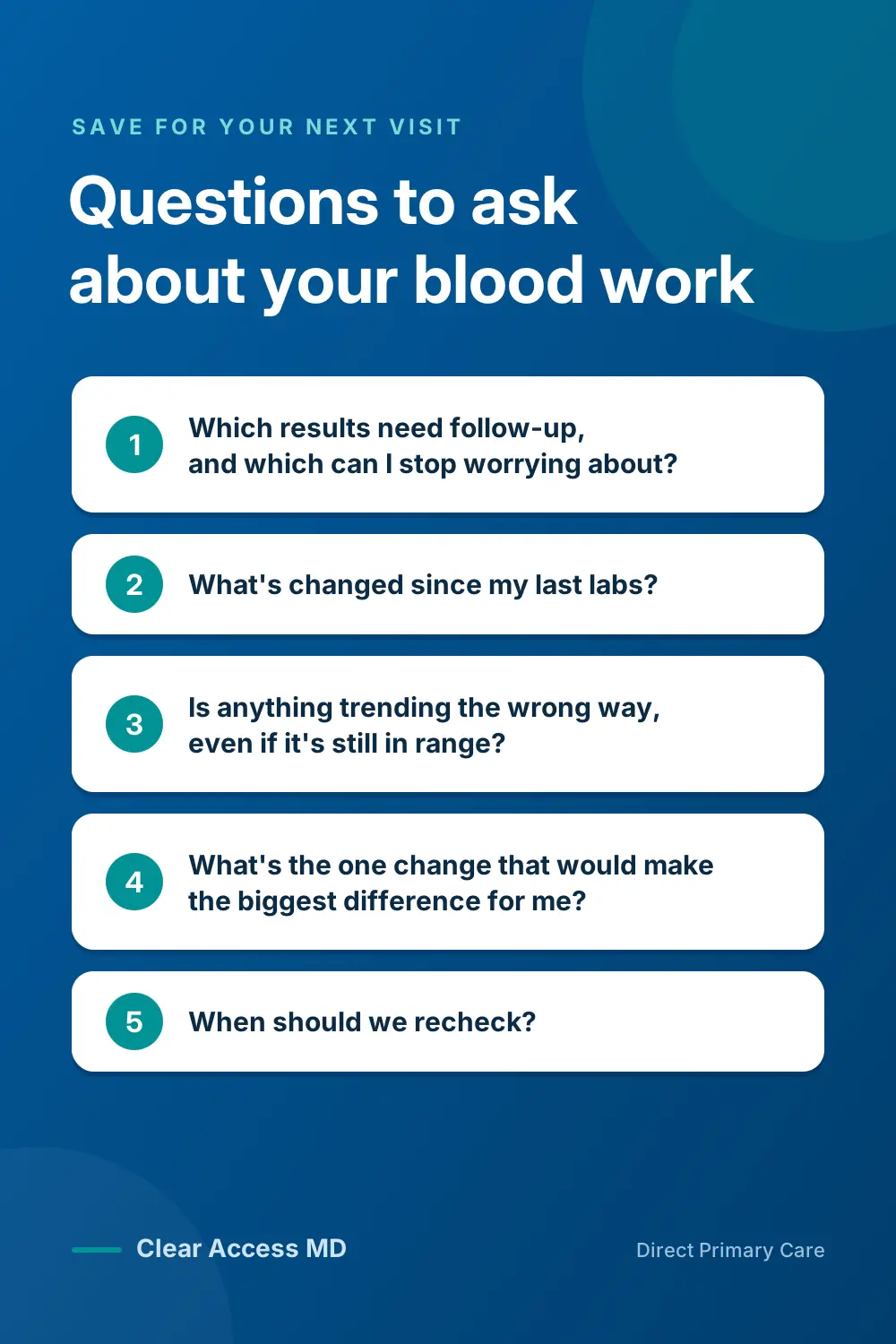
- Which of these results need follow-up, and which can I stop worrying about?
- What’s changed since my last labs?
- Is anything trending in the wrong direction, even if it’s still in range?
- What’s the one change that would make the biggest difference for me?
- When should we recheck?
How to Prepare for Your Next Blood Draw
- Ask whether you need to fast. If so, that usually means nothing but water for 8 to 12 hours beforehand.
- Drink water. Hydration makes the draw easier and keeps certain results more accurate.
- Ask about your medications. Most can be taken as usual, but check first.
- Mention your supplements. If you take biotin, your doctor may ask you to pause it for a few days before your draw.
- Book a morning appointment if you’re fasting, so you’re not going without food all day.
- Skip the hard workout the day before.
Why This Conversation So Rarely Happens
In a traditional primary care setting, visits are often short and schedules are packed. Results get posted to a portal with a quick “looks fine” note, and the conversation that would actually make those numbers useful never happens.
That’s one of the main reasons we built Clear Access MD as a Direct Primary Care practice. As a member, you get:
- Time to go through your results, line by line, with your physician
- Direct access to ask follow-up questions when something on your report doesn’t make sense
- Year-over-year tracking, so we’re watching your trends, not just today’s numbers
- Discounted lab pricing, so routine blood work doesn’t come with a surprise bill
| Test | Typical quoted price | Clear Access MD member price |
|---|---|---|
| Comprehensive Metabolic Panel (CMP) | $49 | $5 |
| Complete Blood Count (CBC) | $29 | $3 |
| Cholesterol (Lipid) Panel | $59 | $6 |
| Hemoglobin A1c | $39 | $5 |
| TSH and Free T4 | $49 | $8 |
| Urinalysis | $40 | $5 |
We charge a sample requisition fee of $15 for a blood draw, which is not included above
Note that the above tests are included at no charge once a year for our members. There are hundreds of various tests available overall, and we offer similar (~90%) discounts off their retail prices. For instance, we offer PSA test for $6 while its cash retail price at Quest is $69.
Ready to Understand Your Numbers?
Your blood work should leave you with answers, not more questions. If it’s been a year or more since your last labs, or you have results you never really got to talk through, we’d love to help.
Frequently Asked Questions
Do I need to fast before blood work?
It depends on what’s being tested. A fasting glucose test requires 8 to 12 hours without food. Many lipid panels can now be done without fasting. Your doctor will let you know what’s needed for your specific tests.
How often should adults get blood work?
There’s no single rule for everyone. Many healthy adults benefit from routine labs about once a year, while people with conditions like diabetes, high cholesterol, or thyroid disease, or those on certain medications, may need them more often. Your doctor can tailor the schedule to your age, health history, and risk factors.
What does it mean if one of my results is slightly high or low?
Often, not much. Reference ranges are designed so that a small percentage of healthy people will fall outside them, and factors like hydration, exercise, and recent illness can nudge results. Your doctor will look at the result in context, alongside your other numbers and past results, and may simply recheck it.
Can I get blood work without insurance?
Yes. Clear Access MD members have access to discounted lab pricing, which often makes routine blood work affordable without insurance. Contact us for up to date lab pricing.
How long do blood test results take?
Most routine tests, like a CMP, CBC, and lipid panel, typically come back within one to three business days. Some specialized tests take longer.
This article is for educational purposes only and is not a substitute for professional medical advice, diagnosis, or treatment. Always talk with your physician about your individual results and health needs.