
Prediabetes: The Diagnosis Most People Don't Know They Have
On This Page
- What is prediabetes?
- Are there any warning signs?
- The numbers to know
- Why the trend matters more than one result
- When an A1c result can be misleading
- Who should get checked?
- Four common myths about prediabetes
- The good news: prediabetes can be reversed
- Why prediabetes needs a doctor who follows you
- Got a borderline result? What to do next
- A slightly high number is the best time to act
You open your lab results and see it: glucose or A1c, “slightly high,” with a small flag next to the number. Nobody calls. There’s no follow-up. A few weeks later, you’ve forgotten about it.
If that sounds familiar, you’re far from alone. About 98 million American adults (more than 1 in 3) have prediabetes, and more than 8 in 10 of them don’t know it, according to the CDC.
Here’s the part that rarely gets said: prediabetes is one of the most fixable diagnoses in medicine. But it only gets fixed if someone notices it, explains it, and keeps watching where your numbers are headed.
What is prediabetes?
Prediabetes means your blood sugar is higher than normal, but not yet high enough to be called diabetes. It usually develops because your body is slowly becoming less responsive to insulin, the hormone that moves sugar out of your blood and into your cells.
Most people with prediabetes feel completely fine. There’s no pain, no obvious warning sign, nothing that sends you to the doctor. That’s exactly why so many cases go unnoticed.
Left alone, prediabetes raises your risk of type 2 diabetes, heart disease and stroke. It matters for your kidneys too: diabetes is one of the leading causes of kidney disease. Dr. Bruna, who completed fellowship training in nephrology (kidney medicine), has seen where that path can lead. That’s a big part of why she pays close attention to early numbers.
Are there any warning signs?
Usually, no. Most people find out about prediabetes from a blood test, not from symptoms. Still, a few clues suggest your body may be struggling with insulin:
- A growing waistline. Fat stored around the belly is closely tied to insulin resistance. A waist measurement over 40 inches for men or 35 inches for women raises risk, even if your overall weight seems fine.
- Darkened, velvety skin in the folds of the neck, armpits or groin. This is called acanthosis nigricans, and it’s often a sign of high insulin levels.
- New skin tags, especially several at once around the neck or underarms.
- High blood pressure or high triglycerides. These often travel together with rising blood sugar.
None of these confirms prediabetes on its own. But if you notice any of them, it’s a good reason to get an A1c test.
The numbers to know
Two common blood tests can show prediabetes. Here’s how to read them:
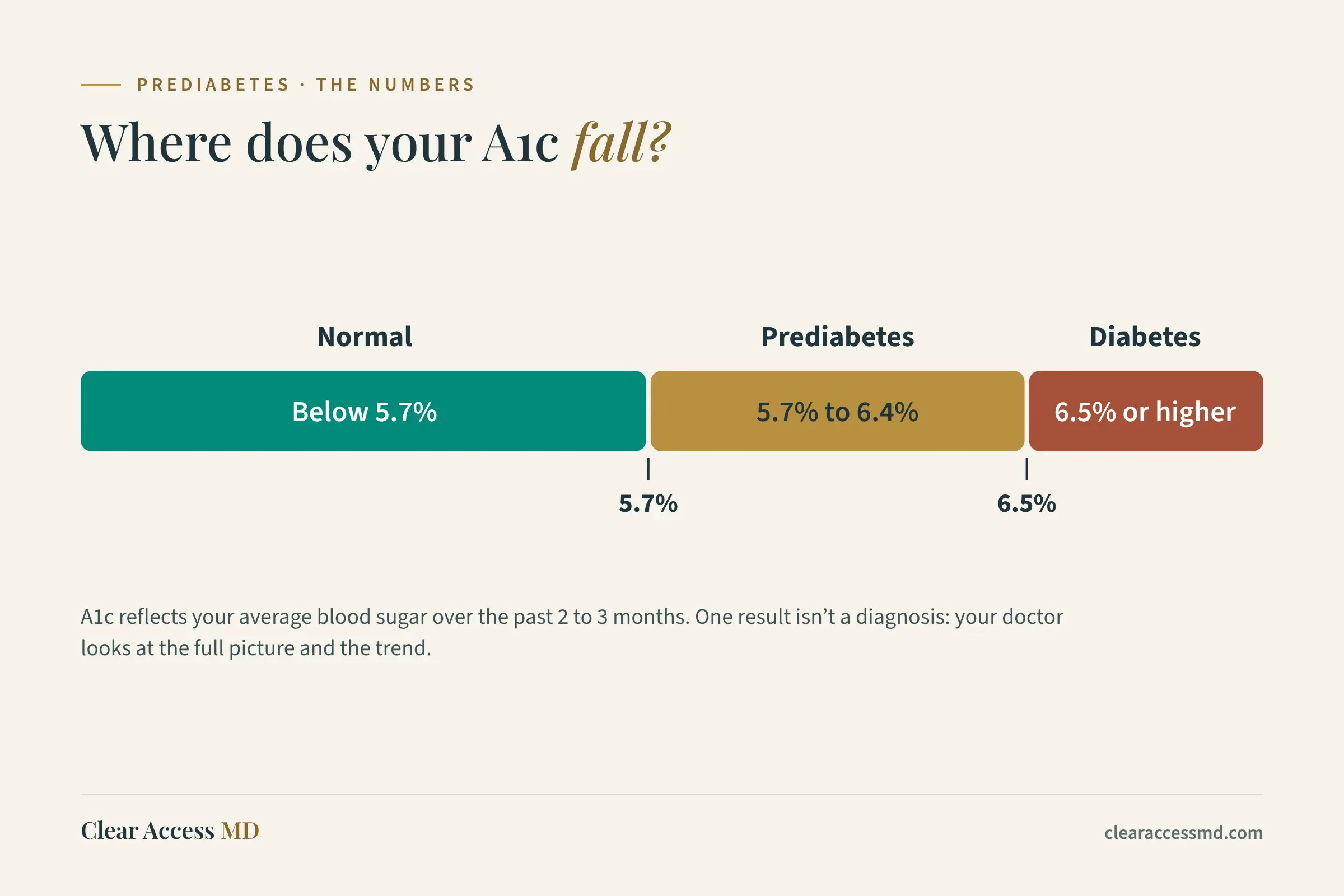
| Test | Normal | Prediabetes | Diabetes range |
|---|---|---|---|
| A1c | Below 5.7% | 5.7% to 6.4% | 6.5% or higher |
| Fasting glucose (mg/dL) | Below 100 | 100 to 125 | 126 or higher |
Your A1c reflects your average blood sugar over the past two to three months, so one bad meal or a stressful morning won’t swing it much. Fasting glucose is a snapshot of your blood sugar at the moment it was drawn, after at least eight hours without food.
One result on its own isn’t a diagnosis. Your doctor looks at the full picture: both tests, your history, your risk factors and, most importantly, how your numbers are changing over time.
Why the trend matters more than one result
“Your A1c level can gradually creep upward over several years, often without noticeable symptoms. By the time it reaches the prediabetes or diabetes range, changes in blood sugar regulation may have been developing for years. That’s why tracking your A1c over time - not just looking at a single result - can help identify early warning signs and provide an opportunity to take preventive action.”
Dr. Bruna Jebelev, MD
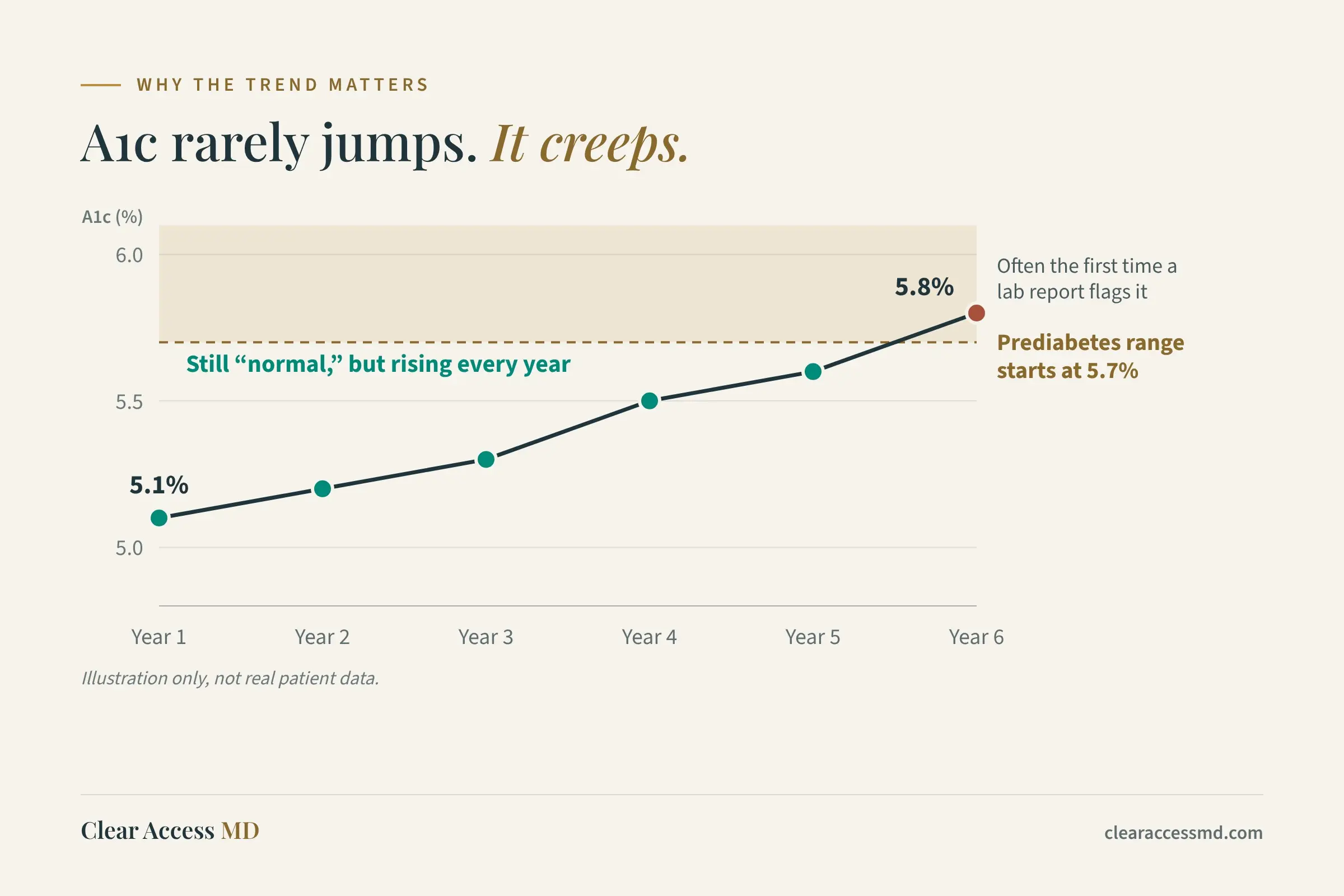
An A1c of 5.5% is technically normal. But if it was 5.1% three years ago, that direction is worth a conversation, long before any lab report flags it.
When an A1c result can be misleading
A1c is measured on your red blood cells, so anything that changes those cells can make the number read higher or lower than your true blood sugar. That includes:
- Iron-deficiency anemia, which can push A1c falsely high
- Recent significant blood loss or a blood transfusion
- Chronic kidney disease
- Pregnancy
- Some inherited hemoglobin variants, such as sickle cell trait, which are more common in people of African, Mediterranean, Middle Eastern and South Asian descent
This is one more reason lab numbers need a doctor’s eye. When A1c and fasting glucose don’t tell the same story, Dr. Bruna looks for the reason, and may use a different test to get an accurate picture.
Who should get checked?
You’re at higher risk for prediabetes if any of these apply to you:
- You’re 35 or older
- You carry extra weight, especially around your waist
- A parent or sibling has type 2 diabetes
- You’re physically active fewer than three times a week
- You have high blood pressure or high cholesterol
- You had diabetes during pregnancy (gestational diabetes) or have been diagnosed with PCOS
Want a quick read on your own risk? The CDC’s one-minute Prediabetes Risk Test is a good place to start.
If you have one or more risk factors and haven’t had an A1c test in the past year, it’s time to get one.
Four common myths about prediabetes
“It’s only borderline, so it’s nothing to worry about.” Borderline is exactly when it’s easiest to act. Prediabetes already carries a higher risk of heart disease, even before diabetes develops.
“I’d feel it if my blood sugar were high.” Prediabetes almost never causes symptoms. Even early type 2 diabetes is often silent. The only reliable way to know is a blood test.
“Only people who are overweight get it.” Excess weight raises risk, but genetics, age, inactivity, sleep and some medications matter too. People at a normal weight can have prediabetes, which is why risk factors and testing matter more than appearance.
“It’s caused by eating too much sugar.” Sugar isn’t the whole story. Prediabetes develops from a mix of genetics, body fat (especially around the belly), activity level, sleep and overall diet. Cutting sugary drinks helps, but it’s rarely the only change that matters.
The good news: prediabetes can be reversed
Prediabetes isn’t a life sentence. In the landmark Diabetes Prevention Program study, people with prediabetes who made modest lifestyle changes cut their risk of developing type 2 diabetes by 58%.
The changes that make the biggest difference are realistic ones:
- Lose a little weight. Losing 5% to 7% of your body weight (10 to 14 pounds for a 200-pound person) can meaningfully improve blood sugar. You don’t need to reach an “ideal” weight to see results.
- Move most days. Aim for about 150 minutes of activity a week. A brisk 30-minute walk five days a week gets you there.
- Walk after meals. Even 10 to 15 minutes of walking after eating helps your muscles use the sugar from that meal, which blunts the spike that follows.
- Add strength training. Muscle is where most of your blood sugar goes. Two sessions a week of weights, bands or bodyweight exercises can improve how well your body responds to insulin.
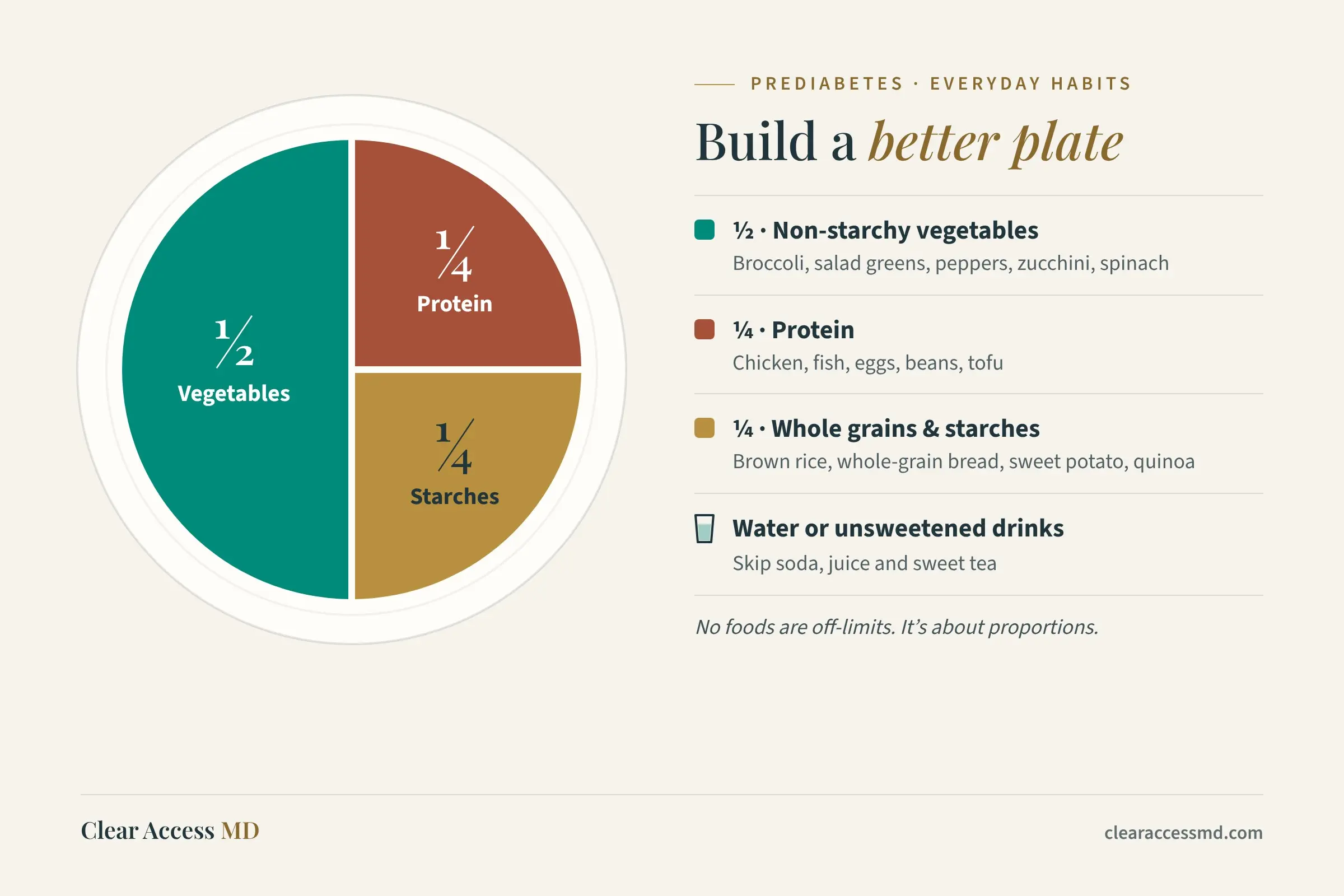
- Build a better plate. Fill half your plate with non-starchy vegetables, a quarter with protein, and a quarter with whole grains or starchy foods. No foods are off-limits; it’s about proportions.
- Rethink your drinks. Soda, sweet tea, juice and specialty coffee drinks can add a lot of sugar without making you feel full. Swapping them for water or unsweetened drinks is one of the simplest changes you can make.
- Protect your sleep. Regularly getting less than six or seven hours makes blood sugar harder to control. If you snore heavily or wake up exhausted, ask about sleep apnea, which is closely linked to insulin resistance.
Start with one or two of these, not all seven at once. Small changes you keep up beat a big overhaul you abandon in February.
For some people, medication is part of the plan too. And if losing weight has been hard on your own, medical weight management can help, including medication when it’s appropriate. Whether any of that makes sense depends on your numbers, your health history and your goals, so it’s a decision to make together with your doctor.
Why prediabetes needs a doctor who follows you
Prediabetes is a slow-moving trend, not a one-time event. What matters most is the direction your numbers take from year to year. That’s hard to see when you get labs once in a while, from whichever doctor is available, with results posted to a portal and no one to explain them.
At Clear Access MD, it works differently:
- Your A1c is checked every year. Membership includes a yearly physical with a comprehensive lab panel, and A1c is part of it.
- You go over the results together. Dr. Bruna reviews your labs with you at a follow-up visit, so you leave knowing what each number means and what, if anything, to do about it.
- Someone keeps watching. Because she sees your results year after year, a slow upward creep gets noticed early, while it’s still easy to turn around.
- You have support between visits. If you’re working on lowering your numbers, you can reach your doctor directly with questions instead of waiting months for an appointment.
That’s the difference between a lab flag and an actual plan.
Got a borderline result? What to do next
- Find your numbers. Look up your A1c and fasting glucose, plus any older results you can find. One number tells you where you are; several tell you where you’re heading.
- Don’t panic, and don’t ignore it. Prediabetes is common and very manageable, but it won’t go away on its own if nothing changes.
- Have someone review the full picture. Your doctor can check whether anything could be skewing the result and whether other numbers, like blood pressure and cholesterol, need attention too.
- Pick one or two changes to start. A walk after dinner and swapping out sugary drinks is a solid beginning.
- Plan your recheck. If you have prediabetes, your A1c should be rechecked at least once a year, sometimes sooner. Put it on the calendar so it doesn’t slide.
Questions to ask your doctor
- Is my A1c going up, down or holding steady compared with previous years?
- Could anything be affecting the accuracy of my A1c?
- What are my other risk factors, like blood pressure, cholesterol and waist size?
- What’s a realistic goal for my next test?
- Would medication make sense for me, or should we start with lifestyle changes?
- When should I be retested?
A slightly high number is the best time to act
If your last lab report showed a borderline glucose or A1c, or if it’s been a while since you had labs at all, now is the time to find out where you stand. Prediabetes is much easier to reverse early than to manage later.
Meet Dr. Bruna first. Book a free 30-minute intro visit, in person, by phone or by video, to ask your questions and see whether Clear Access MD is a good fit. Book your free intro visit
Founding member pricing is still available, but it won’t last long. See membership details
Know someone who got a “slightly high” result and never followed up? Send this to them.
Clear Access MD is a direct primary care practice in Lakewood Ranch, serving adults across Lakewood Ranch, Bradenton and Sarasota in English and Spanish. Call (941) 322-7202.
This article is for general education and isn’t a substitute for personal medical advice.
Sources