The Five Health Numbers Everyone Should Know
On This Page
Most of us have had the experience of opening a lab report or looking at the summary from a doctor’s visit and seeing a long list of numbers. Blood pressure. Cholesterol. Glucose. Creatinine. BMI. Some are marked “normal,” some might be highlighted in red, and many aren’t particularly meaningful unless someone explains what they actually represent.
The good news is that you don’t need to memorize every number on your medical chart.
A handful of measurements can tell you a great deal about your cardiovascular, metabolic, and kidney health. Knowing these numbers—and, just as importantly, knowing how they are changing over time—can help you have more useful conversations with your physician and identify potential problems before they become more serious.
Here are five numbers worth knowing.
1. Your Blood Pressure
Blood pressure is one of the simplest measurements we take in medicine, but it provides important information about your cardiovascular health.
Your reading contains two numbers. The top number, or systolic pressure, measures the pressure in your arteries when your heart contracts. The bottom number, or diastolic pressure, measures the pressure between heartbeats.
For adults, current American Heart Association guidelines classify blood pressure as:
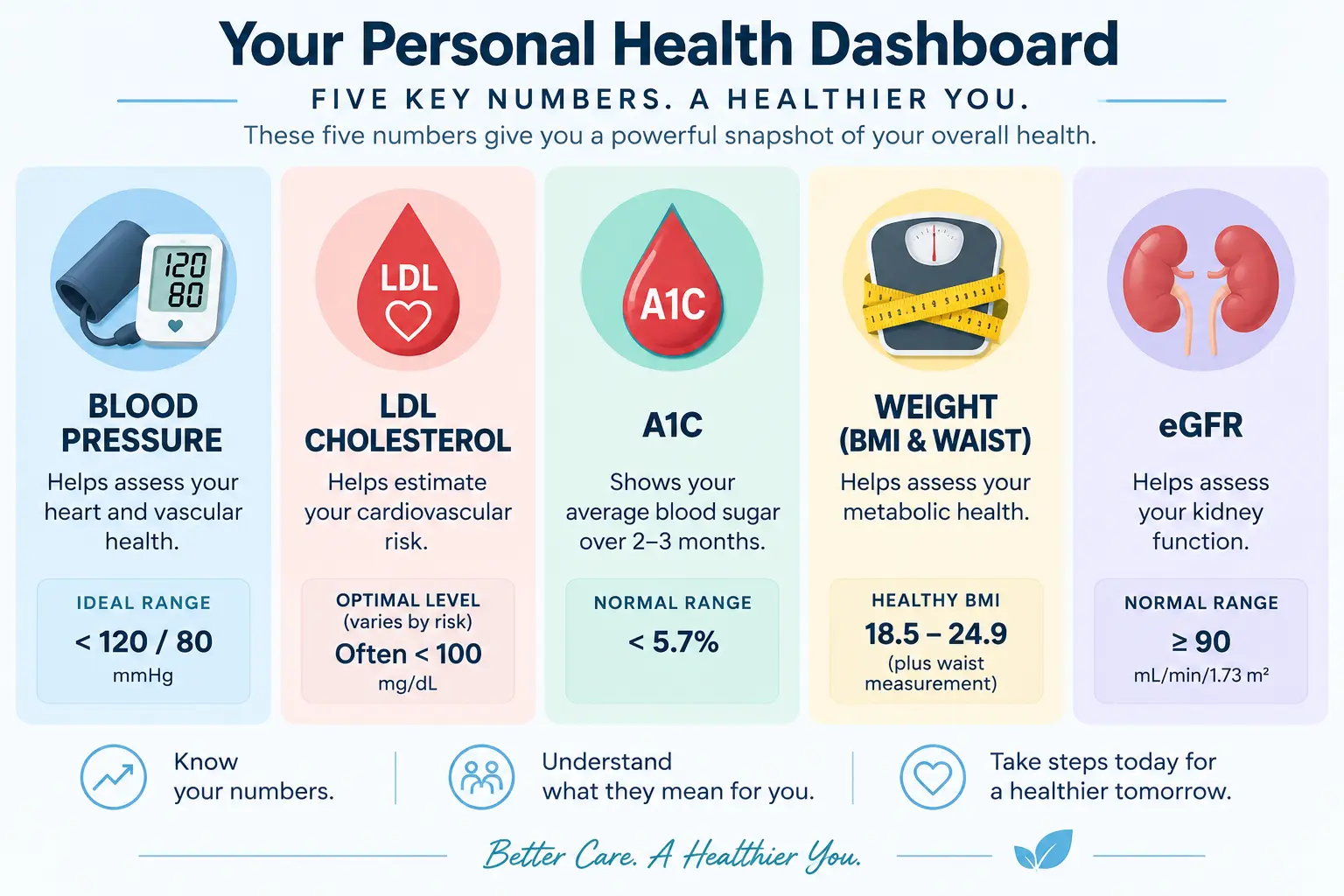
- Normal: less than 120/80 mmHg
- Elevated: systolic pressure of 120–129 with diastolic pressure below 80
- Stage 1 hypertension: 130–139 systolic or 80–89 diastolic
- Stage 2 hypertension: 140 or higher systolic or 90 or higher diastolic
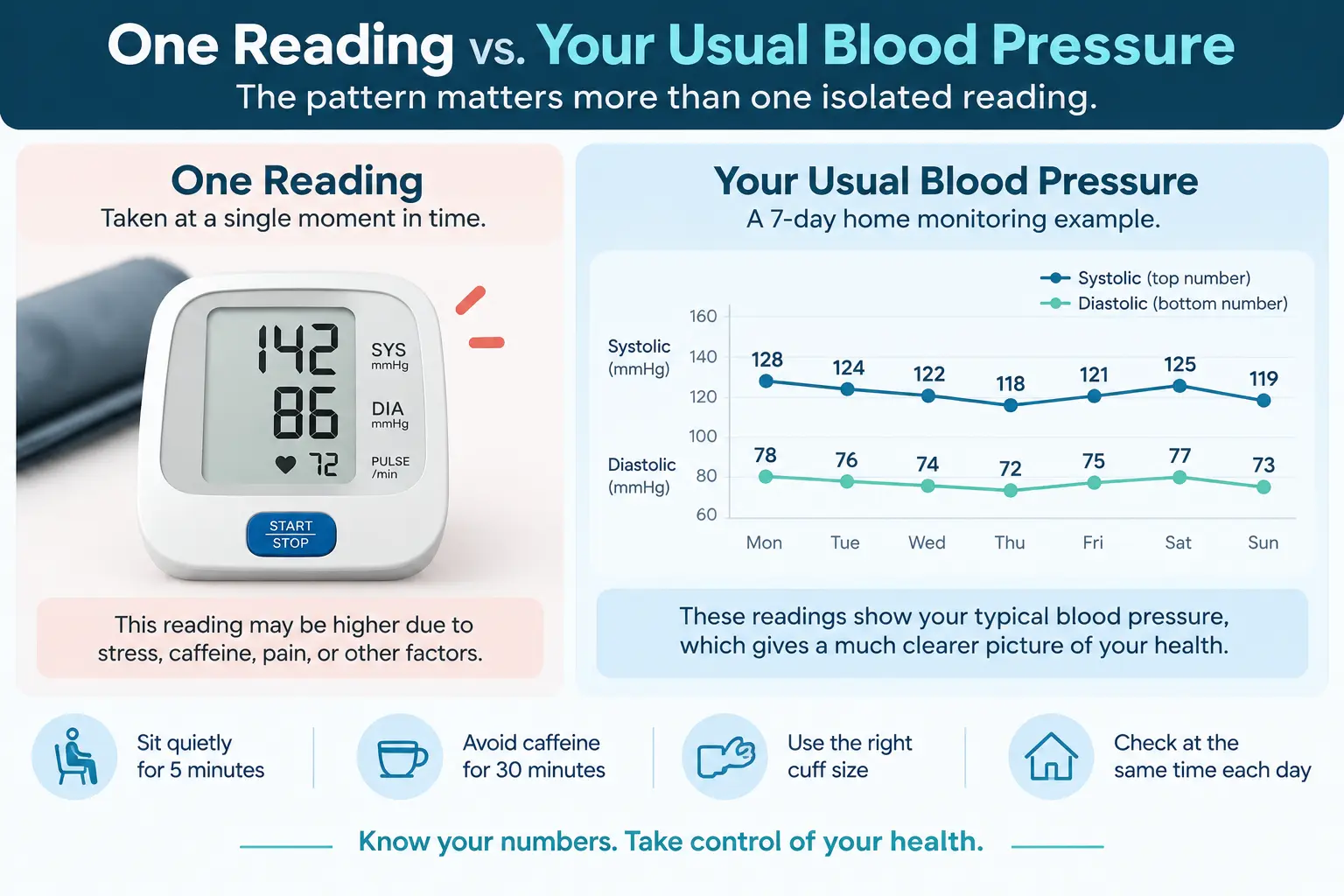
But one elevated reading does not necessarily mean you have hypertension. Blood pressure can change because of stress, exercise, caffeine, pain, medications, illness, or simply the circumstances under which it was measured.
That’s why your usual blood pressure is more important than one isolated measurement.
Home monitoring can be particularly helpful. For an accurate reading, sit quietly with your back supported, feet flat on the floor, and your arm supported at heart level. The cuff should also be the appropriate size for your arm.
If you monitor at home, keep a record rather than focusing too much on any single result. A week or two of readings can tell your physician much more than one number taken during an office visit.
The number to know: Your typical blood pressure.
2. Your Cholesterol—Especially LDL
A cholesterol panel usually contains several numbers:
- Total cholesterol
- LDL cholesterol
- HDL cholesterol
- Triglycerides
Of these, LDL cholesterol often receives the most attention because elevated LDL contributes to the buildup of cholesterol-containing plaque in arteries and is associated with cardiovascular disease.
You may have heard LDL described as the “bad” cholesterol and HDL as the “good” cholesterol. While those terms are convenient, cholesterol assessment is more nuanced than simply trying to make one number low and another high.
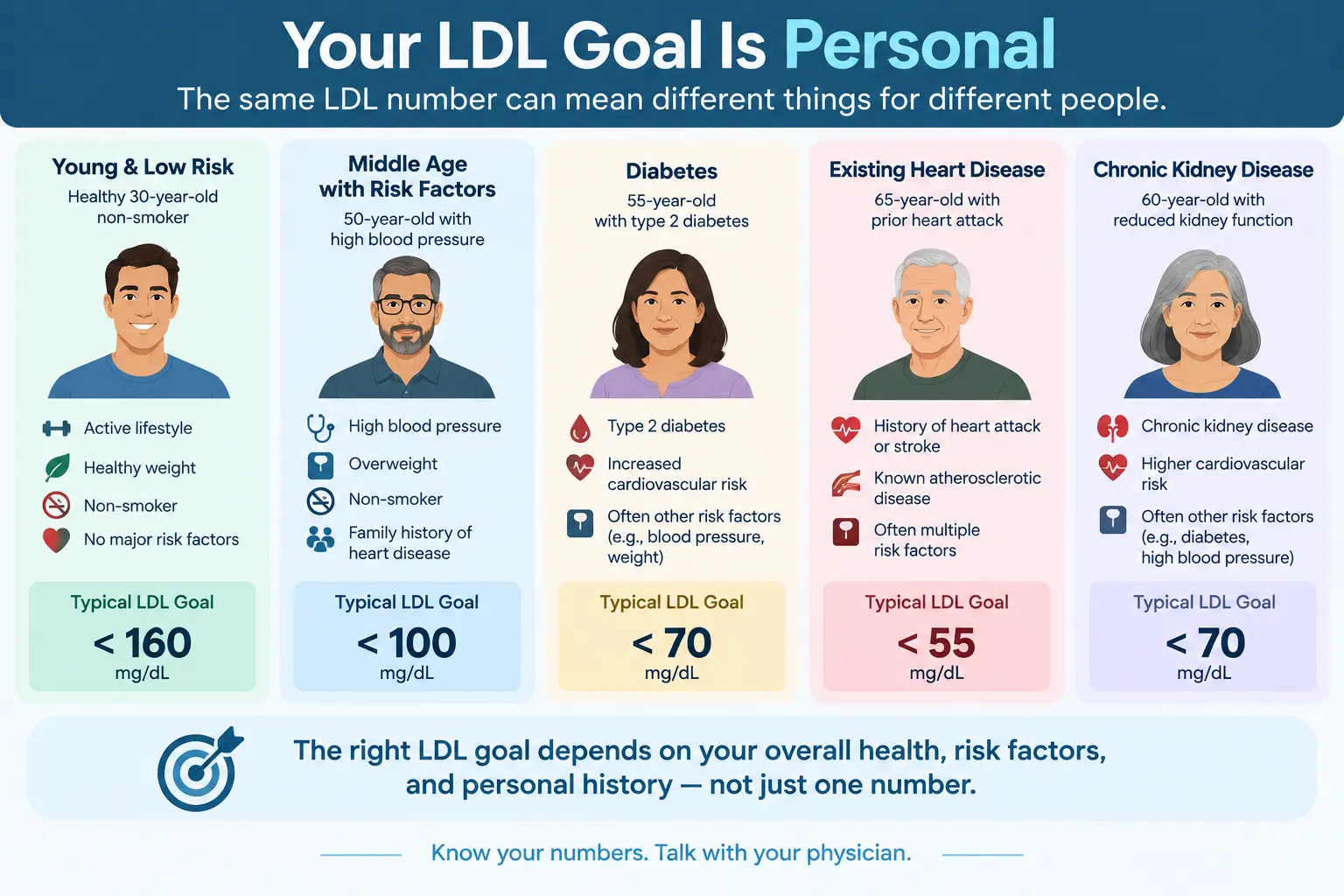
Most importantly, there isn’t one ideal LDL number that applies to everyone.
A person’s appropriate LDL level depends on the larger picture: age, blood pressure, diabetes, smoking history, family history, existing cardiovascular disease, kidney disease, and other risk factors. Someone who has already had a heart attack or stroke, for example, may have a very different LDL goal from a younger person with few cardiovascular risk factors.
This is also why seeing that your cholesterol falls within a laboratory’s reference range doesn’t automatically tell you whether it is optimal for you.
Instead of asking only:
“Is my cholesterol normal?”
A better question may be:
“Is my LDL appropriate for my overall cardiovascular risk?”
The number to know: Your LDL cholesterol—and what your physician thinks your goal should be.
3. Your A1C
Blood sugar problems can develop gradually and may cause no obvious symptoms for years.
One of the most useful screening tools is the hemoglobin A1C, usually shortened to simply A1C.
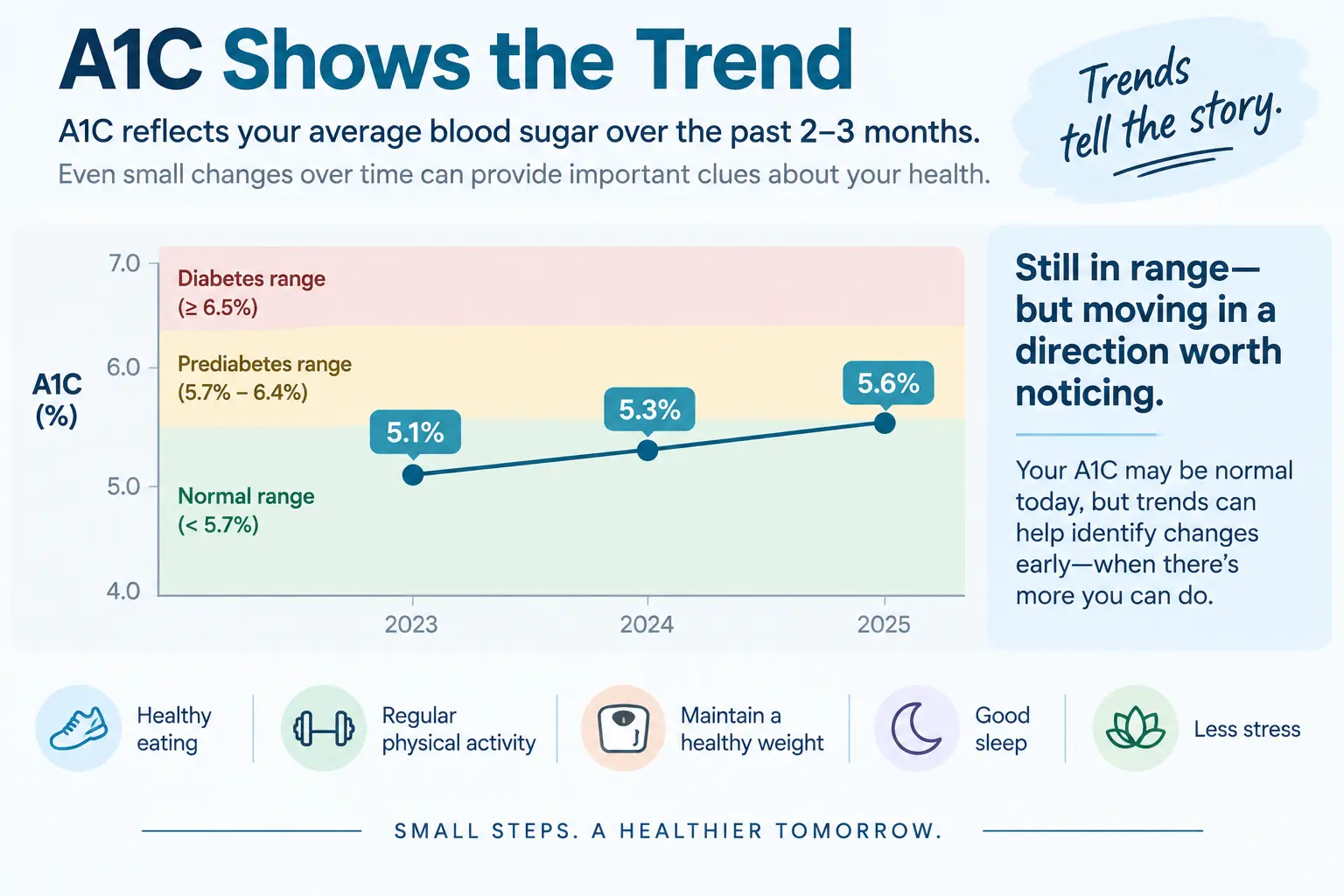
Unlike a glucose measurement taken at one moment in time, A1C provides an estimate of your average blood sugar over approximately the previous two to three months.
In general:
- Below 5.7%: normal range
- 5.7%–6.4%: prediabetes range
- 6.5% or higher: diabetes range
A diagnosis should not be based on interpreting one number yourself. Depending on the circumstances, an abnormal result may need to be confirmed, and certain conditions—including some types of anemia, kidney disease, blood disorders, blood loss, transfusions, and pregnancy—can affect the accuracy of A1C testing.
The important point is that you can feel completely healthy while your blood sugar is gradually moving upward.
Watching A1C over time can also be useful. A change from 5.3% to 5.6%, for example, might still leave someone within the “normal” category, but the trend provides information that a single result cannot.
The number to know: Your most recent A1C and how it compares with previous results.
4. Your Weight—But Don’t Stop at the Scale
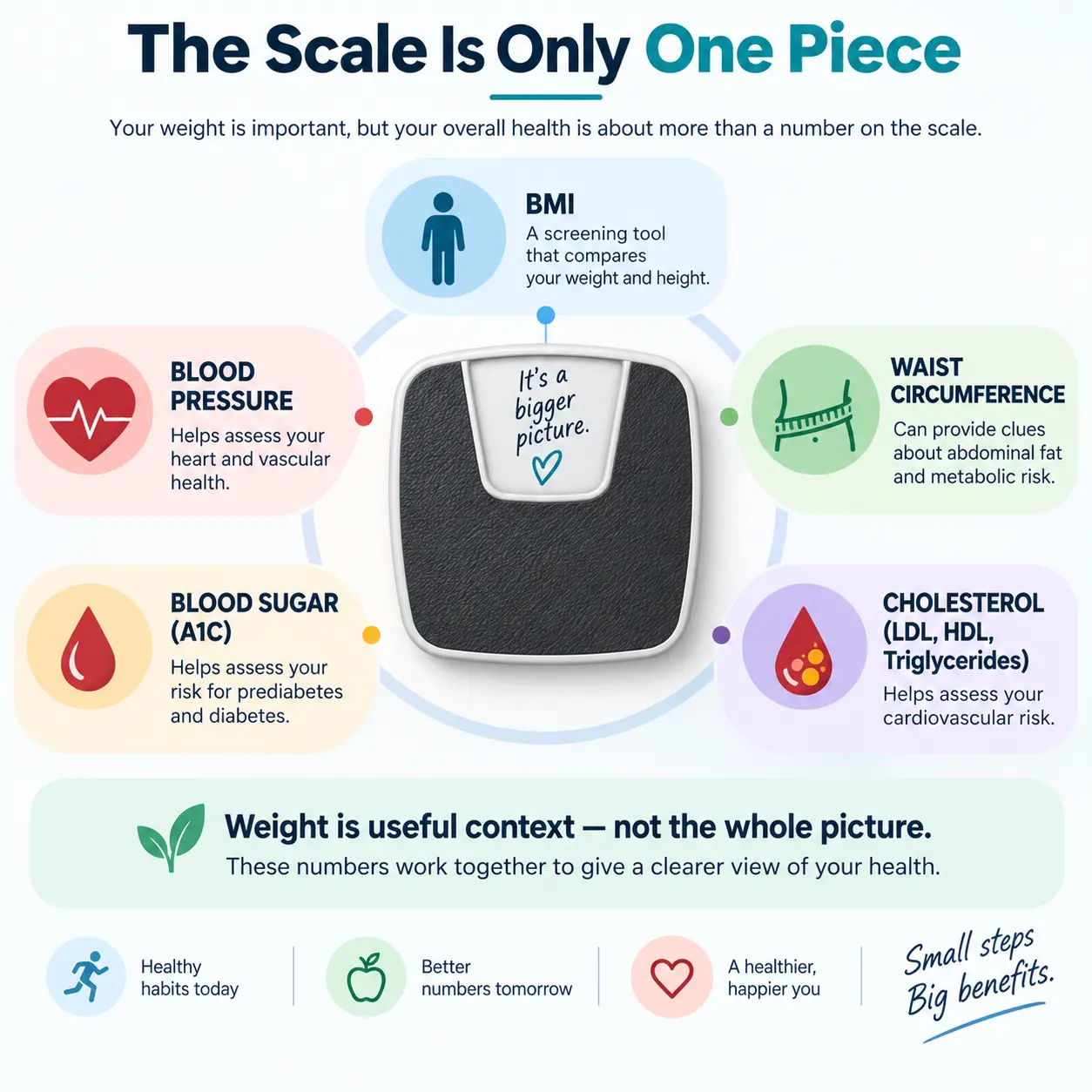
Body weight is an important health measurement, but the number on the scale doesn’t tell the whole story.
Two additional measurements can provide more context: body mass index (BMI) and waist circumference.
BMI compares your weight with your height. For adults, the commonly used categories are:
- Under 18.5: underweight
- 18.5–24.9: healthy-weight range
- 25–29.9: overweight range
- 30 or higher: obesity range
BMI is useful as a screening tool, but it is not a diagnosis and it does not directly measure body fat. It also does not distinguish between fat, muscle, and bone or tell us where body fat is located. That’s why BMI should be considered alongside other information such as blood pressure, cholesterol, blood sugar, physical examination, fitness level, and medical history.
Waist circumference can provide another clue because abdominal fat is particularly associated with metabolic and cardiovascular risk. It can sometimes identify risk that isn’t obvious from body weight or BMI alone.
Perhaps most importantly, don’t let normal day-to-day fluctuations on the scale distract you from the bigger picture.
Weight can change several pounds because of hydration, sodium intake, hormones, bowel contents, or even the time of day. A long-term trend is much more useful than today’s number compared with yesterday’s.
The goal also isn’t to achieve a particular appearance. The reason physicians pay attention to weight and body composition is their relationship to conditions such as diabetes, high blood pressure, abnormal cholesterol, sleep apnea, fatty liver disease, and joint problems.
The numbers to know: Your approximate weight trend, BMI, and—when appropriate—waist circumference.
5. Your Kidney Function—eGFR
Kidney health doesn’t receive as much attention as cholesterol or blood sugar, but it deserves a place on the list.
Kidney disease can develop quietly, without obvious symptoms in its early stages.
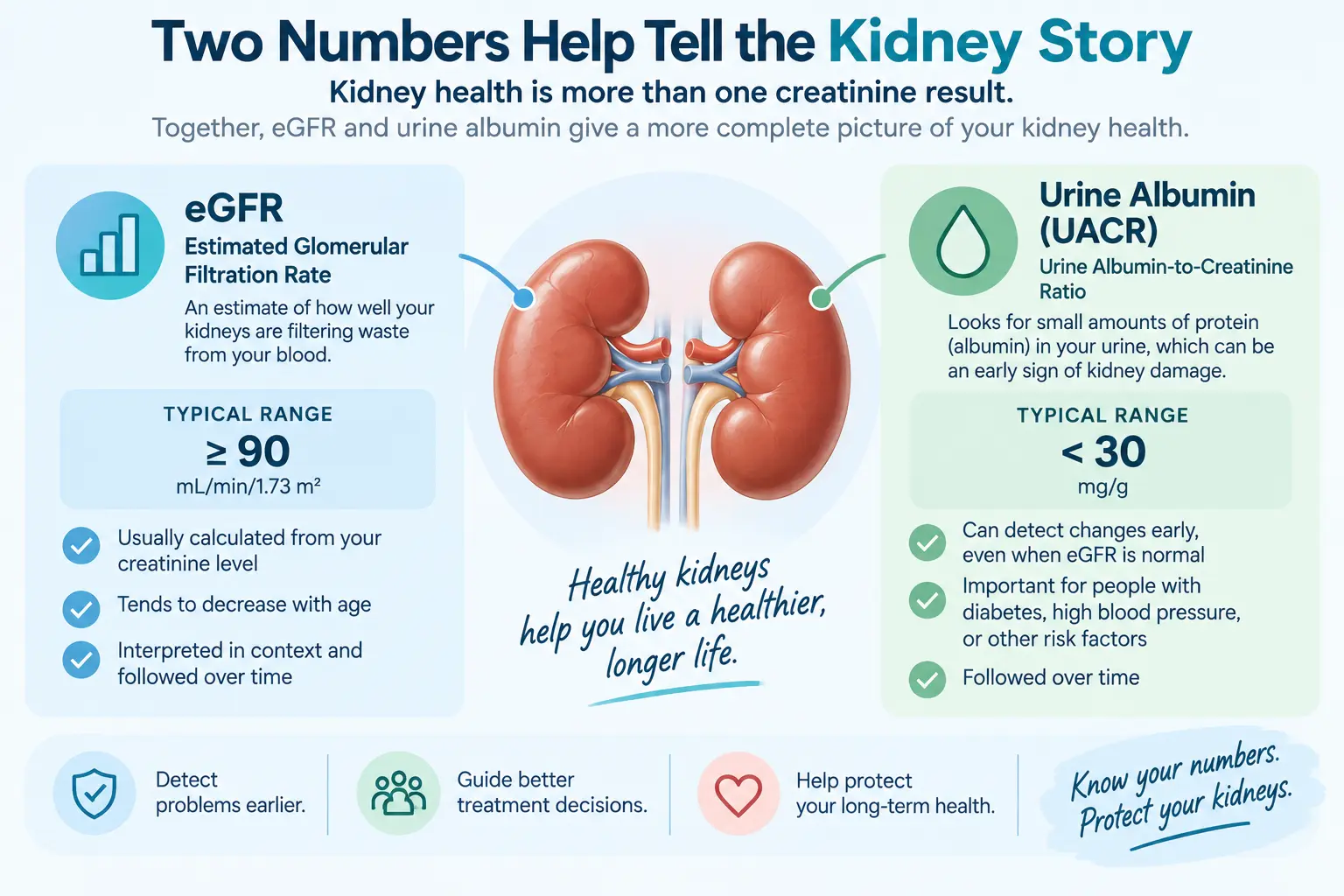
If you’ve had routine bloodwork, you may have noticed a number called eGFR, or estimated glomerular filtration rate. It is calculated using your blood creatinine level and other information and provides an estimate of how effectively your kidneys are filtering your blood.
Here’s something particularly important to understand:
One abnormal eGFR does not automatically mean you have chronic kidney disease.
Kidney function needs to be interpreted in context. Hydration, medications, acute illness, changes in creatinine, muscle mass, and other factors may affect the result. Chronic kidney disease generally involves persistent abnormalities or evidence of kidney damage for more than three months.
And eGFR isn’t the entire kidney story.
Another important measurement, particularly for people with diabetes, high blood pressure, or other kidney-disease risk factors, is the urine albumin-to-creatinine ratio (UACR). It looks for albumin leaking into the urine, which can be an early sign of kidney damage. eGFR and urine albumin are considered two key markers used to evaluate chronic kidney disease.
Not every healthy person necessarily needs extensive kidney testing, but when these measurements are part of your medical evaluation, understanding what they mean can be valuable.
The number to know: Your eGFR—especially if you have diabetes, hypertension, cardiovascular disease, or other risk factors for kidney disease.
Your Health Numbers Work Together
The most important lesson may be that none of these numbers should be interpreted by itself.
Consider two people who both have the same LDL cholesterol.
One is 30 years old, exercises regularly, has normal blood pressure and blood sugar, doesn’t smoke, and has no significant family history.
The other is 65, has diabetes, high blood pressure, and a history of cardiovascular disease.
The laboratory number may be identical. What that number means—and what should be done about it—can be very different.
The same principle applies throughout medicine.
Blood pressure affects kidney health. Weight can influence blood pressure and blood sugar. Diabetes affects cardiovascular and kidney risk. Cholesterol becomes more or less significant depending on the rest of your health picture.
Your physician isn’t simply treating individual numbers. Those numbers are pieces of a much larger story.
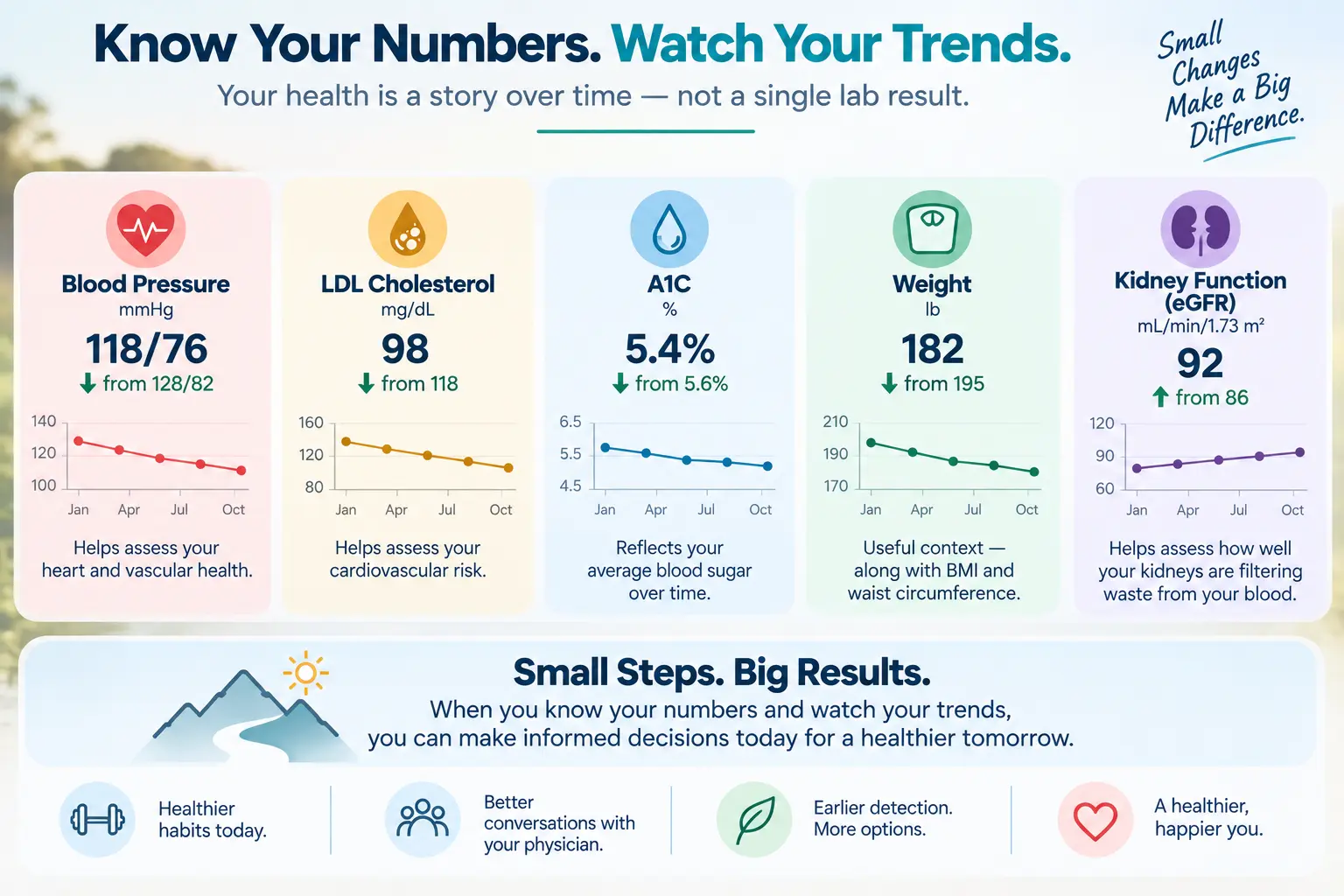
Trends Often Matter More Than Snapshots
This is one of the reasons having an ongoing relationship with your primary-care physician can be so valuable.
Imagine looking at two different lab reports.
One says:
A1C: 5.6%
Technically, that falls within the normal range.
But now imagine seeing:
2024: 5.1% → 2025: 5.3% → 2026: 5.6%
Suddenly, you have more useful information.
The same applies to your blood pressure, cholesterol, kidney function, and weight.
An isolated number tells you where you were on one particular day.
A trend tells you where your health may be heading.
That’s why good preventive care isn’t simply about ordering an annual set of tests and checking whether the results fall inside the laboratory’s reference ranges. It is about knowing your baseline, recognizing meaningful changes, understanding your individual risk factors, and deciding whether anything should be done differently.
Your Personal Health Dashboard
Think of these five measurements as a simple health dashboard:
| Number | What It Helps Assess |
|---|---|
| Blood pressure | Heart and vascular health |
| LDL cholesterol | Cardiovascular risk |
| A1C | Blood-sugar control |
| Weight/BMI/waist | Metabolic health |
| eGFR | Kidney function |
You don’t need to obsess over these numbers, and you certainly don’t need to chase a “perfect” result.
But you should know approximately where you stand.
At your next physical, consider asking:
What are my numbers? Are they appropriate for me? And are any of them changing in a way we should pay attention to?
Those three questions can start a much more meaningful conversation than simply asking whether your lab results were “normal.”
Know Your Numbers. Understand Your Health.
Knowing your health numbers gives you a useful starting point. Understanding what those numbers mean for you is even more important.
One of the advantages of an ongoing primary-care relationship is that your physician gets to know your baseline, your medical history, your goals, and how your health changes over time. Instead of looking at each blood pressure reading or laboratory result in isolation, you can look at the bigger picture together.
Because ultimately, preventive care isn’t about collecting more numbers.
It’s about using the right information to help you stay healthier over time.