Feeling Healthy? Why You Still Need a Primary Care Doctor
On This Page
- Feeling Fine Isn’t the Same as Being Healthy
- One Visit Is a Snapshot. A Doctor Who Knows You Sees the Story.
- Have a Doctor Before You Need One
- Prevention Is a Conversation, Not a Checklist
- Why Most People Don’t Do This (And Why It’s Easier Than You Think)
- Healthy People Are Exactly Who Primary Care Is For
Feeling Healthy? Why You Still Need a Primary Care Doctor

You sleep reasonably well. You get through the workday without much trouble. Nothing hurts, at least nothing worth mentioning. So when someone asks whether you have a primary care doctor, the honest answer might be: Why would I need one? I feel fine.
That’s a completely reasonable way to think. Most of us were trained by the healthcare system to treat doctors like a repair shop: you go when something breaks. Between long waits for appointments, rushed visits, and confusing bills, it’s no wonder people only show up when they have to.
But here’s the thing. The most valuable work in primary care happens before you feel anything at all.
Feeling Fine Isn’t the Same as Being Healthy
Some of the most common health problems don’t announce themselves. They develop quietly for years before they cause symptoms, and by the time they do, they’re harder to reverse.
High blood pressure is the classic example. According to the CDC’s most recent national data, roughly 4 in 10 U.S. adults with high blood pressure don’t know they have it. Prediabetes is even more hidden: the CDC has reported that more than 8 in 10 adults with prediabetes are unaware of it.
Elevated cholesterol, early kidney changes, and some thyroid conditions follow the same pattern. No pain, no warning signs, nothing that would prompt you to pick up the phone.
You can’t feel a number creeping up. You can only measure it.
One Visit Is a Snapshot. A Doctor Who Knows You Sees the Story.
This is where most people’s approach to healthcare breaks down, even people who are doing the right thing.
Maybe you came in for an annual physical. Your labs came back and everything was “in the normal range.” That’s good news. But a single set of results only tells you where you are on one particular day. It doesn’t tell you which direction you’re heading.
Consider two people with the exact same blood sugar reading this year. Both are technically normal. But for one of them, that number has been flat for five years. For the other, it’s climbed a little every year for the last three. Same result, completely different stories. One is fine. The other is on a path toward diabetes, and right now is the easiest possible time to change course.
A one-off visit can’t tell those two people apart. A doctor who has followed you over time can.
The same is true for blood pressure, cholesterol, kidney function, weight, sleep, and stress. Trends matter more than snapshots, and trends only exist when someone is keeping track.
If you’ve already had a physical with us, you have a head start. Your baseline is on file. Its real value shows up the moment there’s something to compare it to.
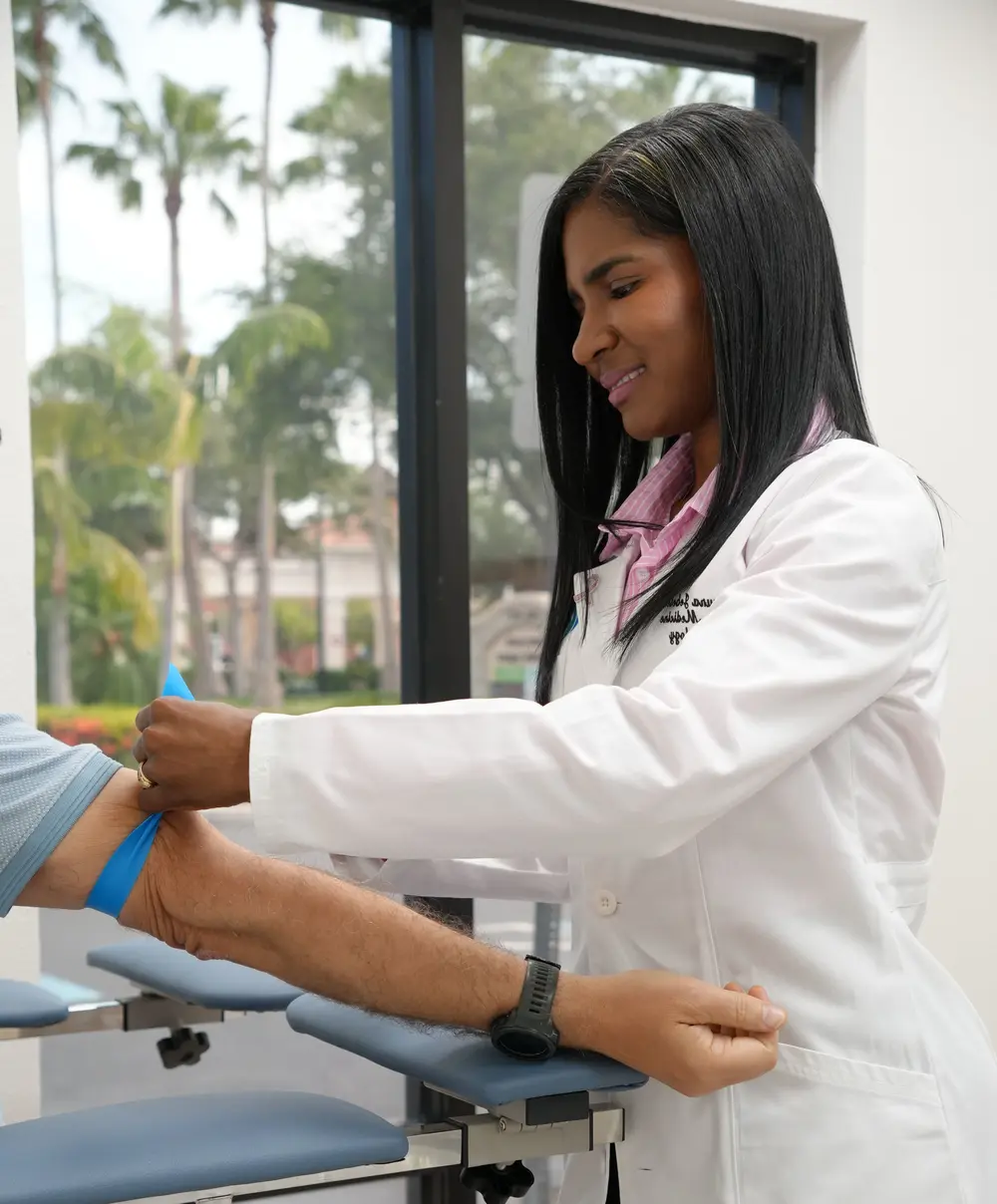
That’s also why, at Clear Access MD, we don’t just send lab results to a portal and leave you to interpret them. Dr. Bruna Jebelev reviews your results with you in a follow-up appointment, explains what they mean for you, and talks through what, if anything, should change.
Have a Doctor Before You Need One
Eventually, something will come up. A strange symptom that won’t go away. A sprained ankle. A medication question. A test result from a specialist that doesn’t make sense.
The worst time to look for a doctor is in that moment.
Without a primary care relationship, your options are usually an urgent care clinic or an ER, where you’ll see someone who has never met you, doesn’t know your history, and has to start from zero. That often means repeated tests, more guesswork, and advice that doesn’t account for the full picture.
With a doctor who already knows you, the conversation is different. They know your baseline, your medications, your family history, and what “normal” looks like for you. Questions get answered faster. Small problems stay small.
Prevention Is a Conversation, Not a Checklist
You’ve probably seen the standard lists: get this screening at 45, that vaccine at 50, check your cholesterol every few years. Those guidelines are a useful starting point, and if you downloaded our free guide to primary care, you’ve already seen many of them.
But real prevention is personal. The right plan depends on your age, your family history, your job, your stress level, how you sleep, how you eat, and what you actually want out of your health. Turning a generic checklist into a plan that fits your life takes time and conversation.
That’s hard to do in a 10-minute appointment where the doctor is watching the clock. It’s much easier when your doctor has the time to listen and gets to know you over months and years.
Why Most People Don’t Do This (And Why It’s Easier Than You Think)
If having a primary care doctor is so valuable, why do so many healthy adults skip it?
Usually it comes down to the experience: weeks-long waits for an appointment, visits that feel rushed, surprise bills afterward, and the sense that you’re one of thousands of patients nobody really knows. When primary care feels like that, it’s hard to justify for “just staying healthy.”
Direct Primary Care (DPC) was built to fix exactly those problems. Instead of billing insurance visit by visit, you pay a simple monthly membership directly to the practice. In return, you get:
- Direct access to your doctor, so you can reach out when something comes up instead of waiting weeks
- Longer, unhurried visits with time to actually talk
- Transparent pricing, without surprise bills for routine care
- Discounted lab pricing, so tracking your health over time stays affordable
- A real relationship with one doctor who knows your history
At Clear Access MD, your doctor is Dr. Bruna Jebelev, who is board-certified in Internal Medicine and fellowship-trained in Nephrology (kidney care), with particular depth in the kinds of “silent” issues like blood pressure and kidney function that often go unnoticed. She sees patients in both English and Spanish.
Learn more about how membership works →
Healthy People Are Exactly Who Primary Care Is For
It’s easy to think of a primary care doctor as something you need once you’re sick. In reality, the opposite is true. The best time to start is when you feel good, because that’s when there’s the most to protect and the most room to act early.
Feeling fine is a great place to be. A primary care doctor is how you stay there.
Already downloaded our guide? Put it into practice. Schedule a call with Clear Access MD to see whether membership is a good fit for you.
Already had your physical with us? You’ve taken the first step, and your baseline is on file. Become a member and let’s keep building on it, together.
Sources: CDC National Center for Health Statistics, Hypertension Prevalence, Awareness, Treatment, and Control Among Adults Age 18 and Older: United States, August 2021–August 2023; CDC, National Diabetes Statistics Report.